The Great Digital Migration: When Box Office Flops Become OTT Gold: Morphokinetics™ Narrative Pacing
Minute-by-minute audience retention risk vs. narrative tension. Identifies structural sag points and retention thresholds.
The Great Digital Migration: When Box Office Flops Become OTT Gold
If you’ve been tracking your streaming subscriptions more closely than your stock portfolio this week, you aren’t alone. Welcome to the “Digital Migration Wave” of 2026 — a strange time in Indian entertainment where a film’s theatrical death certificate is often its OTT birth certificate.
As we wake up on this Thursday morning, the industry is buzzing with a chaotic mix of relief and resentment. We have Kartik Aaryan’s rom-com finally dropping its “rental” paywall, Shahid Kapoor’s poetic violence struggling to find takers in a TikTok-addicted world, and a massive ego clash brewing between the North and South industries over a release date.
Let’s decode the madness of the Indian market right now.
1. The OTT “Rescue Missions”: Genre Fatigue & The Second Life
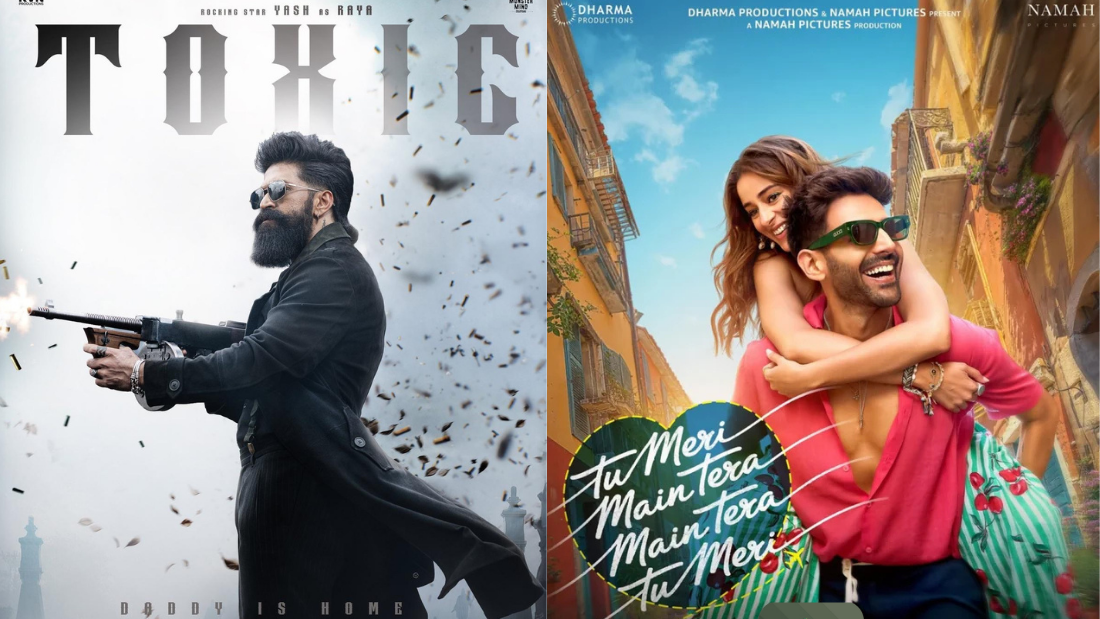
The biggest story today is the official “liberation” of Tu Meri Main Tera.
Tu Meri Main Tera (Prime Video — Streaming Free Today)
For the last two weeks, this film was sitting behind a Rs 349 rental paywall — a bold experiment that tested how desperate fans were to see Kartik Aaryan and Ananya Panday reunite. As of this morning, the paywall is down, and the film is free for all Prime subscribers.
The Verdict: This is a textbook case of “Theatrical Failure, OTT Revival.” The film’s theatrical run was underwhelming (IMDb 5.4/10), largely because the audience is exhausted with the “glossy struggle” narrative. The plot follows Ray (Kartik), an LA wedding planner addicted to hookup culture, clashing with Rumi (Ananya), an Agra writer obsessed with 90s Bollywood romance.
When their worlds collide on a Croatian yacht tour, it sets up a battle of families — Jackie Shroff’s military discipline vs. Neena Gupta’s independent streak. While the box office rejected this as “seen it all before,” the OTT crowd is expected to devour it. Why? Because it’s “Comfort Watch” material. It’s perfect for a Sunday afternoon when you don’t want to think too hard. The transition from a “Rental” luxury item to a “Free” commodity is the new lifecycle of the average Bollywood rom-com.
O Romeo (Theatrical — Week 2)
On the other end of the spectrum is O Romeo, currently fighting for its life in theatres. Shahid Kapoor and Vishal Bhardwaj — the duo that gave us the masterpiece Haider — have returned with an epic that is crossing the Rs 50 crore mark.
But the 3-hour runtime is proving to be a hurdle. In an era of 60-second Reels, a slow-burning “Poetic Rebellion” feels like homework to the mass audience. Is it art? Yes. Is it commercial suicide? Debatable. The film is polarising: purists are calling it a masterpiece of “Commercial Stubbornness,” while general audiences are finding it too heavy for a weekend watch.
Tu Yaa Main (Theatrical — Week 2)
Meanwhile, the survival thriller Tu Yaa Main, starring Adarsh Gourav and Shanaya Kapoor, has virtually flatlined. With a total collection of just Rs 4.02 crore and single-digit occupancy (9.08%), it has been swallowed whole by the shadow of O Romeo. It’s a harsh reminder that “content creator rivalry” themes might work on YouTube, but they don’t necessarily drive footfalls to the cinema.
2. The Direct-to-OTT Gamble & The Economics of Ego
While theatres struggle, the digital space is preparing for a high-brow arrival.
Kennedy (ZEE5 — Releasing Tomorrow, Feb 20)
Anurag Kashyap’s Kennedy finally lands in our living rooms tomorrow. Starring Rahul Bhat as an insomniac ex-cop turned assassin and Sunny Leone in a never-seen-before avatar, this film skipped the theatrical circus entirely.
This is a significant move. After premiering at Cannes 2023, the film’s “grisly realism” was deemed too risky for the box office. The narrative, which weaves a socio-political nexus with Aamir Aziz’s politically charged poetry, is “undeniably Kashyap.” But the question remains: Will the Indian living room audience accept this level of darkness, or will it remain a “Festival Darling” that people praise but don’t actually watch?
The Clash of 2026: Toxic vs. Dhurandhar 2
Looking ahead, a massive storm is brewing for March 19, 2026.
• In the Blue Corner: Rocking Star Yash with Toxic.
• In the Red Corner: Ranveer Singh with Dhurandhar 2.
This isn’t just a box office clash; it’s a culture war. Yash is reportedly “irked” that Aditya Dhar’s team announced the Dhurandhar 2 release on the same date without a courtesy call. In the South Indian industry, major stars often coordinate release dates to avoid cannibalising each other’s business. In Bollywood, it’s the Wild West, first to announce, first to serve.
Yash is betting on the “Long Game.” He believes Toxic has the content to survive the opening weekend hype of Dhurandhar 2. It’s a classic case of “Ego vs. Economics.” Will the audience split their wallet, or will one film crush the other?
3. Deep Dive: The “Rental Window” Economy
We need to talk about what Tu Meri Main Tera just did. The “Rental-First, Free-Later” model is rapidly becoming the industry standard for underperforming films.
Creators are now whispering a terrifying question: “Is the theatrical release just ‘Beta Testing’ for the OTT payoff?”
Here is how the math works in this new economy:
• Phase 1 (Theatrical): The film flops, earning maybe Rs 15–20 crore. This is the “Public Shame” phase.
• Phase 2 (Rental Window): The platform puts it up for Rs 349. Die-hard fans and curious haters pay up, generating a quick Rs 5–7 crore. This is the “Exclusivity Illusion.”
• Phase 3 (Subscriber Release): The film goes free. It gets millions of views, justifying the Rs 50+ crore the platform paid for the rights. This is “Redemption.”
It’s brutal, but brilliant. The theatrical release is no longer the main revenue source; it’s a marketing expense to build hype for the streaming release.
📊 The “OTT Rescue” Scorecard
How likely is a film to survive its theatrical death? Here is our Theatrical-to-Digital Recovery Score™:
Among recent releases, Tu Meri Main Tera has performed poorly at the box office with an estimated Rs 15 crore, making it a flop, though it shows high OTT recovery potential since rom-coms often perform well on television and streaming platforms, earning it a recovery score of 7/10. O Romeo fared averagely, collecting over Rs 50 crore, but its extended runtime limits its re-watch value, resulting in a medium OTT recovery potential and a 4/10 score. Tu Yaa Main, however, turned out to be a disaster, grossing just Rs 4 crore with low recovery prospects due to a niche audience and weak word of mouth, scoring only 2/10. Meanwhile, Kennedy, which was released directly on OTT, has unclear revenue performance but carries high prestige despite limited mass appeal, earning it a moderate recovery score of 6/10.
🕉️ Vedic-to-AI Commentary: The Dharmic Dilemma of The Clash
Let’s look at the Yash vs. Ranveer standoff through a different lens. This is a conflict between Ahimsa (Non-Violence/Courtesy) and Sangharsh (Conflict/Competition).
The Southern film tradition operates on Maryada — a code of conduct where you respect your peers’ territory. Yash’s frustration isn’t about fear; it’s about a violation of Ācāra (proper conduct). He expected a phone call, a negotiation, a mutual agreement.
The Hindi film industry, however, operates on Vyavasthā (System) and Bālī (Might). It’s a ruthless meritocracy where the one who announces first claims the land. Aditya Dhar isn’t being “rude”; he is just following the Dharma of the Bollywood jungle.
The Future Question: In an age where AI predicts the perfect release window down to the hour, are “courtesy calls” a noble tradition or just outdated Ahamkara (Ego)? Perhaps the future is Samanvaya (Integration), where we let the data decide the dates, removing the human ego entirely.
Final Thoughts: Conquest to Conversion
As we settle in to watch Tu Meri Main Tera for “free” tonight, remember this: Cinema is no longer about conquest; it’s about conversion.
We don’t go to the theatres to “discover” movies anymore; we go to confirm if they are worth our time. If they aren’t, we wait for the rental window. If that’s too expensive, we’ll wait for the subscription drop. The industry has realised that if they can’t get Rs 500 from you at the box office, they will get Rs 349 from you on rental, or they will get your attention (and data) on the free tier.
The “Second Life” of cinema is here. And for the Indian audience, patience has never been more profitable.
[[LENS_NARRATIVE:
🎬 Today’s Morning Brief: Feb 19, 2026
Trending Now
-
Tu Meri Main Tera (Prime Video — Today): Kartik-Ananya rom-com moves from Rs 349 rental to free streaming. Theatrical flop (Rs 5.4/10 IMDb) seeks “OTT redemption.” The rental window economy in action.
-
O Romeo (Week 2): Shahid’s epic crosses Rs 50cr (Rs 43.85cr India, Rs 63cr global). Day 6: Rs 3.5cr. The 3-hour war: Art vs. Attention Span continues.
-
Tu Yaa Main (Week 2): Adarsh-Shanaya thriller drowns at Rs 4.02cr total (Day 6: Rs 0.32cr, 9.08% occupancy). Survival thriller can’t survive box office.
Critical View
-
Kennedy (ZEE5 — Tomorrow): Anurag Kashyap’s Cannes noir finally drops. Rahul Bhat’s insomniac assassin + Sunny Leone. Will “grisly realism” translate from festival darling to mass consumption?
-
Toxic vs. Dhurandhar 2 (March 19): Yash refuses to blink. “Irked” by the lack of a courtesy call from Ranveer’s team. South’s “communication culture” vs. Hindi’s “date grab” mentality exposed.
The Social Spark
-
Rental Window Revelation: Tu Meri Main Tera’s two-tier strategy (rental → subscriber) is the new blueprint for theatrical underperformers. Are theatres now just “pre-OTT marketing”?
-
The Courtesy Crisis: Yash-Dhurandhar standoff reveals industry’s etiquette void. Southern filmmakers expect “courtesy calls” before clashes; the Hindi industry operates on “announce first, ask never.” Cultural rift or competitive evolution?
-
The “Second-Life” Economy: In 2026, OTT isn’t backup — it’s bailout. Films dying in theatres resurrect as “subscriber value.” The death of theatrical prestige or the evolution of consumption? ]]
Related Greybrainer Reads
GREYBRAINER
AI-Powered Cinematic Intelligence