Special Ops 2: A Deep-Dive Analysis for Creators and Critics: Morphokinetics™ Narrative Pacing
Minute-by-minute audience retention risk vs. narrative tension. Identifies structural sag points and retention thresholds.
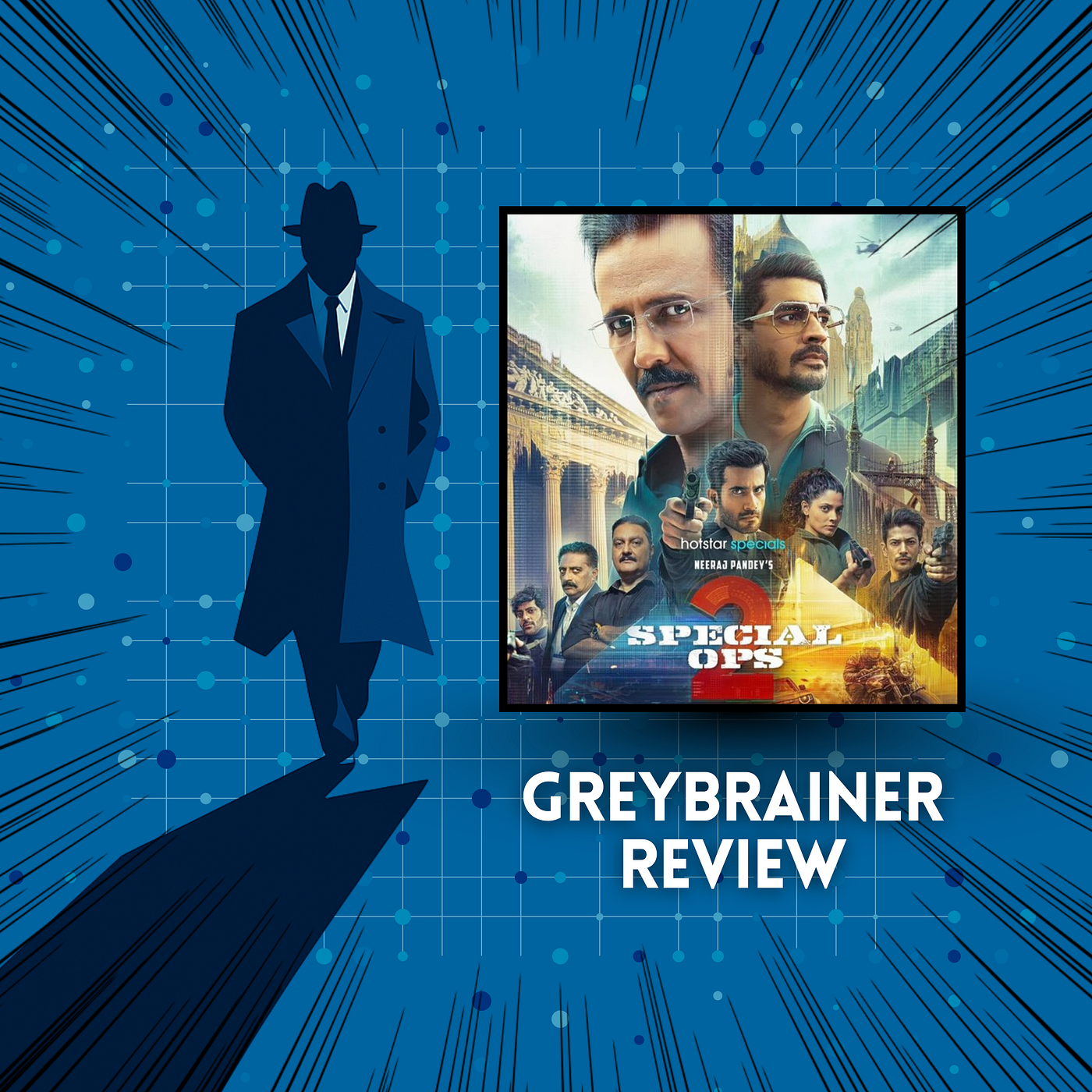
Special Ops 2: A Deep-Dive Analysis for Creators and Critics
Overall Greybrainer Score: 7.3 / 10
Special Ops 2 ambitiously expands the Indian espionage thriller genre by pivoting towards cyber warfare, a theme that resonates globally in today’s geopolitical climate. Despite its conceptual promise and a strong lead performance, the series reveals critical execution gaps that dilute its overall impact. This analysis offers creators research-driven feedback to refine future installments and provides critics with a nuanced perspective grounded in narrative theory, performance studies, and genre conventions.
Story and Script: Ambitious Depth Meets Structural Complexity (7.8/10)
At its core, Special Ops 2 delivers a character-driven narrative exploring the psychological and moral costs of espionage. The series employs a non-linear structure, weaving present-day operations with flashbacks that deepen character motivations and thematic resonance. While this enriches the narrative, it sometimes fragments tension and pacing. Consolidating flashbacks to pivotal moments would maintain intrigue without sacrificing immediacy.
The protagonist’s arc anchored by Kay Kay Menon’s Himmat Singh, eschews simplistic heroism in favor of vulnerability and ethical ambiguity. This nuanced portrayal elevates the series beyond typical spy thrillers, inviting viewers to grapple with the personal sacrifices inherent in statecraft. Supporting characters, while conceptually distinct, suffer from underdevelopment, often relegated to plot devices rather than fully realised individuals. Expanding their arcs would diversify narrative perspectives and enhance emotional complexity.
Dialogue generally balances naturalism with exposition, though occasional reliance on genre clichés undermines its freshness. Refining these exchanges to avoid jargon and enhance thematic subtlety would strengthen the script’s intellectual engagement.
Thematically, the series excels in exploring sacrifice, loyalty, and the blurred lines between patriotism and extremism. However, the ending’s moral ambiguity could benefit from clearer articulation to leave a more lasting impression.
Conceptualisation: Visionary Yet Uneven (7.8/10)
Directors Neeraj Pandey and Shivam Nair maintain the franchise’s grounded espionage aesthetic while updating its thematic focus to cyberterrorism, a reflection of contemporary geopolitical anxieties. This pivot is both timely and innovative, positioning Special Ops 2 as a benchmark for realistic Indian spy thrillers.
Casting choices reinforce this vision. Kay Kay Menon’s return as Himmat Singh provides continuity and gravitas. Tahir Raj Bhasin’s portrayal of antagonist Sudheer Awasthi is particularly noteworthy, embodying a subtle menace that suits the intangible nature of cyber threats. However, the ensemble cast, including Vinay Pathak and Karan Tacker, remains underutilised. Their talents are overshadowed by a script that prioritises exposition over character development, reducing them to narrative functionaries.
The series’ fast-paced editing aims to condense complex diplomatic and technical crises but often results in oversimplification. Visual storytelling techniques could better convey cyber warfare’s abstract stakes, reducing reliance on expository dialogue and enhancing audience immersion.
Performance and Execution: Strength in Lead, Weakness in Ensemble (6.8/10)
Kay Kay Menon’s performance anchors the series with a compelling blend of calm authority and emotional depth. His portrayal sustains audience engagement through complex psychological terrain, embodying the series’ thematic core.
Conversely, the supporting cast’s potential remains largely untapped. Talented actors like Prakash Raj and Saiyami Kher are confined to peripheral roles, limiting the series’ dramatic range. Future installments should allocate more substantive screen time and narrative weight to these characters to enrich the ensemble dynamic.
Cinematography and action choreography strive for gritty realism but falter in execution. The cyber warfare focus translates into visually static scenes dominated by laptop screens, which lack the kinetic energy typical of espionage thrillers. Physical action sequences vary in quality, with some criticised as unconvincing or poorly staged. Innovating these sequences to balance digital and physical tension is essential to maintain genre standards.
The musical score and visual effects competently support the narrative but do not distinguish themselves as memorable elements.
Recommendations for Future Installments
1. Elevate Ensemble Contributions:
Develop supporting characters with meaningful arcs and agency. This will diversify narrative perspectives and deepen emotional engagement.
2. Innovate Visual Storytelling:
Employ creative cinematic techniques to represent cyber threats and diplomatic maneuvers visually, minimising expository dialogue and enhancing narrative immersion.
3. Refine Narrative Pacing:
Streamline the non-linear structure to sustain tension and allow thematic elements to resonate more profoundly. Focus on fewer, more developed threats rather than multiple parallel storylines.
4. Enhance Action Choreography:
Balance cyber and physical action with inventive, well-executed sequences that uphold the franchise’s reputation for thrilling espionage drama.
Visual Layer Overview
Story/Script: 7.8/10
Conceptualisation: 7.8/10 (Suggested)
Performance: 6.8/10
Conclusion
Special Ops 2 represents a bold evolution in Indian espionage storytelling, embracing contemporary cyber warfare themes with intellectual ambition. However, its expansive scope occasionally outpaces its execution, resulting in uneven pacing, underutilised talent, and inconsistent action. By addressing these critical areas, future chapters can realise the series’ full potential as a genre-defining narrative that resonates both emotionally and intellectually.
Related Greybrainer Reads
GREYBRAINER
AI-Powered Cinematic Intelligence