Mimicry to Mockery: How Indian Entertainment Lost Control of Its Own Narrative: Morphokinetics™ Narrative Pacing
Minute-by-minute audience retention risk vs. narrative tension. Identifies structural sag points and retention thresholds.
Mimicry to Mockery: How Indian Entertainment Lost Control of Its Own Narrative
The Indian entertainment ecosystem is reorganising. Three parallel stories reveal how the media is exhausting old formats, dismantling traditional power hierarchies, and demanding ethical clarity from creators.
Comedy’s Fatigue: When Repetition Kills Magic
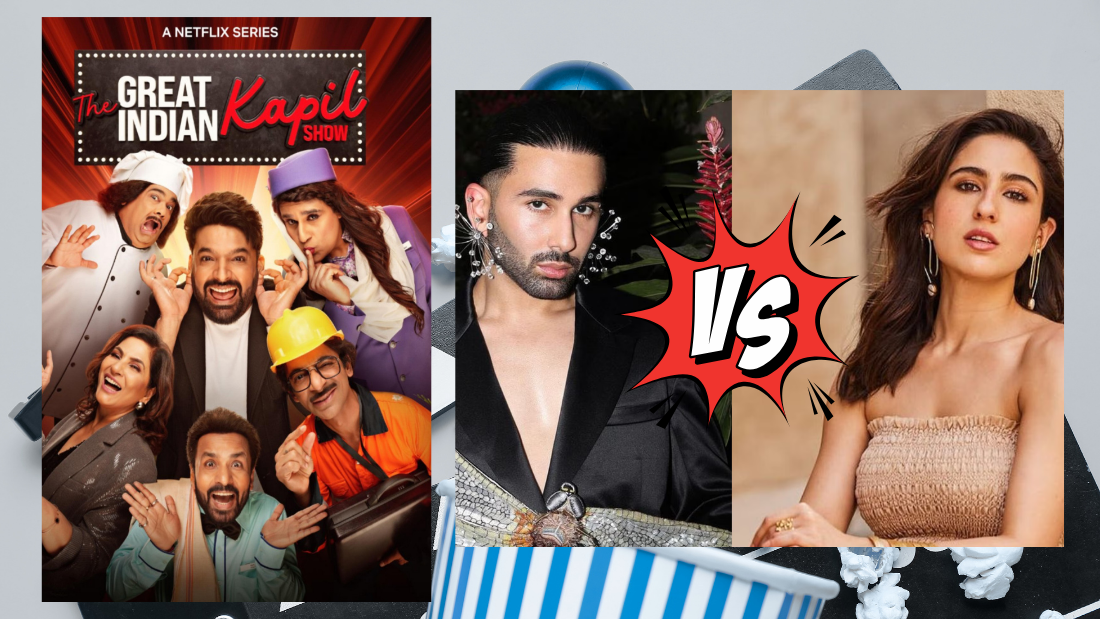
Netflix’s The Great Indian Kapil Show S2 finale exposed format bankruptcy. Sunil Grover’s signature mimicry, the show’s comedic anchor, “did not land.” After two seasons of identical structures, the impressions had lost emotional impact. Only two episodes passed the “laughter test.”
The lesson: Long-running formats have natural lifecycle limits. Repetition doesn’t compound value; it dilutes it. Scale guarantees decline beyond a certain inflexion point.
The Spy Thriller That Questions Power
Dhurandhar (Netflix, December 2025) succeeded through institutional scepticism. Ranveer Singh plays an undercover intelligence agent in Karachi’s gang networks. The film functions as a “bureaucracy thriller” where protocols matter as much as gunfights.
At three hours 34 minutes, it “leaves you breathless rather than exhausted.” Audiences valued epistemic rigour (how power actually works) over spectacle. Institutional complexity drives engagement more than action.
Censorship as a Political Tool
Today’s Madras High Court verdict on Jana Nayagan (Vijay’s final film) reveals institutional weaponisation. The CBFC delayed certification, likely to control release timing before the 2026 election. Vijay refused to cut political dialogues that form his election manifesto.
This case establishes whether certification can be weaponised through procedural delays to suppress politically inconvenient content.
Influencer Power Inversion
Influencer Orry publicly mocked A-list actor Sara Ali Khan’s filmography without institutional consequence. Two years ago, this would have triggered industry backlash. In 2026, it didn’t.
What it means: Digital-native creators now command greater authority over real-time discourse than traditional actors. The hierarchy has inverted.
Moral Ambiguity No Longer Acceptable
Tere Ishk Mein polarised audiences: Is obsessive pursuit “intense art” or “glorified stalking”? Audiences no longer accept moral ambiguity as artistic license. Filmmakers must defend the values embedded in their work.
Five Takeaways
Format exhaustion is industry-wide — innovation, not repetition, drives growth
Institutional skepticism commands audiences — complexity beats spectacle
Censorship is explicitly political — bureaucratic delays weaponise content control
Digital influence now exceeds stardom — real-time discourse authority matters more than legacy
Ethical clarity is mandatory — audiences demand moral positioning, not ambiguity
[[LENS_NARRATIVE:
🎬 Today’s Morning Brief: Jan 27, 2026
- Trending Now
The Great Indian Kapil Show (Netflix): Season 2 is trending, but critics are divided. While the “Heartland Strategy” of bringing Bhojpuri stars is a hit, the latest episode with Varun Dhawan and Atlee was panned for Sunil Grover’s weak mimicry and forced humor. It’s a case of “Star Power vs. Content Fatigue.”
Dhurandhar (Netflix): Ranveer Singh’s spy titan has finally landed on OTT after its historic ₹1,300 Cr theatrical run. It’s the definitive “mass” watch of the week.
Tere Ishk Mein (Netflix): Dhanush and Kriti Sanon’s “Varanasi Noir” is the #1 trending film, sparking a massive digital debate on toxic obsession vs. intense romance.
- Critical View
Kalamkaval (SonyLIV): Mammootty’s “anti-thriller” remains the critical benchmark, lauded for its atmospheric silence and refusal to use manipulative jump scares.
Sirai (ZEE5): A Vikram Prabhu legal thriller inspired by true events. Critics are hailing it as a “Tight Narrative” that exposes systemic rot, standing out for its gritty realism.
- The Social Spark
Censorship & Jana Nayagan: The Madras High Court delivers its final verdict today (Jan 27) on Thalapathy Vijay’s final film. This is the ultimate “Cinema vs. State” battle for 2026.
The “Orry vs. Sara” Feud: A viral social media spat has erupted after influencer Orry mocked Sara Ali Khan’s career. It has ignited a massive debate on “Influencer Bullying” and the fragility of celebrity friendships in the digital age.]]
Related Greybrainer Reads
GREYBRAINER
AI-Powered Cinematic Intelligence