Legacy Superstars, Low Budgets & Political Satire: January 2026’s Quiet Cinema Revolution
Legacy Superstars, Low Budgets & Political Satire: January 2026’s Quiet Cinema Revolution: Morphokinetics™ Narrative Pacing
Minute-by-minute audience retention risk vs. narrative tension. Identifies structural sag points and retention thresholds.
Legacy Superstars, Low Budgets & Political Satire: January 2026’s Quiet Cinema Revolution
As of January 30, 2026, the Indian audience is actively pivoting from high-decibel “Masala” sequels to Intellectual Realism and Process-Driven Narratives.
The New Cinema Equation: Why Regional Films Are Rewriting 2026’s Entertainment Playbook
The opening month of 2026 reveals a seismic shift in Indian cinema. While pan-Indian blockbusters promised spectacle, it was regional films Telugu, Tamil, and Malayalam, that captured the zeitgeist. Simultaneously, streaming platforms are reshaping what “prestige content” means. This is not a moment of fragmentation; it’s a recalibration. Audiences are no longer chasing franchise exhaustion or star mythology. They’re hungry for authenticity, competence, and stories that respect their intelligence.
Part 1: The Regional Powerhouse, When Local Becomes Universal
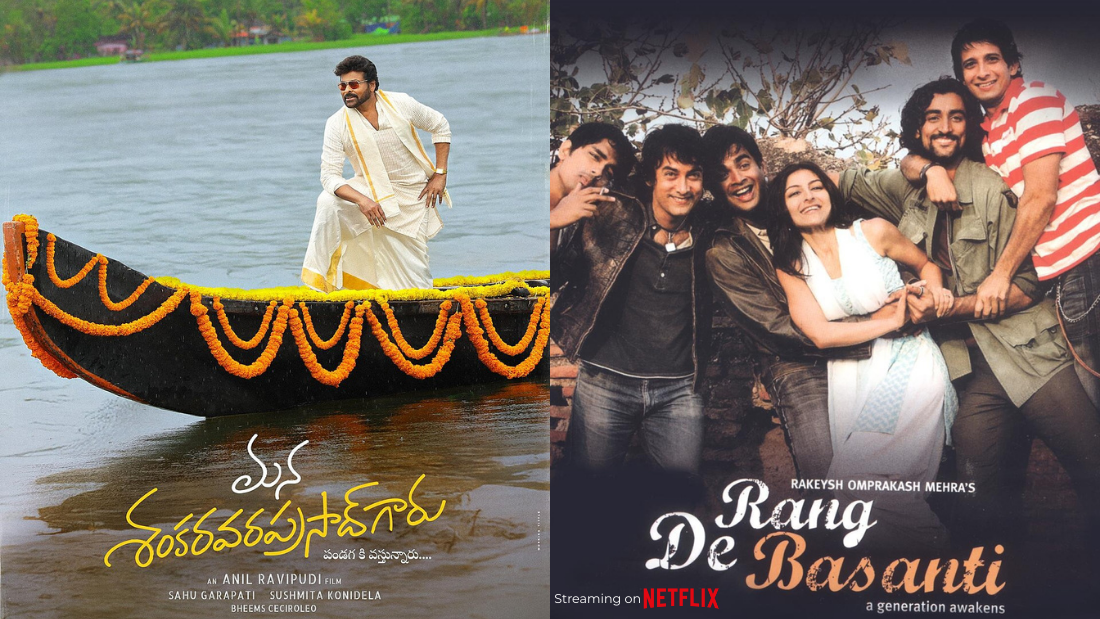
• Mana Shankara VaraPrasad Garu: The Spiritual Drama That Outpaced the Hype
While The Raja Saab commanded the marketing machinery, Telugu cinema’s true commercial titan emerged quietly: Mana Shankara VaraPrasad Garu. Helmed by Chiranjeevi, this spiritual drama has achieved what few “legacy superstar” vehicles accomplish — it didn’t lean on nostalgia or action spectacle. Instead, it pivoted to authentic vulnerability.
The Grey Verdict: The film proves a counterintuitive truth in 2026: Legacy superstars win not by doubling down on their iconic personas, but by trading in the currency of emotional honesty. Chiranjeevi’s turn toward introspection rather than heroism signals that the superstar brand is evolving. Audiences no longer need mythologised versions of their idols; they crave the human underneath the legend. This reframes the entire economics of prestige cinema in Telugu: vulnerability scales better than invulnerability.
• Chatha Pacha: The Ring of Rowdies, Low-Budget Velocity Meets Hyper-Local Authenticity
In Malayalam cinema, a film titled Chatha Pacha: The Ring of Rowdies achieved the seemingly impossible: breaking even in its first week on a shoestring budget. In an industry obsessed with opening-weekend collections, this film’s trajectory redefines what “success” means.
The Grey Verdict: This is a masterclass in low-budget velocity. The film succeeds not despite its gritty, hyper-local ethos, but because of it. Modern Malayalam audiences are actively rejecting the “heroism” traditionally baked into rowdy narratives. Instead, they’re drawn to stories that strip away romantic glorification and present rowdyism as systemic, complex, and deeply human. The film’s commercial math, modest budget, zero big-name stars, and authentic hyper-local storytelling have become the new formula. Malayalam cinema has discovered that locality, when executed with craft, is more marketable than manufactured scale.
• TTT (Thalaivar Thambi Thalaimayil): Political Satire in the Pongal Window
Tamil cinema’s first major success of 2026 arrived during the Pongal window with TTT, a political satire that accomplishes something rare: it critiques the very system it inhabits without cynicism.
The Grey Verdict: This film leverages the Pongal zeitgeist to collapse the boundary between entertainment and commentary. What makes it remarkable isn’t the politics; it’s the self-awareness. A film about “Star-Politics” that uses celebrity infrastructure to dismantle star mythology demonstrates that Kollywood audiences are no longer passive consumers of political messaging. They’re increasingly sceptical of grandiose narratives and receptive to reflexive satire. The timing, festival season, family audiences, and cultural resonance prove that political commentary in regional cinema no longer requires arthouse positioning. It can occupy mainstream real estate.
Part 2: Streaming’s Recalibration, When Platform Means Prestige
• A Knight of the Seven Kingdoms: Anti-Epic Storytelling Finds Its Moment
On JioHotstar, the Westeros universe takes a radical turn with A Knight of the Seven Kingdoms. This isn’t another sprawling, dragon-laden fantasy epic. It’s deliberately, unapologetically human-scaled.
The Grey Verdict: Indian audiences have entered “Scale Fatigue.” The blockbuster playbook, bigger budgets, larger spectacle, more dragons, is showing its exhaustion. A Knight of the Seven Kingdoms succeeds because it trades dragons for honour, complexity for clarity, and world-building for character-building. This reflects a broader truth about 2026 audiences: they’re satiated by spectacle and hungry for craft. Streaming platforms that understand this, that prestige comes from restraint, not expenditure, will define the next phase of content dominance.
• The Pitt: The Rise of Competence Porn
JioHotstar medical procedural The Pitt has been heralded as the gold standard of “Professional Noir.” It tracks doctors navigating a broken healthcare system with skill, ethics, and pragmatism.
The Grey Verdict: This represents an underutilised appetite in Indian audiences: competence porn. We’re increasingly obsessed with watching professionals excel despite systemic dysfunction, not for the drama of individual heroism, but for the quiet satisfaction of seeing expertise and dedication in action. The Pitt taps into something deeper than hospital drama, it’s about dignity in the face of failure, mastery within chaos. In an era of systemic distrust, watching competent people navigate flawed institutions is paradoxically comforting. It suggests that individual excellence is still possible, even when the system is broken.
Part 3: The Classic Retrospective- Rang De Basanti
Why Rang De Basanti Still Matters in 2026
This January marks two decades since Aamir Khan’s Rang De Basanti arrived to redefine what Hindi cinema could express politically. The film streams across Netflix and Prime, now viewed by audiences who weren’t born when it released.
The Grey Deep Dive: What explains the sting RDB still carries? The answer lies in its central thesis: the “Death of Indifference.” The film argued that apathy, not ideology, was India’s true enemy. Every character arc hinged on the moment when complacency was shattered.
Today’s cinema operates in a different register. 2026 is saturated with “Bureaucracy Thrillers”, films obsessed with procedural dysfunction, systemic rot, and institutional critique. These are important films, but they’re fundamentally cynical. They document the disease without seriously imagining a cure.
Rang De Basanti was different. It was angry, yes, but it wasn’t cynical. It believed in the possibility of individual transformation catalysing systemic change. That’s why revisiting it now is so instructive: it reveals the philosophical gap between 2006’s “Revolution” and 2026’s “Process.”
In 2006, the film asked: “What if we stopped accepting the system and demanded change?”
In 2026, cinema asks: “How do we survive within a broken system?”
These are not the same question. And the difference explains why RDB remains culturally urgent 20 years later. It represents a moment when Indian cinema still believed in the revolutionary potential of individual conscience. Whether that optimism was naive or prescient remains a conversation worth having.
Takeaway: The Pattern Beneath the Chaos
January 2026’s cinema reveals a unified audience across languages: They want authenticity over spectacle, competence over heroism, and reflexivity over naiveté. Regional films proved this by grounding themselves in local truths. Streaming platforms are proving it by trading scale for craft. And our relationship with classics like Rang De Basanti proves it by asking what kind of cinema we’ve lost and what we’ve gained in the exchange.
The new cinema equation isn’t about bigger or bolder. It’s about truer.
[[LENS_NARRATIVE:
🎬 GreyBrain Lens: Jan 30, 2026
- Trending Now
Mana Shankara Vara Prasad Garu (Telugu): Chiranjeevi’s spiritual epic dominates the South. A win for “Legacy Vulnerability” over mindless action.
Chatha Pacha (Malayalam): The first breakout hit of 2026. A gritty, low-budget rowdy-drama that prioritizes realism over heroism.
A Knight of the Seven Kingdoms (JioCinema): Westeros goes analog. The “Hedge Knight” is trending for proving that Intimacy is the new Blockbuster.
- Critical View
The Pitt (JioCinema): The “Anti-Grey’s Anatomy.” A masterclass in medical realism that honors the “Competence” of its characters.
Sirai (Tamil — ZEE5): Vikram Prabhu’s legal thriller remains the critical benchmark for “Systemic Grit.”
- The Social Spark
The 20-Year Patriot: On the anniversary of Rang De Basanti, audiences are debating: Is the modern “Bureaucracy Thriller” too safe compared to the 2006 “Revolution”?
Scale Fatigue: The success of ‘Small Fantasy’ and ‘Regional Grits’ marks the death of the CGI-Epic in early 2026.]]
Related Greybrainer Reads
GREYBRAINER
AI-Powered Cinematic Intelligence