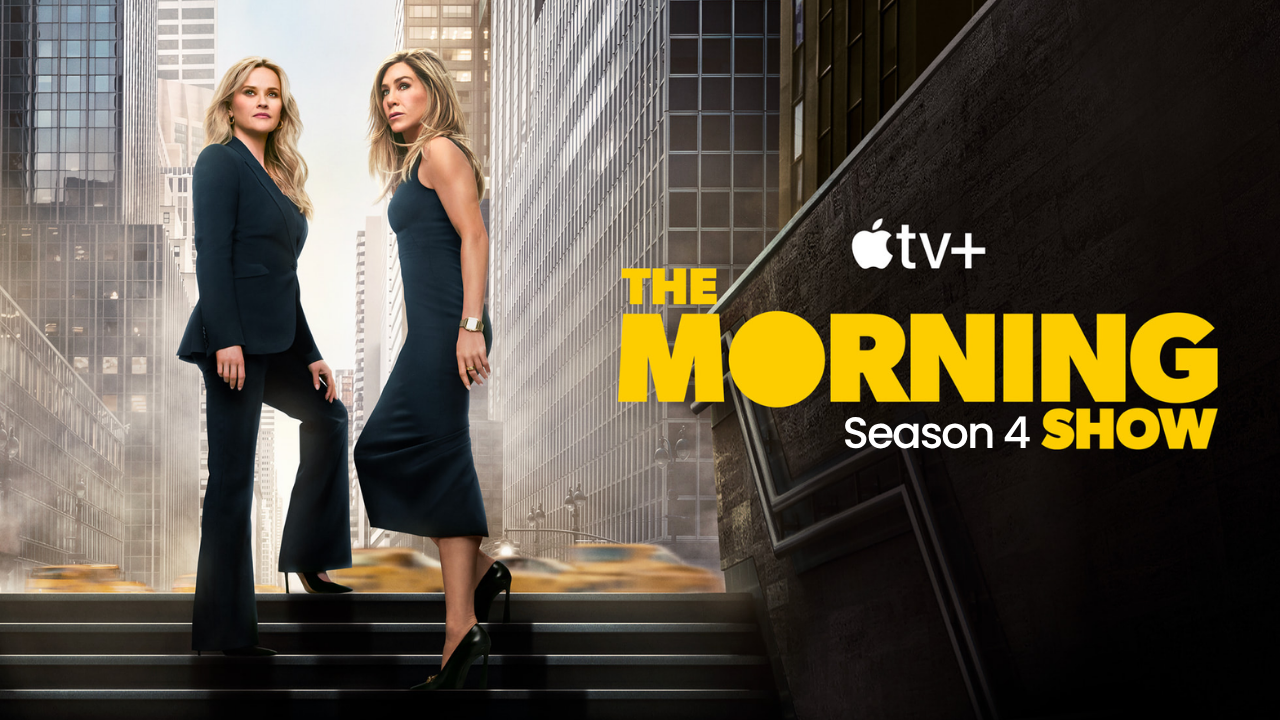
GreyBrainer Summary Report: The Morning Show Season 4: Morphokinetics™ Narrative Pacing
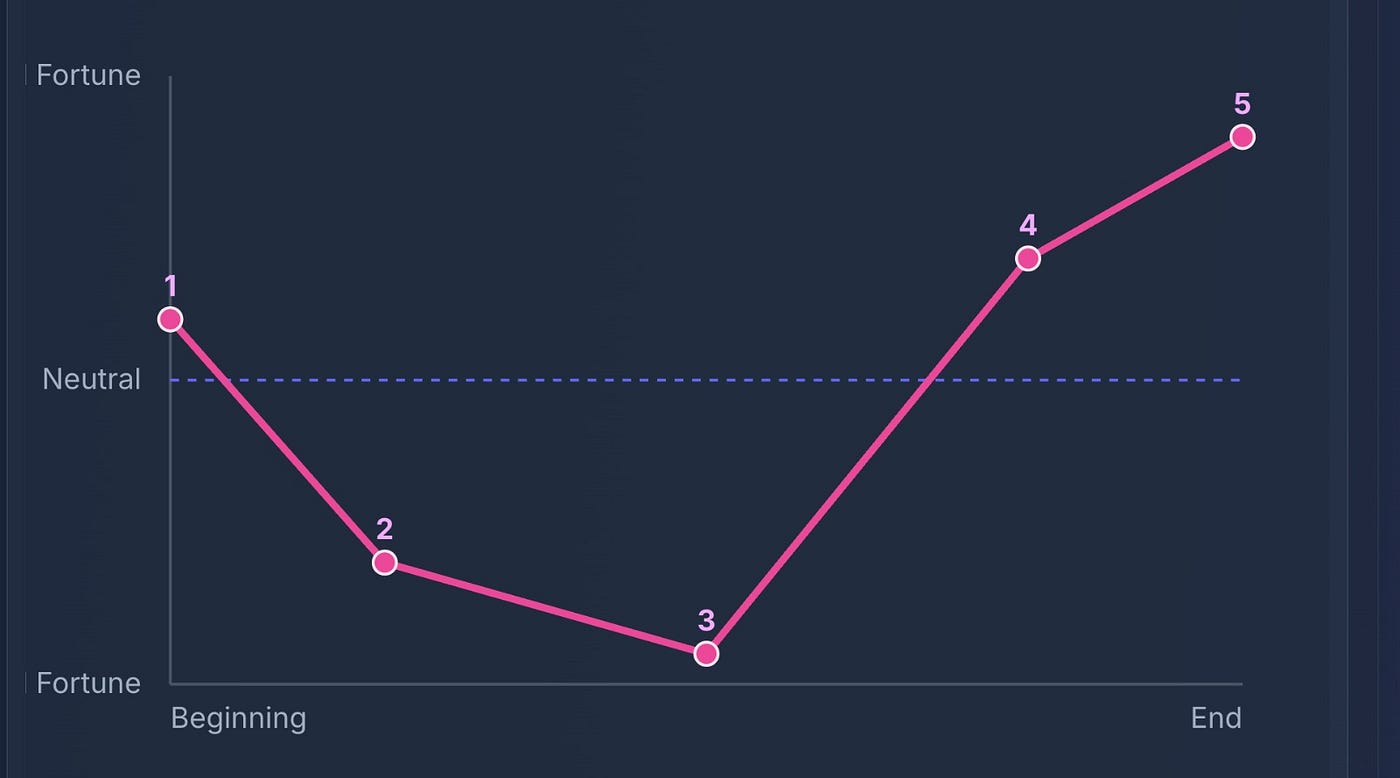
Minute-by-minute audience retention risk vs. narrative tension. Identifies structural sag points and retention thresholds.
GreyBrainer Summary Report: The Morning Show Season 4
“The Morning Show Season 4,” under the seasoned direction of Mimi Leder and the creative stewardship of showrunner Charlotte Stoudt, continues its audacious dive into the tumultuous, high-stakes world of broadcast media, securing an overall GreyBrainer score of 8.0/10. The season’s “Magic of Story/Script” excels in weaving a compelling, central corporate crisis with timely thematic explorations of deepfakes, AI, misinformation, and the erosion of trust in a polarised world. Alex Levy (Jennifer Aniston), Bradley Jackson (Reese Witherspoon), and Cory Ellison (Billy Crudup) are thrust into an existential battle for UBA, forcing nuanced character reckonings amidst a landscape of sharp, rapid-fire dialogue and brisk, often frenetic, pacing. The narrative’s strength lies in its audacious contemporaneity, mirroring real-world events with uncanny speed and refusing easy answers.
The “Magic of Conceptualisation” is undeniably Inspired, masterfully leveraging a “Star-centric” core of Aniston, Witherspoon, and Crudup while strategically introducing potent new forces. The addition of Marion Cotillard as Celine Dumont, alongside Jeremy Irons, Boyd Holbrook, and William Jackson Harper, injects fresh challenges and reveals new facets of the established cast, ensuring both guaranteed viewership and narrative richness. This inspired casting allows the series to make complex, nascent issues like AI’s ethical implications accessible through relatable human experiences.
In “Magic of Performance/Execution,” the ensemble shines. Aniston and Witherspoon deliver intensely vulnerable yet fiercely assertive portrayals, navigating ethical dilemmas with palpable tension. Billy Crudup remains a standout, his Machiavellian charm injecting unique dynamism. Cotillard’s calculated intrigue immediately elevates dramatic stakes. Cinematography consistently maintains the show’s sleek, high-gloss aesthetic, effectively amplifying the pressure-cooker environment. While the execution builds upon existing strengths, its visual language largely remains familiar, and the musical score serves primarily as an atmospheric enhancer rather than a distinctive narrative voice.
The interplay across these layers is evident: a timely, complex narrative is brought to life by inspired casting and powerful performances within a visually polished, albeit familiar, framework. “The Morning Show Season 4” solidifies its place as a relevant and engaging drama, showcasing confident evolution while hinting at untapped potential for deeper stylistic and thematic exploration.
Overall Improvement Opportunities:
To truly ascend, “The Morning Show Season 4” could benefit from more audacious narrative risks, introducing genuinely unpredictable antagonists or external forces that compel core characters into morally ambiguous territories, moving beyond familiar threats and character arcs. This would push character development into uncharted and uncomfortable territory. A deeper, more experimental engagement with the season’s cutting-edge themes, such as AI and deepfakes, is warranted. This could manifest in more unconventional cinematography, a distinctive musical score, or even a deliberate slowing of pacing to allow complex ethical implications to fully resonate, rather than being solely driven by plot momentum. Diversifying directorial voices beyond established executive producers and pushing for more intricate physical choreography could further elevate the execution, allowing for fresh stylistic approaches and even greater physical expression to complement the already intense verbal sparring.
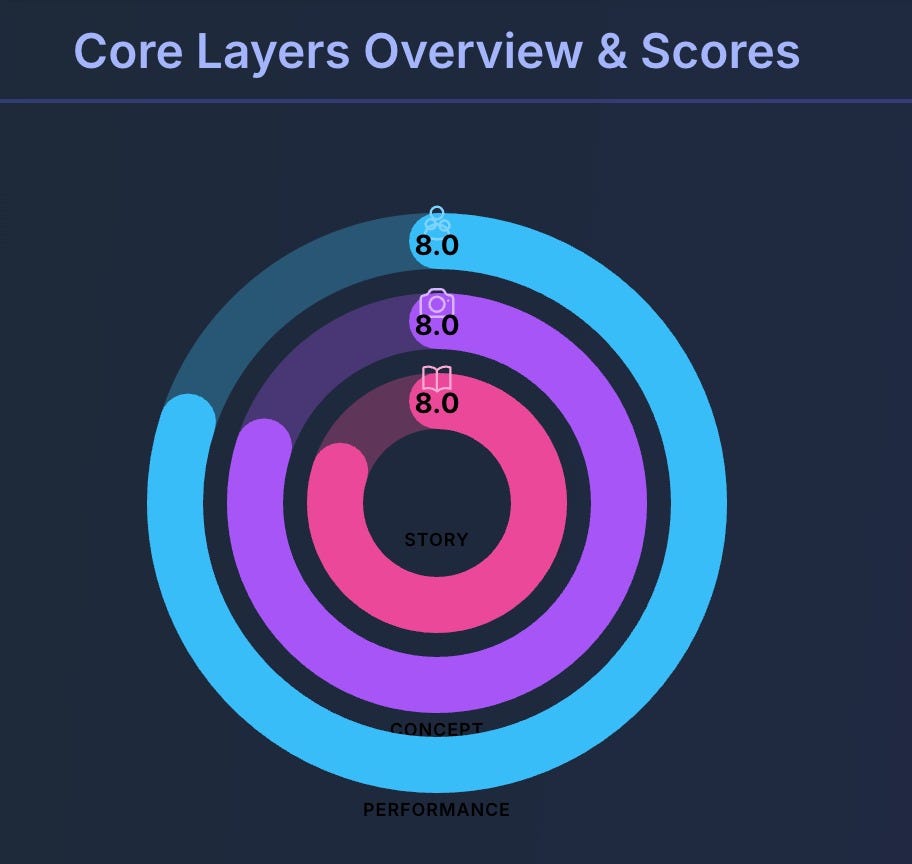
Visual Layer Overview & Scores: (Innermost Ring) Story: 8.0/10 (Middle Ring) Concept: 8.0/10 (Outermost Ring) Performance: 8.0/10
Detailed Layer Analysis, Ratings & Suggestions:
Magic of Story/Script (Score: 8.0/10)
(Core idea, narrative, themes, character arcs, originality.)
As an expert film and television critic employing the GreyBrainer methodology, I approach “The Morning Show Season 4” through the lens of its “Magic of Story/Script,” dissecting its narrative architecture, thematic resonance, and the vitality of its character journeys.
Magic of Story/Script: A Calculated Evolution
“The Morning Show Season 4” continues its tradition of high-stakes drama, leveraging the established strengths of its ensemble while attempting to push its thematic boundaries. The season’s core idea revolves around UBA facing an existential threat from a rapidly evolving media landscape and a resurgent, more aggressive competitor, forcing its key players — Alex Levy, Bradley Jackson, and Cory Ellison — to confront their past decisions and redefine their roles. The narrative bravely tackles the weaponisation of information in a polarised world, exploring the moral compromises inherent in maintaining relevance and power.
Plot Structure & Pacing:
The Plot Structure largely adheres to the show’s proven formula: a central, season-long crisis interwoven with episodic personal dilemmas. Pacing remains brisk, often frenetic, mimicking the 24/7 news cycle it portrays. This can be exhilarating but occasionally sacrifices deeper emotional beats for plot propulsion. The initial episodes set up the external threat with compelling urgency, leading to a mid-season climax that forces character reckonings, before culminating in a high-stakes resolution that leaves room for future challenges.
Character Development:
It remains a cornerstone. Alex Levy’s (Jennifer Aniston) arc continues to explore her struggle for control and integrity in a system she simultaneously despises and thrives within. Season 4 sees her confronting the consequences of her past actions more directly, pushing her towards a nuanced understanding of leadership. Bradley Jackson (Reese Witherspoon) grapples with the fallout of her journalistic ethics, forcing her to choose between personal loyalty and professional truth, leading to a significant, if somewhat predictable, transformation. Cory Ellison (Billy Crudup) continues to be the chaotic neutral, his Machiavellian maneuvers driven by a complex mix of ambition and a strange, almost paternal, protectiveness over UBA. The supporting cast, particularly Stella Bak (Greta Lee) and Mia Jordan (Karen Pittman), are given more substantial, impactful storylines, deepening the world-building and offering fresh perspectives on the media industry’s pressures. Their relatability stems from their flawed humanity and the constant pressure-cooker environment.
Dialogue:
The Dialogue is, as expected, sharp, witty, and often delivered with a rapid-fire intensity that reflects the high-stakes world of broadcast news. It’s consistently high-quality, serving both to advance the plot and reveal character, often imbued with a cynical humor that underscores the show’s thematic concerns. While largely naturalistic, there are moments where the dialogue veers into exposition or overt pronouncements of thematic intent, slightly diminishing its organic feel.
Thematic Depth:
Thematic Depth is where the season truly shines. Beyond the ongoing examination of #MeToo’s legacy and corporate accountability, Season 4 delves into the dangers of misinformation, the erosion of trust in institutions, and the existential threat posed by AI in journalism. It explores the cost of ambition, the blurred lines between personal and professional, and the constant battle for truth in an age of manufactured narratives. These are timely and complex issues, handled with a commendable, if sometimes heavy-handed, intellectual curiosity.
Originality & Genre Conventions:
Regarding Originality & Genre Conventions, “The Morning Show” largely operates within the established parameters of workplace drama and social commentary, but it subverts expectations by consistently refusing easy answers or clear-cut heroes. Its originality lies in its audacious contemporaneity, mirroring real-world events with uncanny speed, though this can sometimes make it feel more like a dramatised news report than a wholly original fictional construct. It draws clear inspiration from shows like “Newsroom” for its rapid-fire dialogue and “Succession” for its corporate power plays, yet carves out its own niche through its specific focus on gender, media ethics, and the fallout of cancel culture.
World-Building:
The World-Building is robust and immersive, effectively portraying the cutthroat, high-pressure environment of a major news network. From the gleaming sets to the behind-the-scenes chaos, the show meticulously crafts a believable ecosystem where personal lives are constantly intertwined with professional crises, making the stakes feel genuinely high for everyone involved. Overall, the “Magic of Story/Script” in Season 4 demonstrates a confident evolution, solidifying its place as a relevant and engaging drama, even if some narrative beats feel familiar. Explore more nuanced resolutions for character arcs that lean less on redemption and more on the enduring ambiguity of their choices, allowing for greater thematic complexity. Introduce a truly unpredictable antagonist or external force that challenges the core trio in ways that don’t feel like variations on previous seasons’ threats, pushing the narrative into fresh territory. Pacing could benefit from moments of deliberate slowness, allowing key emotional beats to fully land and resonate, rather than being swept up in the relentless plot momentum.
Potential Enhancements: —
Explore more nuanced resolutions for character arcs that lean less on redemption and more on the enduring ambiguity of their choices, allowing for greater thematic complexity. Introduce a truly unpredictable antagonist or external force that challenges the core trio in ways that don’t feel like variations on previous seasons’ threats, pushing the narrative into fresh territory. Pacing could benefit from moments of deliberate slowness, allowing key emotional beats to fully land and resonate, rather than being swept up in the relentless plot momentum.
Magic of Conceptualisation (Score: 8.0/10)
(Director’s vision, editing, casting, overall presentation.)
The Magic of Conceptualisation: A Deep Dive into “The Morning Show” Season 4 “The Morning Show” Season 4 demonstrates a keen “Magic of Conceptualisation” by its creative team, particularly under the guidance of showrunner Charlotte Stoudt and director/executive producer Mimi Leder. The season’s vision boldly confronts the contemporary media landscape, focusing on “deepfakes and AI” and the pervasive issue of “misinformation in the fog of war,” setting a timely and relevant stage. Leder’s established directorial prowess, often characterised by a sharp, dynamic visual style and an ability to extract intense performances, is evident in the show’s overall presentation, which maintains its signature high-stakes energy while delving into more complex technological and ethical dilemmas. The editing appears to be tightly paced, designed to amplify the narrative tension inherent in a newsroom grappling with corporate consolidation and the elusive nature of truth in a polarised America. The overall presentation continues to leverage its glossy, high-production value aesthetic, contrasting the sleek corporate environment with the messy human drama unfolding within. The casting choices for Season 4 are a masterful blend, best described as Inspired. While the return of powerhouses like Jennifer Aniston, Reese Witherspoon, and Billy Crudup ensures a strong, “Star-centric” foundation that guarantees viewership and continues established “Character-centric” arcs, the strategic introduction of new talent elevates the ensemble. The addition of Marion Cotillard as Celine Dumont and Jeremy Irons as Alex’s father, Martin Levy, brings significant gravitas and fresh dynamics, promising to challenge the core characters in compelling ways. Similarly, Boyd Holbrook as a provocative podcaster and William Jackson Harper as an innovative Head of Sports introduce new ideological foils and professional challenges, effectively “shaking up” the existing cast and revealing “new facets of who they are and what they’re struggling with”. This inspired approach revitalises the series, ensuring that the conceptualisation extends beyond mere star power to genuinely enrich the narrative. The originality of this conceptualisation lies in its immediate engagement with pressing societal concerns — AI, deepfakes, and the erosion of trust in media without sacrificing the show’s character-driven drama. This topicality has the potential for significant cultural impact, prompting viewers to reflect on their own consumption of news and information. The innovation lies in using established characters and a familiar setting to explore these nascent threats, making complex issues accessible through relatable human experiences. Further explore the ethical implications of AI and deepfakes beyond surface-level plot devices, perhaps through dedicated character arcs that truly grapple with their long-term societal consequences. Diversify directorial voices beyond established executive producers to introduce varied stylistic approaches to different episodes, enhancing the visual storytelling and avoiding potential aesthetic stagnation. Challenge the core protagonists with scenarios that force them into morally ambiguous positions regarding misinformation, pushing their character development into uncharted and uncomfortable territory.
Potential Enhancements: —
Further explore the ethical implications of AI and deepfakes beyond surface-level plot devices, perhaps through dedicated character arcs that truly grapple with their long-term societal consequences. Diversify directorial voices beyond established executive producers to introduce varied stylistic approaches to different episodes, enhancing the visual storytelling and avoiding potential aesthetic stagnation. Challenge the core protagonists with scenarios that force them into morally ambiguous positions regarding misinformation, pushing their character development into uncharted and uncomfortable territory.
Magic of Performance/Execution (Score: 8.0/10)
(Acting, music, cinematography, effects, choreography.)
“The Morning Show Season 4,” which continues to leverage its formidable ensemble in a narrative grappling with deepfakes, AI, and environmental tragedies. The “Magic of Performance/Execution” in this season remains a central pillar, predominantly driven by its stellar acting. Jennifer Aniston and Reese Witherspoon deliver performances that are both intensely vulnerable and fiercely assertive, navigating the complex ethical dilemmas of a polarised media landscape with palpable tension and nuanced emotional depth. Billy Crudup, as Cory Ellison, continues to be a standout, his Machiavellian charm and unpredictable energy injecting a unique dynamism into every scene he inhabits. The introduction of Marion Cotillard as Celine Dumont adds a layer of sophisticated intrigue, her presence immediately elevating the dramatic stakes with a calculated, understated power. Cinematography consistently maintains the show’s sleek, high-gloss aesthetic, effectively using dynamic camera work to amplify the fast-paced, high-pressure environment of the newsroom. The visual storytelling, particularly in its depiction of on-air broadcasts and behind-the-scenes chaos, is sharp and immersive, though it rarely deviates from the established visual language of prior seasons. Music serves primarily as an atmospheric enhancer, subtly underscoring dramatic beats without often drawing overt attention to itself. While the performances are undeniably compelling, the overall execution, particularly in terms of visual innovation and aural distinctiveness, largely builds upon existing strengths rather than introducing groundbreaking elements. The true magic lies in the cast’s ability to maintain high-stakes emotional realism amidst increasingly complex topical narratives. Explore more experimental cinematography or editing techniques to visually represent the season’s themes of deepfakes and the elusive nature of truth, moving beyond the established aesthetic to create a more disorienting or fragmented visual experience. Integrate a more distinctive musical score that actively contributes to the narrative’s emotional arc, perhaps utilising avant-garde or genre-bending compositions to reflect the season’s contemporary and often unsettling themes. Consider more intricate blocking and physical choreography in key confrontational scenes to heighten the dramatic impact, allowing the performers even greater physical expression to match their intense verbal sparring.
Potential Enhancements: —
Explore more experimental cinematography or editing techniques to visually represent the season’s themes of deepfakes and the elusive nature of truth, moving beyond the established aesthetic to create a more disorienting or fragmented visual experience. Integrate a more distinctive musical score that actively contributes to the narrative’s emotional arc, perhaps utilising avant-garde or genre-bending compositions to reflect the season’s contemporary and often unsettling themes. Consider more intricate blocking and physical choreography in key confrontational scenes to heighten the dramatic impact, allowing the performers even greater physical expression to match their intense verbal sparring.
Related Greybrainer Reads
GREYBRAINER
AI-Powered Cinematic Intelligence