GreyBrainer Summary Report: The Morning Show Season 3: Morphokinetics™ Narrative Pacing
Minute-by-minute audience retention risk vs. narrative tension. Identifies structural sag points and retention thresholds.
GreyBrainer Summary Report: The Morning Show Season 3
The Morning Show Season 3” emerges as a potent, if at times frenetic, cultural artifact, leveraging a powerhouse ensemble to dissect the precarious future of journalism amidst corporate greed and technological disruption. Under the overarching guidance of Mimi Leder and showrunner Charlotte Stoudt, the season plunges into the high-stakes acquisition of UBA by tech titan Paul Marks (Jon Hamm), juxtaposed with a devastating cyberattack that weaponises personal and institutional secrets. This narrative, while rooted in familiar corporate drama, distinguishes itself through an unflinching engagement with hyper-current events, making it feel both urgent and deeply relevant.
The Story/Script (8.0/10) excels in its thematic ambition, meticulously exploring the erosion of journalistic integrity, the weaponisation of information, and the complex interplay of personal ambition and professional ethics. Dialogue is consistently sharp, crackling with wit and subtext, though occasionally veering didactic in its exposition. Characters like Alex Levy (Jennifer Aniston) aggressively pursue legacy, while Bradley Jackson (Reese Witherspoon) grapples with profound moral dilemmas, often pushed by a propulsive plot that sometimes sacrifices emotional breathing room for narrative momentum. Billy Crudup’s Cory Ellison remains a deliciously chaotic force, anchoring much of the season’s Machiavellian machinations.
Conceptualisation (7.8/10) delivers a sleek, fast-paced aesthetic, characteristic of Leder’s oversight, with high production values that underscore its prestige drama aspirations. Casting is largely star-centric, yet Jon Hamm’s Paul Marks is an inspired addition, effortlessly embodying the charismatic yet sinister tech mogul. This layer successfully frames complex themes using a high-profile ensemble, even if the aesthetic homogeneity occasionally limits visual distinction between arcs, and the rapid editing can dilute character-driven moments.
The Performance/Execution (7.8/10) is consistently superb, with the cast elevating even the most melodramatic plot points. Aniston and Witherspoon deliver compelling performances, but Billy Crudup frequently steals the show with his magnetic, mercurial portrayal. Hamm and Nicole Beharie seamlessly integrate, adding fresh energy. Visually, the series maintains a “slick, glossy” look, occasionally embracing “bonkers” yet striking sequences like Alex in space, though overall visual storytelling could explore more innovative techniques.
Ultimately, “The Morning Show Season 3” is a high-budget, character-driven drama that thrives on its audacious embrace of contemporary relevance. While the rapid pacing and occasional narrative inconsistencies might demand actors to elevate the material, the interplay between a compelling, timely story and stellar performances results in a gripping, often uncomfortable, reflection of our times. Overall GreyBrainer Score: 7.9/10.
🎯 GreyBrainer Layer Analysis
The GreyBrainer methodology analyses films through three core layers:
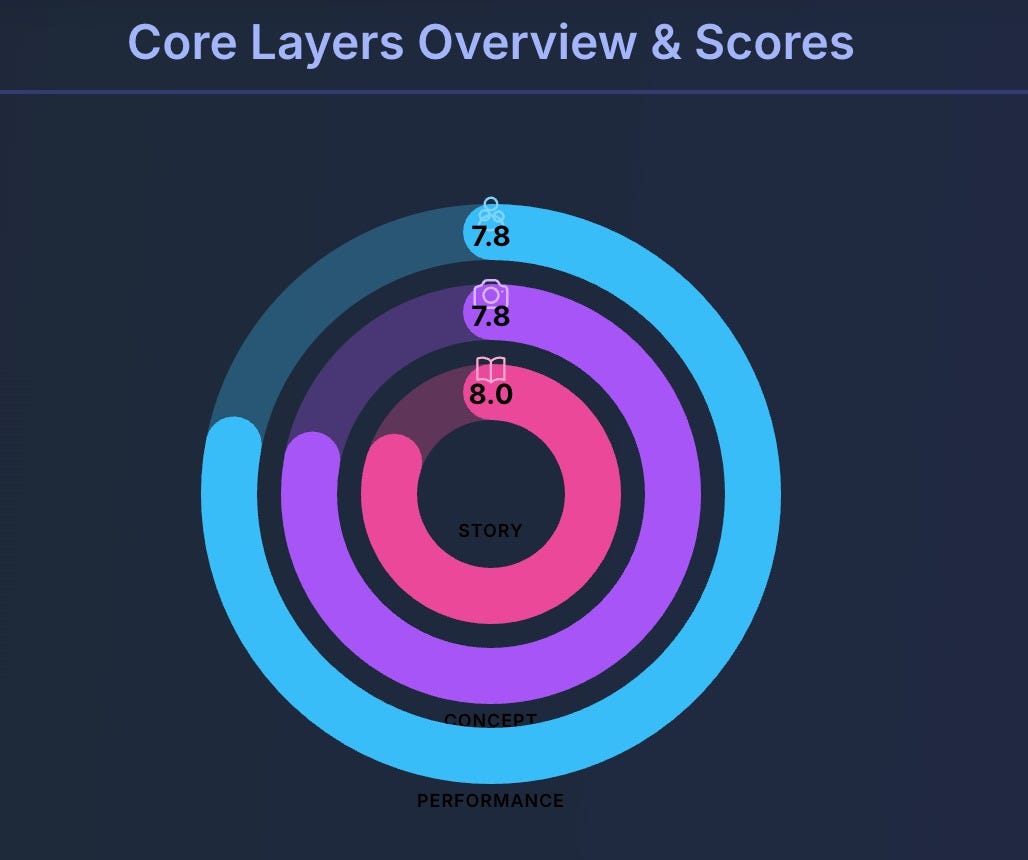
🎯 Core Ring: Magic of Story/Script — 8.0/10
Core idea, narrative, themes, character arcs, originality.
As an expert film and television critic employing the “GreyBrainer” methodology, I approach “The Morning Show Season 3” not merely as entertainment, but as a cultural artifact reflecting and shaping contemporary anxieties. This season, under the seasoned direction of showrunner Charlotte Stoudt and featuring a powerhouse ensemble including Jennifer Aniston, Reese Witherspoon, Billy Crudup, and Jon Hamm, plunges deeper into the treacherous waters of media ethics, corporate power, and the precarious future of journalism.
Magic of Story/Script The narrative core of “The Morning Show Season 3” orbits a timely and potent conflict: the attempted acquisition of the struggling UBA network by tech titan Paul Marks (Jon Hamm), juxtaposed with a devastating cyberattack that exposes the network’s deepest secrets. This premise, while rooted in familiar corporate drama tropes, gains significant traction through its acute relevance to current media landscapes, where legacy institutions battle for survival against disruptive digital forces and the constant threat of information warfare.
Plot Structure & Pacing:
The season adopts a high-stakes, propulsive plot structure, maintaining a brisk pace that rarely allows for respite. Each episode peels back layers of corporate intrigue and personal betrayal, building towards the climactic confrontation over UBA’s future. While this momentum is largely effective in sustaining viewer engagement, it occasionally sacrifices deeper character introspection for plot mechanics, pushing characters through events rather than allowing them to fully process their emotional ramifications. The cyberattack subplot, in particular, offers a masterclass in escalating tension and consequence.
Character Development:
Alex Levy (Jennifer Aniston) undergoes a significant arc, evolving from a figure seeking redemption to one aggressively pursuing control and legacy, often blurring ethical lines in her quest for power. Bradley Jackson (Reese Witherspoon) grapples with profound moral dilemmas and a deeply compromising secret, forcing her into an increasingly uncomfortable position that tests her journalistic integrity. Cory Ellison (Billy Crudup) remains a deliciously chaotic and enigmatic force, his Machiavellian machinations driven by a complex mix of loyalty, ambition, and a perverse vision for UBA. Jon Hamm’s Paul Marks is a compelling, if somewhat archetypal, tech mogul antagonist, embodying the allure and danger of unchecked power. The season effectively explores the cost of ambition and the compromises inherent in navigating high-stakes environments.
Dialogue:
The script boasts sharp, often biting dialogue, particularly in the exchanges between Alex, Bradley, and Cory. It crackles with wit and subtext, adeptly conveying power dynamics and character motivations. Conversations frequently serve multiple purposes, advancing plot, revealing character, and delivering thematic commentary with efficiency. However, in moments concerning complex technological or financial exposition, the dialogue can occasionally feel a touch too didactic, prioritising clarity over naturalism.
Thematic Depth:
Season 3 excels in its thematic ambition. It meticulously dissects the erosion of journalistic integrity in the face of corporate greed, the weaponisation of information, and the perilous intersection of personal ambition and professional ethics. The season provocatively questions the very definition of “truth” in a hyper-connected, post-truth world, exploring how secrets, both personal and institutional, become currency. Themes of cancel culture, gender dynamics in power, and the moral compromises made for survival are woven throughout, offering a complex, often uncomfortable, reflection of contemporary society.
Originality & Genre Conventions:
While operating within the established genre of workplace drama and corporate thriller, “The Morning Show Season 3” distinguishes itself by its unflinching engagement with hyper-current events. It leverages the “prestige drama” convention to explore issues of media consolidation and cyber warfare with a gravitas and immediacy that feels distinct. Its originality lies less in inventing new narrative structures and more in its bold, timely application of familiar ones to urgent societal concerns.
World-Building:
The intricate world of UBA, from its gleaming studios to its fraught executive suites, remains meticulously crafted. The season expands this world to encompass the high-tech, high-stakes realm of Silicon Valley, effectively portraying the clash of corporate cultures and the underlying power structures that govern both media and technology. The “Magic of Story/Script” in “The Morning Show Season 3” is found in its audacious embrace of contemporary relevance, crafting a narrative that feels both urgent and deeply personal. While some character beats occasionally veer into melodrama, the overarching story, its thematic depth, and the compelling performances elevate it beyond mere entertainment, positioning it as a potent commentary on our times. The season could have benefited from allowing more breathing room for the emotional fallout of its numerous crises, rather than consistently pushing the plot forward, to deepen character arcs beyond their immediate reactions. A more nuanced exploration of Paul Marks’ motivations, moving beyond the somewhat archetypal tech villain, might have added further thematic complexity to the acquisition storyline. While the dialogue is generally strong, reducing some of the more exposition-heavy corporate/tech explanations could enhance its natural flow and immersion.

💡 Enhancement Opportunities:
The season could have benefited from allowing more breathing room for the emotional fallout of its numerous crises, rather than consistently pushing the plot forward, to deepen character arcs beyond their immediate reactions. A more nuanced exploration of Paul Marks’ motivations, moving beyond the somewhat archetypal tech villain, might have added further thematic complexity to the acquisition storyline. While the dialogue is generally strong, reducing some of the more exposition-heavy corporate/tech explanations could enhance its natural flow and immersion.
🔄 Middle Ring: Magic of Conceptualisation — 7.8/10
Director’s vision, editing, casting, overall presentation.
Magic of Conceptualisation:
A High-Stakes Balancing Act “The Morning Show Season 3” demonstrates a conceptualisation that is both ambitious and, at times, overtly familiar, striving to meld high-octane drama with timely societal commentary. Mimi Leder’s directorial oversight, particularly as an executive producer, imbues the season with a consistent aesthetic of sleek, fast-paced storytelling, characterised by dynamic camera work and an almost frenetic energy that mirrors the cutthroat news environment. The editing maintains a sharp rhythm, adeptly weaving together multiple complex storylines, though occasionally sacrificing emotional depth for narrative momentum. Overall presentation remains polished, with high production values that underscore the series’ prestige drama aspirations. Regarding casting, the approach is predominantly Star-centric, yet with moments of genuine Inspired alignment. The return of Jennifer Aniston, Reese Witherspoon, and Billy Crudup anchors the series with undeniable star power, capitalising on their established appeal to draw in viewers. Their performances, particularly Billy Crudup’s as Cory Ellison, feel meticulously crafted, almost co-created with the writers, showcasing a character-centric depth that transcends mere star presence. The introduction of Jon Hamm as tech titan Paul Marks is a prime example of inspired casting; Hamm effortlessly embodies the charismatic yet potentially sinister billionaire, a role that feels both perfectly suited to his gravitas and fresh within the series’ evolving narrative. Similarly, Nicole Beharie and Stephen Fry, as new additions, bring distinct energies that enhance the ensemble without feeling gratuitous, suggesting a thoughtful blend of star power and character fit. While the reliance on big names is evident, the creative team largely succeeds in ensuring these stars are not just faces but integral, often transformative, components of the narrative. The originality of this layer lies in its consistent ability to leverage a high-profile ensemble to tackle complex, often ripped-from-the-headlines themes, even if the thematic exploration itself occasionally leans into familiar territory. The potential impact is significant, as the conceptualisation successfully frames a compelling, if sometimes melodramatic, examination of media ethics, power dynamics, and personal accountability in a rapidly changing world. Explore more varied directorial styles across episodes to prevent a sense of aesthetic homogeneity, allowing for greater visual distinction between character arcs or thematic shifts. While star-centric casting works, consider introducing more lesser-known talents in pivotal supporting roles to diversify the ensemble and offer fresh perspectives without relying solely on established appeal. Refine the editing to allow for more breathing room in key emotional beats, ensuring that the rapid narrative pace doesn’t inadvertently dilute the impact of character-driven moments.
💡 Enhancement Opportunities:
Explore more varied directorial styles across episodes to prevent a sense of aesthetic homogeneity, allowing for greater visual distinction between character arcs or thematic shifts. While star-centric casting works, consider introducing more lesser-known talents in pivotal supporting roles to diversify the ensemble and offer fresh perspectives without relying solely on established appeal. Refine the editing to allow for more breathing room in key emotional beats, ensuring that the rapid narrative pace doesn’t inadvertently dilute the impact of character-driven moments.
🌟 Outer Ring: Magic of Performance/Execution — 7.8/10
Acting, music, cinematography, effects, choreography.
“The Morning Show Season 3” continues to leverage its star-studded ensemble with a “Magic of Performance/Execution” that remains both its core strength and, at times, its most elaborate flourish. The acting is consistently a standout, with Jennifer Aniston’s Alex Levy expertly navigating crushing vulnerabilities and a moral code that constantly clashes with her ambition. Reese Witherspoon, as Bradley Jackson, delivers a performance that makes her often-contradictory character compelling, even when the writing pushes her into melodramatic territory. However, it is Billy Crudup’s magnetic portrayal of Cory Ellison that frequently steals the show, offering an edgy, mercurial executive who feels co-created with the series’ direction. His performance anchors much of the season’s business dealings and power struggles, with critics often citing him as the season’s MVP. New additions, particularly Jon Hamm as the Elon Musk-esque tech titan Paul Marks, seamlessly integrate into the dynamic, providing a sleek and impactful foil to the established cast. Nicole Beharie also makes a strong impression as Christina Hunter, bringing heart and soul to her new anchor role. Visually, the series maintains a “slick, glossy” aesthetic, often employing a stark palette of fluorescent lights and dark blues that underscores the high-stakes newsroom environment. Director Mimi Leder, an executive producer on the series, continues to shape this polished look. The opening sequence of Season 3, featuring Alex Levy in space, is a testament to the show’s willingness to embrace “bonkers” yet visually striking sequences, setting a tone for a “manic, luxurious soap opera”. While the cinematography is generally effective in conveying the show’s intense atmosphere, the music largely serves to underscore dramatic beats rather than stand out as an innovative element, though specific needle drops like “Stayin’ Alive” are used for thematic impact. The overall execution leans into its identity as a high-budget, character-driven drama, effectively managing its large cast and complex storylines, even if some plot points feel grafted onto current events rather than organically emerging from them. While the acting is superb, streamlining some character arcs, particularly for Bradley Jackson, could allow for more consistent character development and impact, rather than relying on the actors to elevate inconsistent writing. Further integration of music as a narrative device, beyond impactful singular moments, could enhance the show’s emotional depth and stylistic originality. Exploring more innovative visual storytelling techniques, perhaps moving beyond the “slick, glossy” standard, could further distinguish the series in a crowded prestige TV landscape.
💡 Enhancement Opportunities:
While the acting is superb, streamlining some character arcs, particularly for Bradley Jackson, could allow for more consistent character development and impact, rather than relying on the actors to elevate inconsistent writing. Further integration of music as a narrative device, beyond impactful singular moments, could enhance the show’s emotional depth and stylistic originality. Exploring more innovative visual storytelling techniques, perhaps moving beyond the “slick, glossy” standard, could further distinguish the series in a crowded prestige TV landscape.
🚀 Overall Enhancement Opportunities
Refine the narrative pacing to allow for greater emotional resonance, ensuring character arcs deepen beyond immediate reactions rather than being solely driven by plot mechanics. This would enable the superb cast to explore more nuanced internal struggles and consequences. Diversify the show’s aesthetic and narrative approach by exploring more varied directorial styles and innovative visual storytelling. This could break the “slick, glossy” homogeneity, offering richer visual distinction and enhancing the emotional impact of key character moments. Further integrate music as a more deliberate narrative device, moving beyond mere underscoring or impactful needle drops. This would allow for a deeper emotional tapestry and a more distinct stylistic originality, complementing the sharp dialogue and intense atmosphere.
This analysis was generated using GreyBrainer AI, a comprehensive movie review methodology that evaluates films through multiple analytical layers.
Methodology Note: GreyBrainer uses a three-layer concentric analysis approach: - Core (Story): Narrative foundation, themes, character development - Middle (Conceptualisation): Director’s vision, editing, casting decisions -** Outer (Performance):** Acting, cinematography, music, technical execution
Related Greybrainer Reads
GREYBRAINER
AI-Powered Cinematic Intelligence