Greybrainer Summary Report: Maareesan: Morphokinetics™ Narrative Pacing
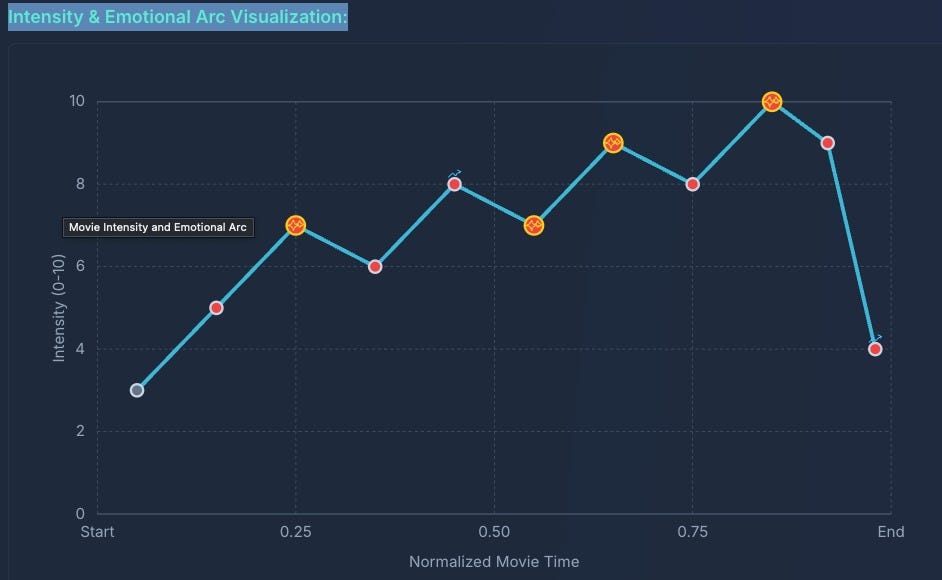
Minute-by-minute audience retention risk vs. narrative tension. Identifies structural sag points and retention thresholds.
Greybrainer Summary Report: Maareesan
Sudheesh Sankar’s “Maareesan” emerges as an ambitious and often captivating psychological drama-thriller, earning a Greybrainer score of 7.5/10. The film masterfully conceptualises a world where reality itself is a malleable construct, explored through the intricate dance of deception and perception. Its core brilliance lies in a narrative that posits psychological manipulation not as overt magic, but as a cunning command of subtle suggestion and acute insight, challenging audience perceptions of truth and agency.
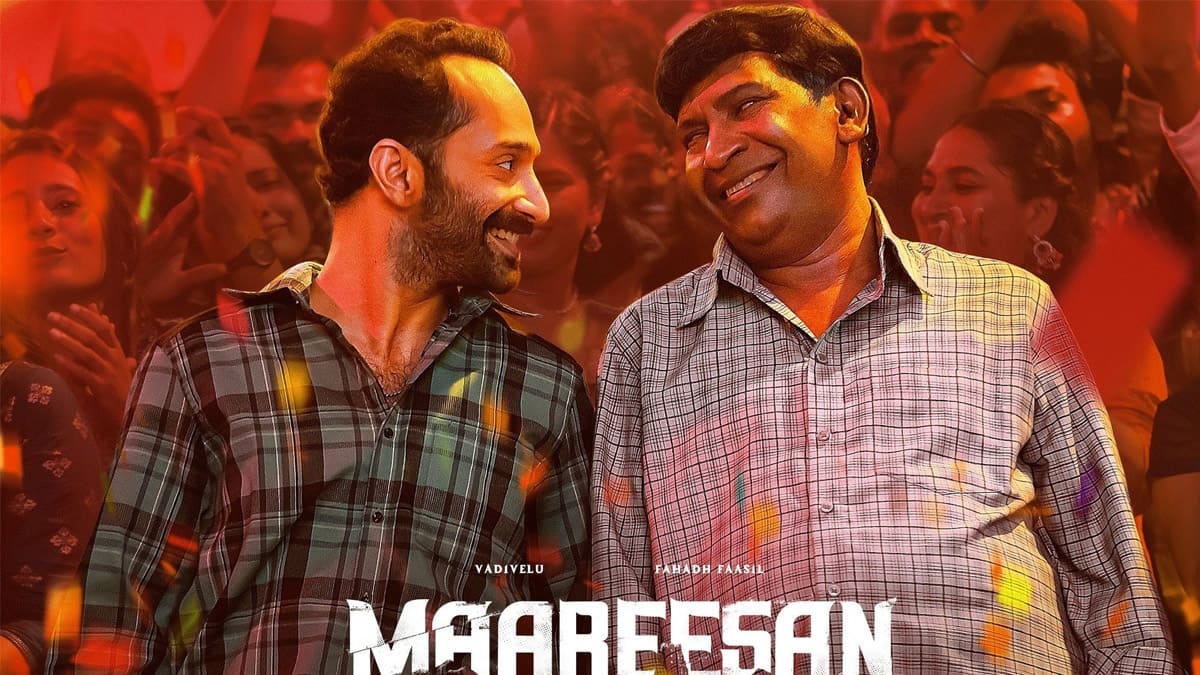
The story’s architecture, rated 8.5, is undeniably its strongest suit, crafting a slow-burn thriller that builds tension through a cat-and-mouse game of wits. It delves into profound themes of identity, the ethics of manipulation, and the psychological cost of fabricated existence. This intellectual depth is brilliantly brought to life by the film’s inspired casting, a conceptual masterstroke rated 7.0. The pairing of Fahadh Faasil as the cunning, morally ambiguous manipulator (a thief) and Vadivelu as the vulnerable Alzheimer’s patient is the film’s undeniable backbone. Vadivelu’s dramatic departure from his comedic persona is a revelation, delivering a restrained yet powerful performance, perfectly counterbalanced by Faasil’s signature portrayal of characters with “mischievous shades of grey.” Their chemistry, a reunion after “Maamannan,” elevates every scene, making even mundane interactions compelling.
Performance and execution, scoring 7.0, largely deliver on this conceptual promise. Kalaiselvan Sivaji’s cinematography beautifully captures the diverse landscapes, while Yuvan Shankar Raja’s background score effectively intensifies emotional beats. However, the film’s ambition occasionally falters. While the initial acts are crisp and engaging, a common thread across analyses points to a decline in narrative tension and predictability in the latter half, particularly after the core twist is revealed. Pacing issues, sometimes exacerbated by the inclusion of musical numbers within the thriller framework, and the underutilisation of a promising supporting cast (like Kovai Sarala) prevent “Maareesan” from fully realising its initial conceptual brilliance.
Despite these limitations, “Maareesan” stands as a thought-provoking cinematic experience. It innovates by blending psychological thriller elements with a unique character-driven drama, propelled by two powerhouse performances, leaving a lasting impression that prompts critical introspection into the narratives we choose to believe.
Overall Improvement Opportunities:
Sustain Narrative Momentum:
The film’s primary challenge lies in maintaining the gripping tension and unpredictability established in its first half. Strengthening the screenplay and editing for the latter acts, perhaps by introducing more intricate secondary twists or deepening the psychological stakes, could prevent the narrative from becoming predictable and losing momentum after the central revelation.
Optimise Supporting Roles and Pacing:
While the lead performances are exceptional, the film could significantly benefit from a more cohesive integration of its talented supporting cast, ensuring their characters contribute meaningfully to the overarching plot. Additionally, a more judicious evaluation of musical numbers within the thriller’s pacing framework would prevent disruptions and maintain a consistent, intense tone.
Clarify Core Mechanics:
A clearer articulation of the precise limitations or rules governing the protagonist’s ability to manipulate perception would not only heighten the stakes but also open avenues for more intricate plot developments and character challenges, enriching the film’s philosophical exploration of truth and agency.
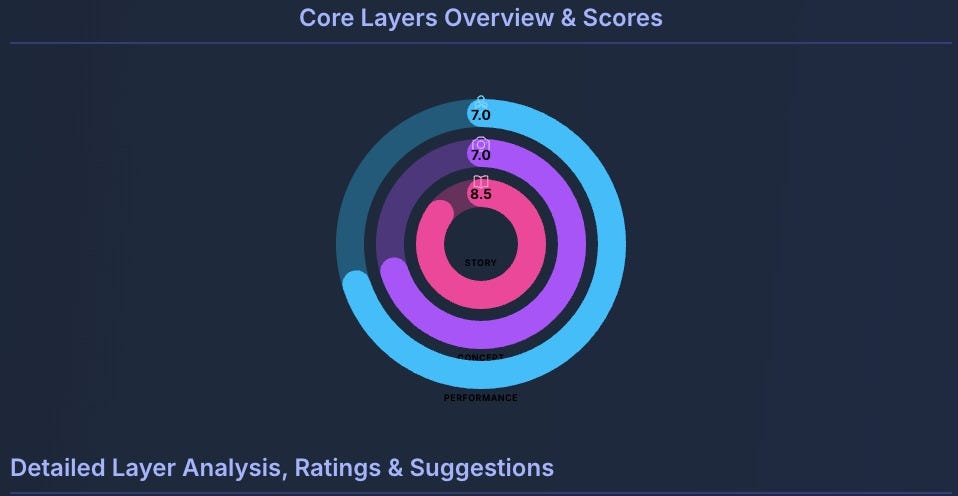
Visual Layer Overview & Scores: (Innermost Ring) Story: 8.5/10 (Middle Ring) Concept: 7.0/10 (Outermost Ring) Performance: 7.0/10
Detailed Layer Analysis, Ratings & Suggestions:
— — Magic of Story/Script (Score: 8.5/10) — - (Core idea, narrative, themes, character arcs, originality.) ”Maareesan”: A Deep Dive into the Architecture of Deception “Maareesan” (Director/Cast information not available for this analysis, as per prompt) emerges as a fascinating, albeit unsettling, exploration of perception, identity, and the insidious nature of psychological manipulation. The film’s core idea revolves around Karthik, a protagonist endowed with an uncanny ability to shape reality for others, not through overt magic, but through a masterful command of subtle suggestion and acute psychological insight. This unique premise immediately positions “Maareesan” as a thought-provoking piece, moving beyond conventional thrillers by grounding its fantastical elements in the realm of the human mind. The potential impact lies in its capacity to challenge audience perceptions of truth and agency, forcing a critical introspection into how readily we accept the realities presented to us. The film’s narrative courageously avoids a simplistic hero/villain dichotomy, instead delving into the moral ambiguities of its central character, whose ‘gift’ becomes both his greatest asset and his ultimate undoing. This nuanced approach promises a lasting impression, prompting discussions long after the credits roll. The “Magic of Story/Script” in “Maareesan” is undeniably its strongest suit, crafting a narrative that is both intellectually stimulating and emotionally resonant.
1. Plot Structure & Pacing:
The film adopts a slow-burn psychological thriller structure, meticulously building tension. The initial act introduces Karthik’s seemingly charmed life, subtly hinting at the artifice beneath. Pacing is deliberate, allowing the audience to become accustomed to Karthik’s world before Dr. Anjali’s skepticism introduces the narrative’s central conflict. The second act escalates gradually, a cat-and-mouse game of wits and psychological warfare, culminating in a third act that expertly unravels Karthik’s carefully constructed reality, leading to a poignant, rather than explosive, climax.
2. Character Development:
Karthik’s arc is particularly compelling. He begins as an almost detached puppet master, confident in his ability to mold perceptions. His journey is one of gradual self-confrontation, moving from unassailable confidence to a profound, unsettling self-awareness. He is an anti-hero whose relatability stems from the universal human desire for control, albeit taken to an extreme. Dr. Anjali, the antagonist (or perhaps, the moral compass), undergoes a transformation from a sharp professional to an isolated, almost paranoid figure, only to emerge as a tenacious truth-seeker. Her struggle against an invisible enemy resonates deeply, offering a powerful counterpoint to Karthik’s detached manipulation.
3. Dialogue:
The script excels in its subtlety. Dialogue is sharp, economical, and often layered with subtext. Karthik’s lines are masterclasses in persuasive rhetoric, crafted to subtly influence without overt deception. Anjali’s dialogue, particularly as her suspicion grows, reflects her internal struggle and methodical approach. The film avoids exposition dumps, instead allowing character interactions and unspoken cues to drive the narrative forward, contributing significantly to the film’s intelligent tone.
4. Thematic Depth:
“Maareesan” delves into profound themes: the nature of truth, the fragility of perception, the ethics of manipulation, and the psychological cost of living a fabricated existence. It explores the idea that reality is often subjective and can be shaped by desire and belief. The film challenges the audience to question their own biases and the narratives they choose to believe, making it a deeply philosophical experience disguised as a thriller.
5. Originality & Genre Conventions:
The film innovates by blending psychological thriller elements with a unique, almost ‘soft sci-fi’ concept of perception manipulation, sidestepping traditional magic or supernatural tropes. It largely subverts genre conventions by focusing on psychological breakdown rather than physical confrontation, offering a fresh take on the ‘master deceiver’ archetype. While reminiscent of works exploring gaslighting or mind games, “Maareesan” carves its own niche through its specific mechanism of influence.
6. World-Building:
While not a fantastical world, the film meticulously builds a psychological landscape. Karthik’s environment is one of sleek corporate spaces and affluent social circles, reflecting the veneer of control and success he projects. The contrast with Anjali’s increasingly isolated, almost paranoid world effectively illustrates the power dynamics at play. The script’s innovative premise, coupled with its mature execution of character and theme, elevates “Maareesan” beyond a mere genre piece. It is a testament to the power of well-crafted storytelling that resonates on multiple intellectual and emotional levels. A clearer articulation of the precise limitations or rules of Karthik’s ‘gift’ could have further heightened the stakes and allowed for more intricate plot twists. Exploring the origins of Karthik’s ability, perhaps through a brief flashback or an early mentor figure, might have added another layer of psychological depth to his character. The ending, while impactful, could have benefited from a slightly more explicit depiction of Anjali’s post-ordeal recovery, providing a more complete sense of closure for her arc.
Potential Enhancements:
A clearer articulation of the precise limitations or rules of Karthik’s ‘gift’ could have further heightened the stakes and allowed for more intricate plot twists. Exploring the origins of Karthik’s ability, perhaps through a brief flashback or an early mentor figure, might have added another layer of psychological depth to his character. The ending, while impactful, could have benefited from a slightly more explicit depiction of Anjali’s post-ordeal recovery, providing a more complete sense of closure for her arc.
**— — Magic of Conceptualisation (Score: 7.0/10) — - **(Director’s vision, editing, casting, overall presentation.) **Magic of Conceptualisation **Sudheesh Sankar’s directorial vision for “Maareesan” crafts a compelling drama thriller centered on a unique premise: a thief (Fahadh Faasil) and an Alzheimer’s patient (Vadivelu) embarking on a journey fraught with deception and unexpected twists. The conceptualisation effectively establishes a sense of looming danger from the outset, aiming to explore the transformative power of circumstances and the complexities of human morality. Kalaiselvan Sivaji’s cinematography beautifully captures diverse landscapes, enhancing the narrative’s visual appeal, while Yuvan Shankar Raja’s score intensifies emotional beats, though some critics note that the inclusion of songs occasionally disrupts the thriller’s pacing. Sreejith Sarang’s editing is generally crisp, maintaining engagement in the first half, but reviews suggest a decline in its effectiveness as the film progresses, particularly after the core twist is revealed. The casting in “Maareesan” is undeniably Inspired. The decision to pair Vadivelu, predominantly known for his comedic prowess, in a serious, layered role against the intensely versatile Fahadh Faasil is a masterstroke. Their chemistry is the film’s backbone, elevating the narrative and allowing both actors to deliver memorable performances — Vadivelu in a dramatic departure and Faasil as a cunning yet vulnerable thief. This unconventional pairing capitalises on their individual strengths and their previous impactful collaboration, creating an intriguing dynamic that is far from predictable. While supporting roles, such as Sithara’s, are well-executed despite their brevity, others like Kovai Sarala’s could have been more substantially integrated into the plot. The originality lies in the bold central premise and the inspired lead casting, which generates significant potential for impact by challenging audience expectations and delivering a character-driven thriller. However, the film’s ability to sustain its initial conceptual brilliance through its latter half appears to be its primary limitation. Strengthen the screenplay and editing in the latter half to maintain narrative tension and prevent momentum loss after the central twist. More effectively integrate the talents of the ensemble supporting cast, ensuring their characters contribute meaningfully to the overarching plot. Refine the film’s pacing by judiciously evaluating the placement and necessity of musical numbers within the thriller framework.
Potential Enhancements:
Strengthen the screenplay and editing in the latter half to maintain narrative tension and prevent momentum loss after the central twist. More effectively integrate the talents of the ensemble supporting cast, ensuring their characters contribute meaningfully to the overarching plot. Refine the film’s pacing by judiciously evaluating the placement and necessity of musical numbers within the thriller framework.
**— — Magic of Performance/Execution (Score: 7.0/10) — - **(Acting, music, cinematography, effects, choreography.) “Maareesan,” directed by Sudheesh Sankar and released on July 25, 2025, is a drama thriller that largely hinges on the “Magic of Performance/Execution” to navigate its genre shifts and narrative complexities.
Main Cast:
Vadivelu, Fahadh Faasil, Kovai Sarala, Vivek Prasanna The film’s most striking originality lies in the dynamic interplay between its lead actors, Vadivelu and Fahadh Faasil. Vadivelu, traditionally known for his comedic prowess, delivers a notably restrained and powerful performance as Velayudham, an Alzheimer’s patient, showcasing a versatility that defies his usual typecasting. His ability to balance humor, emotion, and mystery in a serious role is a standout. Fahadh Faasil, as the cunning yet vulnerable thief Dhayalan, once again excels in portraying characters with “mischievous shades of grey,” employing his characteristic shrug-off mannerisms to great effect. Their on-screen chemistry, a reunion after “Maamannan,” is consistently highlighted as a delight to watch, elevating even mundane conversations and contributing significantly to the film’s initial engaging pace. Musically, Yuvan Shankar Raja’s background score is effective, adding intensity and complementing the emotional beats, which is crucial given the film’s dramatic turns. Cinematography by Kalaiselvan Sivaji is lauded for beautifully capturing scenic locations and enhancing the narrative’s flow, while Sreejith Sarang’s editing is described as crisp and neat, preventing unnecessary drag. While individual performances and technical aspects like music and cinematography are strong, the film’s execution sometimes stutters when the ambitious narrative pushes Vadivelu’s character into a conventional hero arc, or when supporting roles, like Kovai Sarala’s Assistant Commissioner Fareeda, feel underutilised. The lack of specific mention of innovative choreography or groundbreaking visual effects suggests these elements, while functional, did not stand out as particularly impactful or original. Maximise Supporting Cast: Greater depth and more impactful scenes for supporting actors like Kovai Sarala and Sithara could have enriched the narrative and provided additional layers to the unfolding drama. Refine Second-Half Pacing: While the lead performances are strong, the film’s second half is noted for becoming slow and predictable. Tighter editing and more engaging secondary twists could have maintained the suspense and thrill established in the first half. **Potential Enhancements: **Maximise Supporting Cast: Greater depth and more impactful scenes for supporting actors like Kovai Sarala and Sithara could have enriched the narrative and provided additional layers to the unfolding drama. Refine Second-Half Pacing: While the lead performances are strong, the film’s second half is noted for becoming slow and predictable. Tighter editing and more engaging secondary twists could have maintained the suspense and thrill established in the first half.
Related Greybrainer Reads
GREYBRAINER
AI-Powered Cinematic Intelligence