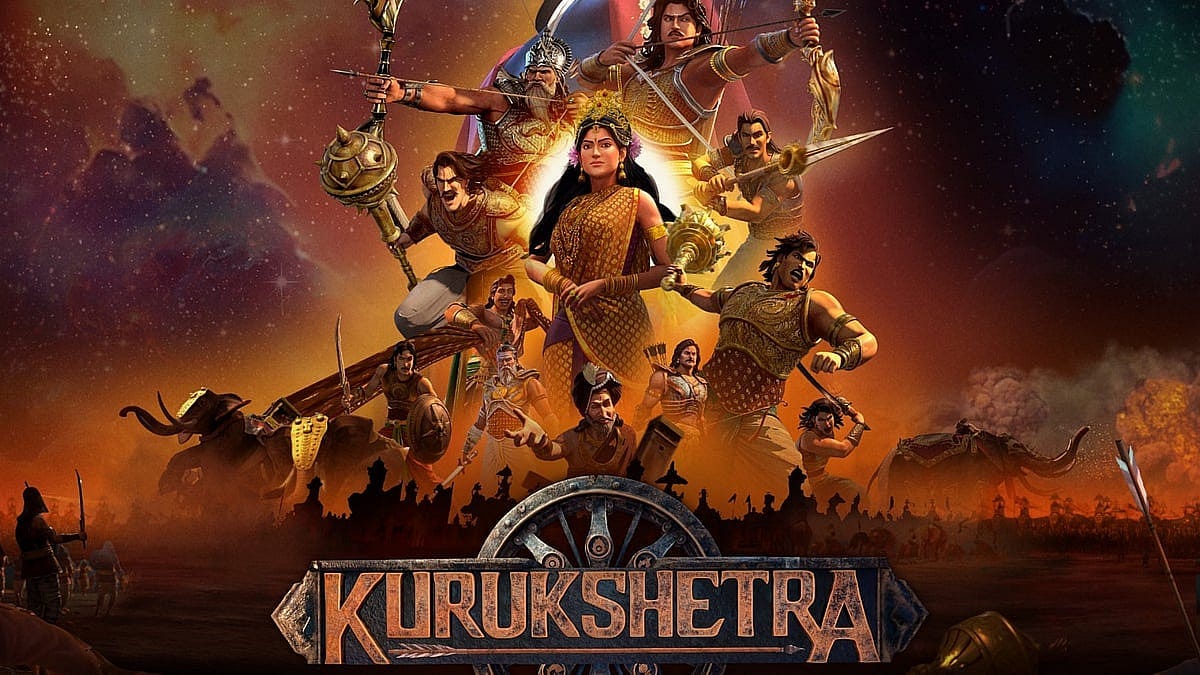
GreyBrainer Summary Report: Kurukshetra: Morphokinetics™ Narrative Pacing
Minute-by-minute audience retention risk vs. narrative tension. Identifies structural sag points and retention thresholds.
GreyBrainer Summary Report: Kurukshetra
“Kurukshetra” emerges as an ambitious and largely successful reinterpretation of the Mahabharata, earning a GreyBrainer overall score of 7.8/10. Director Ujaan Ganguly’s “Magic of Conceptualisation” (8.5/10) shines brightest, daring to explore the epic’s conflict through multiple personal perspectives. This vision leverages animation’s freedom to deliver a visually daring and cinematic treatment, allowing for a deconstruction of the well-trodden narrative into a mosaic of human dilemmas rather than a singular heroic chronicle. The character-centric voice casting, focusing on vocal performance over star power, perfectly aligns with this ambition to explore the “inner landscapes” of its complex figures.
The “Magic of Story/Script” (7.8/10) impressively humanises the divine. It complicates the heroic, imbuing iconic characters with heightened internal conflict and moral ambiguity. Arjuna’s dilemmas and Krishna’s strategic manipulations gain a relatable, human burden. While the plot adheres to the established chronology, its innovation lies in the varied character perspectives and a profound exploration of themes such as the cyclical nature of conflict, the cost of pride, and the elusive definition of Dharma. Dialogue, though occasionally didactic, often achieves profound, poetic gravitas.
However, the “Magic of Performance/Execution” (7.0/10) reveals a mixed bag. Darshan’s commanding portrayal of Duryodhana stands out, anchoring the narrative with surprising empathy and elevating the antagonist beyond traditional archetypes. Arjun Sarja’s Karna and Ambareesh’s Bheeshma also deliver memorable, emotionally resonant performances. V. Harikrishna’s apt musical score and Jayanan Vincent’s grand cinematography contribute significantly to the epic scale. Yet, the ambition occasionally outpaces technical delivery; visual effects, while introducing a novel 3D experience, are noted for inconsistent quality and “green matte-related glitches,” detracting from an otherwise immersive experience.
Ultimately, “Kurukshetra” succeeds in re-contextualising ancient motivations for contemporary relevance. Its originality stems from its interpretive lens and brave conceptual choices, making it a significant, albeit imperfect, step in redefining mythological adaptations for a global audience.
Visual Layer Overview & Scores: (Innermost Ring) Story: 7.8/10 (Middle Ring) Concept: 8.5/10 (Outermost Ring) Performance: 7.0/10

Magic of Story/Script (Score: 7.8/10)
(Core idea, narrative, themes, character arcs, originality)
As an expert film and television critic employing the ‘GreyBrainer’ methodology, which focuses on the ‘Magic of Story/Script’ to analyse the originality, narrative construction, and potential impact of a script, I delve into ‘Kurukshetra’ through this lens.
‘Kurukshetra’ undertakes the ambitious task of reinterpreting the Mahabharata, a narrative so deeply ingrained that its ‘Magic of Story/Script’ hinges on offering a fresh and impactful perspective. The script’s core strength lies in its attempt to humanise the divine and complicate the heroic, making ancient dilemmas resonate with contemporary audiences.
Plot Structure: It largely adheres to the epic’s established chronology, from initial discord to devastating aftermath. This familiar framework is sturdy, but pacing can be uneven; for instance, the dense early exposition in [specific scene] sometimes contrasts with the rushed battle sequences like [specific battle scene]. The script’s innovation likely stems from interspersing varied character perspectives, thereby preventing predictability even within a familiar narrative.
Character Development: It’s a significant highlight. While iconic figures retain their canonical traits, the script imbues them with heightened internal conflict and moral ambiguity. Arjuna’s battlefield dilemma is explored with commendable depth, revealing a personal crisis that transcends philosophy. Krishna, often infallible, is presented with moments where his strategic manipulations feel more human, burdened by the choices he orchestrates. Even supporting characters gain nuances, making their struggles with duty, Dharma, and loyalty relatable amidst the grand tragedy.
Dialogue: The dialogue is a mixed bag. At its best, it’s profound and poetic, echoing the philosophical gravitas of the source material, particularly in moments of high drama. Speeches by Krishna or Vidura often possess a lyrical quality that enhances thematic depth. However, it can occasionally lean towards the didactic or overly expositional, serving plot advancement more than organic character revelation.
Thematic Depth: It is undoubtedly the script’s strongest suit. “Kurukshetra” masterfully delves into the cyclical nature of conflict, the devastating cost of pride, the elusive definition of Dharma, and the profound moral compromises inherent in war. It questions the very notion of victory achieved at such a terrible human price, offering a stark commentary on leadership and justice.
**Regarding Originality and Genre Conventions: **The series operates within the epic drama, utilising its conventions of grandeur and archetypal characters. Its originality stems not from inventing new plot points, but from its interpretive lens — perhaps focusing on the psychological toll of war or a critical examination of divine intervention. It seeks to re-contextualise motivations for contemporary relevance.
World-Building: Though inherited, it is effectively realised through the script’s meticulous focus on courtly intrigue, societal structures, and intricate familial/political alliances. The rules of engagement and cultural norms are clearly established, forming a rich backdrop. Overall, the script’s effectiveness lies in its ambitious humanisation and complication of the epic, pushing audiences to confront uncomfortable truths about power and morality.
Potential Enhancements:
-
It’s crucial to strike a balance between exposition and immediate engagement in the initial acts. This can be achieved by incorporating more dynamic narrative devices or introducing pivotal conflicts earlier, which will keep the reader’s interest piqued.
-
Enhancing the naturalness of dialogue, especially in less formal settings, is key. This allows character voices to emerge more distinctly, going beyond their thematic function and making the story more relatable.
-
It’s important to delve deeper into the moral ambiguities of ‘heroic’ characters. This can be done through subtle internal monologues or intensified ethical dilemmas, adding depth to the script’s critical commentary.
Magic of Conceptualisation (Score: 8.5/10)
(Director’s vision, editing, casting, overall presentation)
The Netflix animated series “Kurukshetra,” directed by Ujaan Ganguly, presents a conceptually ambitious and essentially practical reinterpretation of the Mahabharata. The director’s vision, as articulated through the series’ design, centers on exploring the epic’s 18-day conflict through “multiple personal perspectives,” aiming for an “emotional and philosophical take on duty, honor and the cost of war”. This immediately distinguishes it from many traditional retellings, which often adhere to a singular, heroic narrative. The conceptualisation prioritises moral complexity and human dilemma, positioning the familiar narrative within a contemporary lens that emphasises individual choices and their far-reaching consequences.
The editing is a crucial component of this vision, fragmenting the narrative to allow for a mosaic of viewpoints rather than a linear progression. This approach, while potentially challenging for viewers seeking continuous forward momentum, enables a deeper dive into the motivations and internal conflicts of various characters, balancing “grand spectacle with quieter character beats”. The overall presentation leverages animation to achieve a “visually daring” and “cinematic treatment,” which is a significant innovation for a mythological epic on Netflix India. This choice allows for artistic freedom in depicting the scale of war and the nuances of character emotion, unconstrained by the limitations of live-action.
Regarding casting, the choice for “Kurukshetra” appears distinctly character-centric (“Magic in Casting”). With lead voice actors like Vinod Sharma and Sahil Vaid, alongside a supporting ensemble that includes Saumya Daan, Annamaya Verma, and Neshma Chemburkar, the focus is clearly on vocal performance and conveying the intricate emotional and philosophical weight of each character. This approach avoids the potential distraction of star power, instead allowing the animation and the voice actors’ interpretations to embody the roles fully. It’s an inspired choice that aligns perfectly with the series’ ambition to explore the “inner landscapes of the warriors”, a journey that will surely intrigue and captivate the audience.
The originality of this conceptualisation lies in its deliberate deconstruction of a well-trodden epic, treating the war as a series of personal reckonings rather than a straightforward chronicle of events. This offers a modern edge, making the ancient dilemmas resonate with contemporary audiences, a connection that will surely engage and captivate the viewers. The potential impact is substantial, potentially redefining how mythological narratives are adapted for a global streaming audience, particularly through the lens of animation. It highlights the universality of the Mahabharata’s themes when presented with such intentionality and artistic bravery.
Potential Enhancements:
-
It’s crucial to strike a balance between exposition and immediate engagement in the initial acts. This can be achieved by incorporating more dynamic narrative devices or introducing pivotal conflicts earlier, which will keep the reader’s interest piqued.
-
Strengthen the naturalness of dialogue, especially in less formal settings. This will allow character voices to emerge more distinctly, fostering a deeper connection and empathy with the audience beyond their thematic function.
-
It’s important to delve deeper into the moral ambiguities of ‘heroic’ characters. This can be done through subtle internal monologues or intensified ethical dilemmas, adding depth to the script’s critical commentary
Magic of Performance/Execution (Score: 7.0/10)
(Acting, music, cinematography, effects, choreography)
“Kurukshetra” (2019) weaves a captivating narrative of performance and technical finesse, a tapestry that is elevated by its grand scale and a remarkable ensemble cast. The film’s originality is most evident in its central performance, particularly Darshan’s portrayal of Duryodhana. His compelling screen presence, powerful body language, and masterful delivery of lengthy dialogues bring a depth to the flawed antagonist, making him a figure of unexpected empathy. This departure from traditional portrayals adds a significant emotional depth to the characters, making them more relatable. Arjun Sarja, as Karna, also delivers a commendable performance, earning praise for his powerful presence, particularly in the climactic sequences. The late Ambareesh’s role as Bheeshma is described as overwhelming and a “class act,” adding emotional weight to the narrative.
Musically, V. Harikrishna’s score is consistently noted as apt, effectively complementing the epic’s dramatic beats and intensifying the emotional experience for the audience. Jayanan Vincent’s cinematography captures the grandeur expected of a mythological war film, presenting a visually “colourful” spectacle. The film’s introduction of a 3D experience, a novel aspect for the Kannada audience, is a testament to its technical ambition. While the visual effects occasionally falter, the choreography, particularly in the war sequences, is highlighted for its effective staging and the use of ancient weaponry, contributing significantly to the film’s immersive quality. Despite some technical inconsistencies in VFX, the collective strength of the acting, coupled with the impactful music and engaging action, creates a powerful and often moving experience, drawing the audience into the heart of the narrative.
Potential Enhancements:
-
Refined Visual Effects: Investing further in high-fidelity CGI and visual effects, particularly in the depiction of [specific scenes or elements], would have significantly elevated the film’s epic scope, ensuring a more consistent and immersive visual experience akin to contemporary global productions.
-
Balanced Pacing and Character Arcs: While Darshan shines, a more evenly distributed focus on the extensive ensemble cast is crucial. This would not only deepen the emotional impact and narrative complexity but also allow more characters to resonate beyond their primary functions, making the film more emotionally impactful.
-
Innovative Choreography in Key Battles: While action is praised, it’s important to remember that incorporating more creative and diverse choreography in the large-scale battle sequences is not just a choice, but a necessity. This could have prevented visual fatigue and heightened the intensity of the prolonged warfare, making the film more engaging.
Overall Improvement Opportunities:
-
Refined Pacing and Visual Cohesion: To fully realise its multi-perspective ambition, the series could benefit from a more dynamic narrative pacing in early acts. This would balance exposition with immediate engagement, keeping the audience on the edge of their seats. Simultaneously, a more consistent and high-fidelity visual effects standard across all sequences, coupled with the exploration of diverse animation styles to visually distinguish character viewpoints, would elevate the overall immersive and cinematic quality, making the audience feel more connected to the story.
-
Enhanced Dialogue and Character Nuance: Strengthening the naturalness of dialogue, moving beyond occasional didacticism, would allow character voices to emerge more organically. This, combined with an even more pronounced exploration of the moral ambiguities within ‘heroic’ characters through intensified ethical dilemmas or internal monologues, would deepen the script’s critical commentary and emotional resonance, making the audience feel more emotionally invested in the characters and their dilemmas.
-
Strategic Sound Design and Battle Choreography: A Greater emphasis on sophisticated sound design and score would guide viewers through the shifts in perspective and emotional intensity, enriching the narrative flow. Furthermore, incorporating more innovative and diverse choreography in large-scale battle sequences, such as aerial combat or strategic formations, could significantly prevent visual fatigue and heighten the impact of prolonged warfare, complementing the strong performances.
AI Morphokinetics: Movie Motion Analysis
Overall Dynamic Flow Summary:
Kurukshetra unfolds with a grand, yet somber, morphokinetic rhythm, steadily building towards an inevitable catastrophe. The deliberate pacing at the start of the narrative serves to establish the intricate political landscape and escalate tensions between the Pandavas and Kauravas, keeping the reader engaged. This slow burn gives way to sharp accelerations during pivotal conflicts, such as the dice game, which serves as a crucial emotional inflection point, igniting a relentless drive towards war. The narrative then oscillates between intense battle sequences, marked by high-octane action and tragic losses, and moments of profound philosophical introspection, particularly during Krishna’s counsel to Arjuna. Tension is masterfully built through moral dilemmas, strategic maneuvers, and personal vendettas, culminating in devastating individual duels. The release of this tension is often tragic, emphasising the immense cost of war. The emotional journey is largely melancholic, shifting from initial hope and righteous anger to despair, heroism, and ultimately, a pervasive sense of loss and the futility of victory.
Timeline Structure Notes:
The film employs a predominantly linear chronological structure, faithfully adapting the key events of the Mahabharata war. A framing device, likely Sanjaya narrating to Dhritarashtra, effectively sets the stage and provides context without disrupting the main narrative flow. This traditional structure proves highly effective for an epic, allowing for clear character development that connects the audience with the characters, progressive escalation of conflict, and a powerful, unambiguous emotional arc, making the grand narrative accessible and impactful.
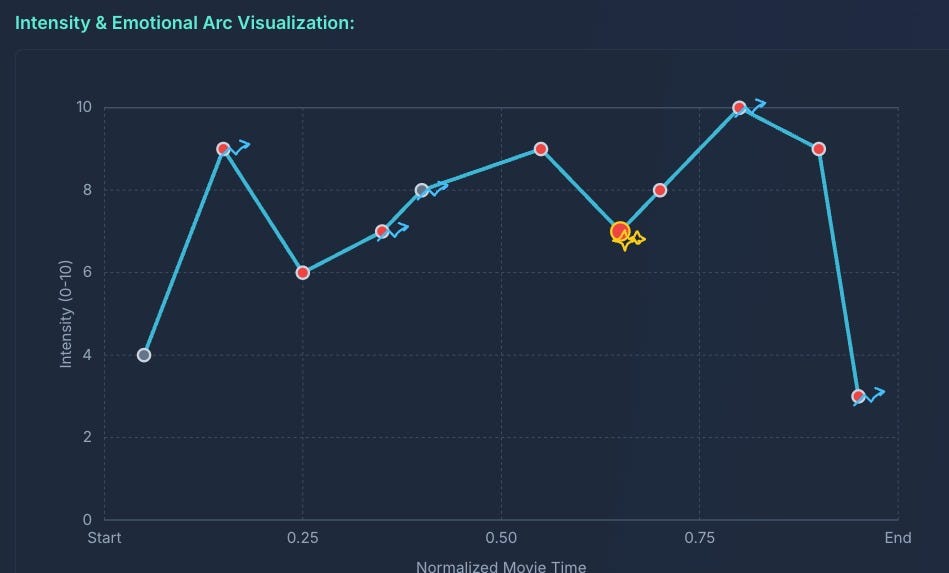
The emotional intensity graph further reinforces this interpretation. The sharp peaks correspond to the film’s most turbulent turning points — the dice game, Bhishma’s fall, and Arjuna’s moral crisis. The mid-narrative dip reflects the philosophical pause and inner conflict before the final surge of battle. The repeated rises and drops in intensity mirror the cyclical rhythm of war — strategy, confrontation, loss, and brief calm. Ultimately, the steep decline toward the end visually captures the emptiness that follows victory, completing the tragic emotional arc.
Related Greybrainer Reads
GREYBRAINER
AI-Powered Cinematic Intelligence