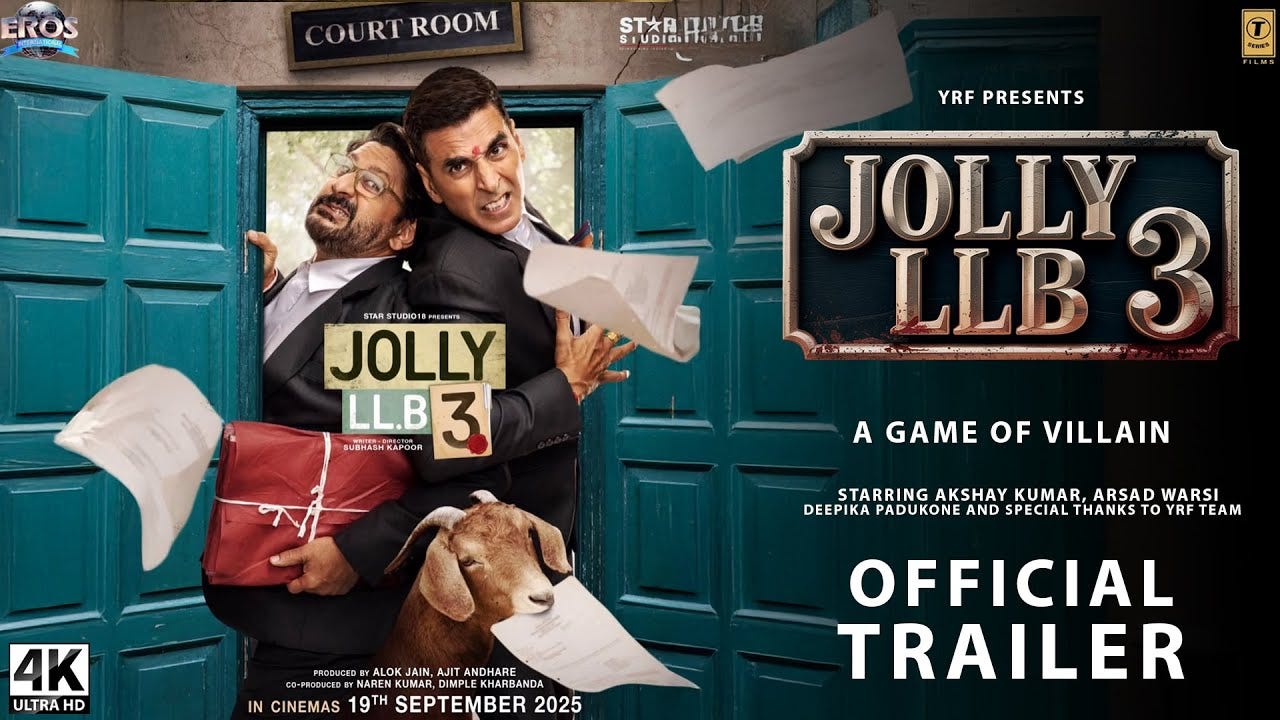
Greybrainer Summary Report: Jolly LLB 3 (Trailer Analysis): Morphokinetics™ Narrative Pacing
Minute-by-minute audience retention risk vs. narrative tension. Identifies structural sag points and retention thresholds.
Greybrainer Summary Report: Jolly LLB 3 (Trailer Analysis)
The “Jolly LLB 3” trailer, under the expert lens of the Greybrainer methodology, unveils a remarkably shrewd evolution for the beloved legal dramedy franchise, culminating in an impressive 8.0/10 overall score. Director Subhash Kapoor’s vision ingeniously pivots on a meta-narrative conceit: the direct legal and ideological confrontation between the two cinematic “Jollys” Arshad Warsi’s Jagdishwar Mishra and Akshay Kumar’s Jagdish Tyagi. This conceptual masterstroke not only addresses the inherent originality challenge of a third installment but transforms an external casting legacy into the very core of the narrative.
At the story’s heart (scoring 7.5), this dual-protagonist dynamic promises a compelling clash, pushing both established characters into new territories. The narrative hinges on how effectively this rivalry transcends mere comedic competition to explore deeper themes of legal integrity, legacy, and the true definition of an advocate. The trailer hints at the franchise’s signature sharp, satirical dialogue and brisk pacing, balancing courtroom theatrics with personal stakes, all grounded by Saurabh Shukla’s reliably exasperated Judge Tripathi. The film’s success will depend on the central legal case possessing genuine socio-political relevance, elevating the stakes beyond personal rivalry.
The conceptualisation (scoring 8.5) is truly inspired, cleverly blending “Character-centric” and “Star-centric” casting. Uniting Kumar and Warsi leverages their distinct star power and doubles down on the beloved “Jolly” persona, creating palpable on-screen chemistry that fuels the film’s comedic and dramatic potential. This strategic decision is the bedrock upon which the strong performances (scoring 8.0) are built. Both leads bring their unique comedic timing and gravitas, with Warsi’s quick wit playing off Kumar’s more boisterous energy. The execution, from the upbeat score to competent cinematography, appears meticulously tailored to maximise the impact of these central performances. “Jolly LLB 3” is poised to deliver a chaotic, entertaining, and potentially profound courtroom battle, leveraging its unique meta-narrative to redefine franchise continuity.
🎯 Greybrainer Layer Analysis
The Greybrainer methodology analyses films through three core layers:
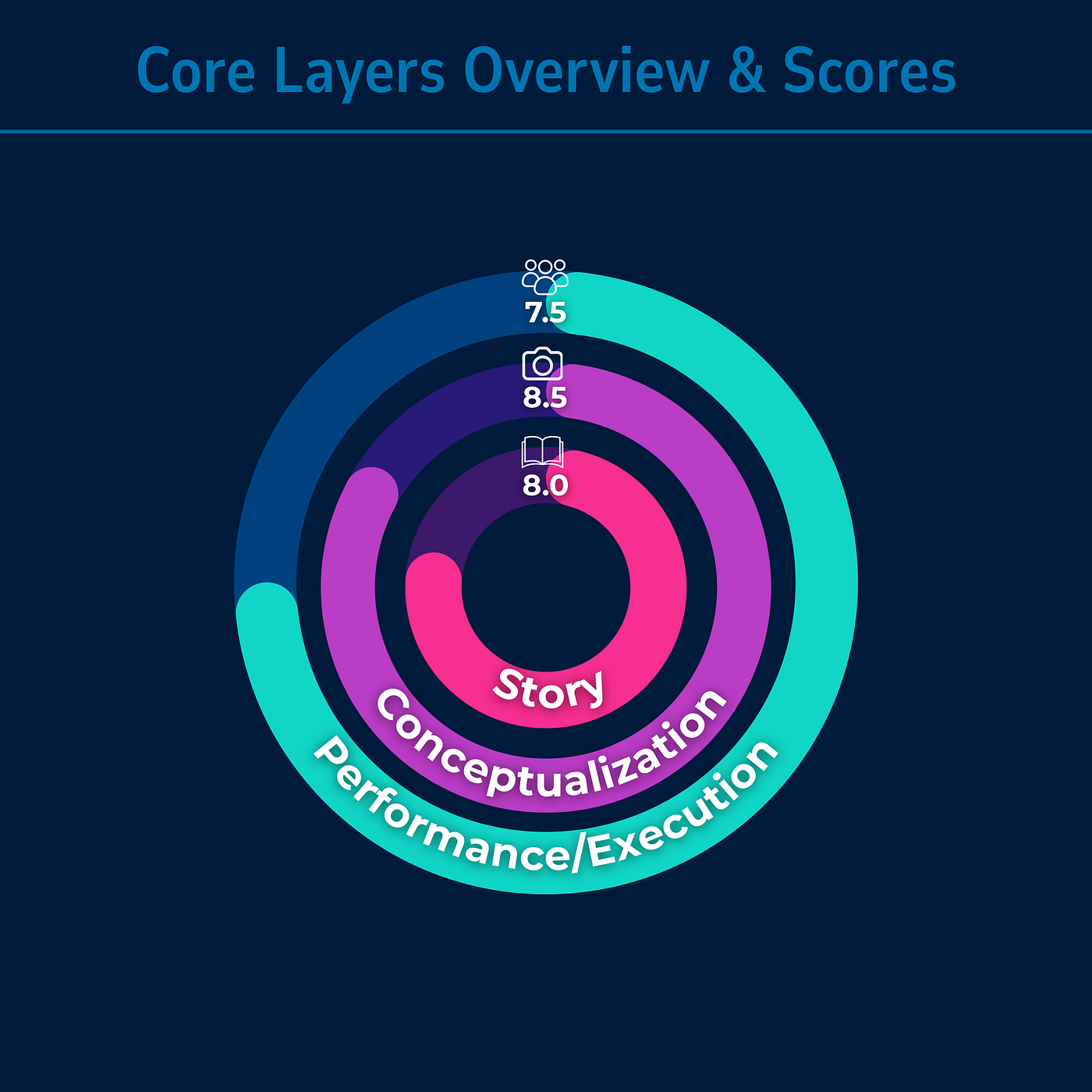
🎯 Core Ring: Magic of Story/Script — 7.5/10
Core idea, narrative, themes, character arcs, originality.
As an expert film and television critic employing the “Greybrainer” methodology, I’ve analysed the trailer for “Jolly LLB 3” with a specific focus on its “Magic of Story/Script.” Cast: Akshay Kumar, Arshad Warsi, Saurabh Shukla, Huma Qureshi The “Jolly LLB” franchise has carved a niche as a legal dramedy that blends social commentary with accessible humor. The core idea of “Jolly LLB 3” pivots on a meta-narrative conceit: the clash of two “Jollys” Jagdishwar Mishra (Arshad Warsi) and Jagdish Tyagi (Akshay Kumar) in a direct legal and ideological confrontation. This immediately addresses the challenge of originality for a third installment by internalising the franchise’s own legacy. The potential impact lies in how effectively this rivalry is leveraged, not just for comedic effect, but to explore deeper themes of justice, legacy, and the definition of a “true” advocate. While the premise of two protagonists clashing isn’t groundbreaking in cinema, its application within this specific, beloved universe offers a fresh lens. The narrative promises to be engaging if it transcends mere competition to deliver a meaningful exploration of legal ethics and personal growth. Magic of Story/Script: Comprehensive Analysis The trailer for “Jolly LLB 3” indicates a narrative structure that adheres to the established legal drama format, while introducing a compelling dual-protagonist dynamic.
1. Plot Structure & Pacing:
The trailer effectively sets up a clear inciting incident: the challenge between the original Jolly (Warsi) and the successor Jolly (Kumar). This rivalry appears to be the primary driver, leading into a central legal case that forces both characters into a direct confrontation. The pacing, as suggested by the trailer’s rapid cuts and escalating dramatic beats, seems brisk, balancing courtroom theatrics with personal stakes. It suggests a traditional three-act structure, with the trailer showcasing the setup and rising action, promising a crescendo in the courtroom.
2. Character Development:
The established characters of Jolly Mishra and Jolly Tyagi are reintroduced, now set on a collision course. The film’s success will hinge on how their individual arcs are developed through this rivalry. Will Mishra, the underdog from the first film, find renewed purpose or face a crisis of confidence? Will Tyagi, the more flamboyant and initially cynical lawyer, be forced to re-evaluate his methods? The trailer hints at Saurabh Shukla’s Judge Tripathi maintaining his role as the exasperated, yet often insightful, arbiter, providing continuity and a grounding presence. The conflict itself is designed to push both protagonists out of their comfort zones, potentially leading to mutual respect or a definitive answer on who truly embodies the “Jolly” spirit.
3. Dialogue:
The franchise’s strength lies in its sharp, witty, and often satirical dialogue, particularly in the courtroom. The trailer showcases this, with both Arshad Warsi and Akshay Kumar delivering lines that are both humorous and pointed. The exchanges appear natural, reflecting the common man’s perspective while also elevating to dramatic pronouncements when necessary. The quality of the dialogue will be crucial in defining the distinct personalities of the two Jollys and in delivering the film’s thematic messages without becoming preachy.
4. Thematic Depth:
Beyond the surface-level rivalry, “Jolly LLB 3” appears to delve into themes of legacy, integrity, and the evolving nature of justice in contemporary India. The film implicitly asks: What makes a “good” lawyer? Is it adherence to rules, a common touch, or sheer legal acumen? The clash between the two Jollys can be seen as a metaphorical battle between different approaches to justice, perhaps one more grounded, the other more pragmatic. The film’s ability to explore these nuances without sacrificing its comedic elements will determine its thematic resonance.
5. Originality & Genre Conventions:
The film largely adheres to the conventions of the Indian legal dramedy, a genre it has significantly influenced. Its primary innovation lies in its meta-narrative: bringing together two different actors who have played the same character within the franchise. This is a clever subversion of typical sequel formulas, turning an external casting choice into an internal plot point. While not revolutionary in its overall cinematic approach, this specific narrative choice offers a fresh take on franchise continuity, reminiscent of a “legacy sequel” where the past directly confronts the present.
6. World-Building:
The film continues to operate within the familiar, somewhat chaotic, yet ultimately hopeful depiction of the Indian legal system established in previous installments. The courtroom is portrayed as a vibrant arena where bureaucratic hurdles meet human drama, a world that is relatable and often absurd. The script’s potential lies in its ability to transcend the gimmick of two Jollys and deliver a compelling, emotionally resonant legal battle with meaningful character arcs. Ensure the central legal case is not merely a vehicle for the Jolly vs. Jolly showdown, but possesses genuine socio-political relevance and emotional weight, elevating the stakes beyond personal rivalry. Explore the ethical dilemmas faced by both Jollys more deeply, perhaps forcing them to confront their own definitions of success and integrity in the cutthroat legal world. Develop distinct, non-caricatured supporting characters who provide fresh perspectives on the legal system and the two protagonists’ methods.
💡Enhancement Opportunities:
Ensure the central legal case is not merely a vehicle for the Jolly vs. Jolly showdown, but possesses genuine socio-political relevance and emotional weight, elevating the stakes beyond personal rivalry. Explore the ethical dilemmas faced by both Jollys more deeply, perhaps forcing them to confront their own definitions of success and integrity in the cutthroat legal world. Develop distinct, non-caricatured supporting characters who provide fresh perspectives on the legal system and the two protagonists’ methods.
🔄 Middle Ring: Magic of Conceptualisation — 8.5/10
Director’s vision, editing, casting, overall presentation.
Magic of Conceptualisation: A Dual Jolly Delight
The trailer for “Jolly LLB 3” showcases a conceptualisation rooted in a shrewd understanding of its franchise’s appeal. Director Subhash Kapoor’s return ensures a consistent vision, maintaining the series’ signature blend of sharp legal satire, social commentary, and comedic chaos. The central conceit of bringing together both “Jollys” — Akshay Kumar’s Jagdishwar Mishra and Arshad Warsi’s Jagdish Tyagi — is a clear stroke of directorial intent, aiming for a double dose of the established courtroom humor and rivalry. The editing masterfully highlights this dynamic, focusing on their witty exchanges and physical comedy, all under the hilariously exasperated gaze of Saurabh Shukla’s Judge Tripathi. The teaser, at a concise 1:30, effectively builds anticipation by showcasing the character interactions and comedic tone without revealing the specific case, a commendable approach that prioritises engagement over plot spoilers. The overall presentation, with its upbeat music and quick pacing, promises an entertaining and chaotic courtroom battle. Regarding “Magic in Casting,” this appears to be an Inspired choice, cleverly combining “Character-centric” and “Star-centric” approaches. The decision to unite Akshay Kumar and Arshad Warsi, both of whom have successfully embodied the “Jolly” character, is a strategic move that leverages their individual star power while simultaneously doubling down on the beloved franchise persona. The consistent presence of Saurabh Shukla as Justice Sunder Lal Tripathi, the only actor to have appeared in all three films, grounds the conceptualisation in continuity and provides a familiar, much-loved comedic anchor. The return of Amrita Rao and Huma Qureshi in their respective roles further solidifies this character-driven reunion, adding layers of established relationships to the comedic and legal proceedings. This casting choice isn’t merely predictable; it’s an inspired gamble to amplify the core premise by pitting two fan-favorite iterations against each other, promising enhanced comedic and dramatic potential. While the dual Jolly concept is strong, ensuring that the underlying legal case is equally compelling and not overshadowed by the comedic rivalry will be crucial for the film’s overall impact. The trailer could have subtly hinted at the specific social issue or commentary the film aims to tackle, reinforcing the franchise’s depth beyond just humor.
💡 Enhancement Opportunities:
While the dual Jolly concept is strong, ensuring that the underlying legal case is equally compelling and not overshadowed by the comedic rivalry will be crucial for the film’s overall impact. The trailer could have subtly hinted at the specific social issue or commentary the film aims to tackle, reinforcing the franchise’s depth beyond just humor.
🌟 Outer Ring: Magic of Performance/Execution — 8.0/10
Acting, music, cinematography, effects, choreography.
The “Jolly LLB” franchise has consistently leveraged the “Magic of Performance/Execution” to deliver its unique blend of legal drama and social satire, and the trailer for Jolly LLB 3, directed by Subhash Kapoor, suggests this tradition continues with amplified impact. ‘s primary strength in this layer lies in its acting, particularly the much-anticipated “Jolly vs. Jolly” showdown between Akshay Kumar and Arshad Warsi. Both actors reprise their roles, bringing their distinct comedic timing and dramatic gravitas to the courtroom. The teaser highlights their palpable chemistry and witty banter, showcasing Warsi’s laid-back, quick-witted style against Kumar’s more boisterous, monologue-driven energy. This dynamic promises a compelling and entertaining clash, elevating the film beyond a simple sequel. Saurabh Shukla, returning as the perpetually exasperated Justice Sunder Lal Tripathi, serves as the perfect comedic foil, grounding the escalating chaos with his signature reactions. The combined performances appear to be the central engine driving the film’s humor and dramatic tension. Musically, the trailer features an upbeat and funky score, which complements the film’s black comedy tone and the frenetic energy of the courtroom exchanges. While not explicitly highlighted for groundbreaking innovation, the music by Aman Pant, Anurag Saikia, Vikram Montrose (songs), and Mangesh Dhakde (score) seems effectively integrated to enhance the comedic and dramatic beats. Cinematography, handled by Rangarajan Ramabadran, is noted as impressive, suggesting a visually competent production that effectively frames the performances and courtroom setting without overshadowing them. The execution appears tailored to maximise the impact of the lead actors’ performances, which is the undeniable standout element here. The originality stems from uniting two popular iterations of the same character, creating a fresh narrative conflict that leans heavily on the actors’ established appeal and rapport. While the acting is a clear highlight, exploring more nuanced character development within the trailer, beyond just the comedic clash, could hint at deeper dramatic potential and avoid predictability. Further showcasing the film’s musical themes beyond just “funky and upbeat” could establish a more memorable sonic identity, particularly for key dramatic or comedic moments. Subtler, more innovative use of visual storytelling in the trailer could hint at the film’s overall cinematic ambition, complementing the strong performances with a distinctive visual style.
💡 Enhancement Opportunities:
While the acting is a clear highlight, exploring more nuanced character development within the trailer, beyond just the comedic clash, could hint at deeper dramatic potential and avoid predictability. Further showcasing the film’s musical themes beyond just “funky and upbeat” could establish a more memorable sonic identity, particularly for key dramatic or comedic moments. Subtler, more innovative use of visual storytelling in the trailer could hint at the film’s overall cinematic ambition, complementing the strong performances with a distinctive visual style.
🚀 Overall Enhancement Opportunities
Ensure the central legal case carries significant socio-political weight and emotional depth, preventing it from being merely a backdrop for the protagonist rivalry. This will enhance the film’s thematic resonance and align with the franchise’s historical commitment to meaningful social commentary. Deepen the exploration of ethical dilemmas faced by both Jollys, pushing them beyond their comfort zones and forcing a re-evaluation of their personal definitions of success and integrity within the legal system. This could lead to more nuanced character arcs and a less predictable narrative outcome. While the lead performances are a clear highlight, incorporating more innovative visual storytelling and a distinctive musical identity for key moments could elevate the overall cinematic ambition, complementing the strong acting with a richer sensory experience.
This analysis was generated using Greybrainer AI, a comprehensive movie review methodology that evaluates films through multiple analytical layers.
Methodology Note: Greybrainer uses a three-layer concentric analysis approach: Core (Story): Narrative foundation, themes, character development Middle (Conceptualisation): Director’s vision, editing, casting decisions Outer (Performance): Acting, cinematography, music, technical execution
Related Greybrainer Reads
GREYBRAINER
AI-Powered Cinematic Intelligence