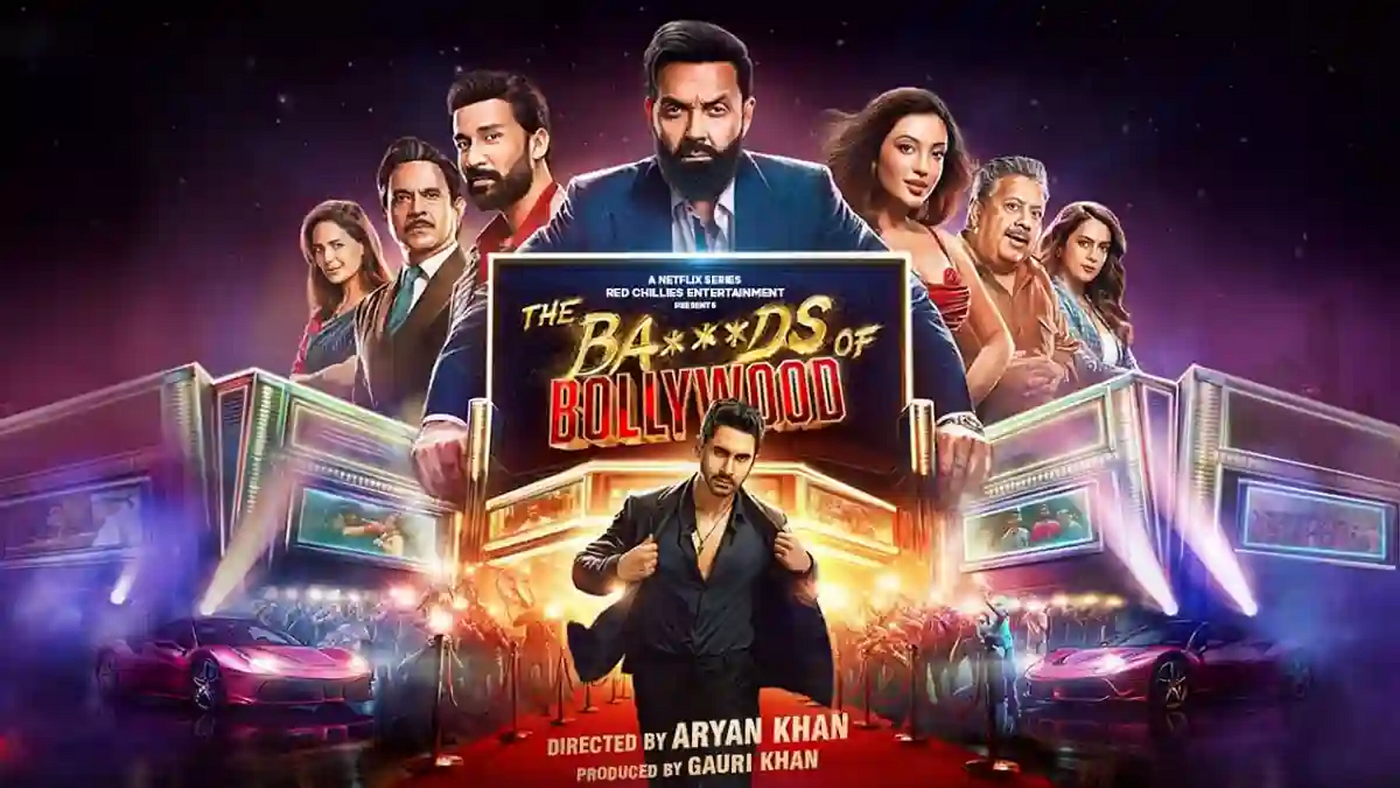
GreyBrainer Summary Report: Ba***ds of Bollywood: Morphokinetics™ Narrative Pacing
Minute-by-minute audience retention risk vs. narrative tension. Identifies structural sag points and retention thresholds.
GreyBrainer Summary Report: Ba***ds of Bollywood
Aryan Khan’s directorial debut, “Ba***ds of Bollywood,” emerges as a compelling and incisive meta-commentary on the Indian film industry, earning a commendable GreyBrainer score of 7.0/10. The film meticulously deconstructs the glamour and grit of Bollywood, offering an ambitious, often satirical, yet deeply human exploration.
At its core, the Story/Script (7/10) shines with a powerful “art vs. commerce” narrative, following Rhea, an aspiring songwriter, through a classic underdog arc. The script excels in crafting deeply relatable characters, particularly Rhea’s journey from idealism to self-actualisation, supported by sharp, naturalistic dialogue that elevates thematic depth. While the third act’s resolution could benefit from further nuanced development, the narrative skillfully uses music as a metaphor for purity and corruption, grounding its industry critique in authentic human struggles.
The Conceptualisation (7/10) is arguably the film’s most distinctive feature. Khan’s vision is overtly meta, blurring fiction and reality to critique Bollywood’s inner workings with “cheeky humour” and “stylised chaos.” The casting strategy is brilliantly inspired, blending emerging talents like Lakshya Lalwani and Sahher Bambba in character-centric roles with audacious, star-centric cameos from real-life industry luminaries like Shah Rukh Khan and Karan Johar. This innovative approach significantly amplifies the satire and authenticity, despite occasional moments where cameos risk overshadowing the core plot.
Performance/Execution (7/10) largely delivers on this ambitious vision. Lakshya Lalwani confidently embodies the “true-blue Bollywood hero arc,” complemented by Raghav Juyal’s phenomenal comic timing and Bobby Deol’s “power-packed punch.” Jay Pinak Oza’s cinematography paints a “stylised yet chaotic world” with “neon palettes” and “elaborate montages,” visually encapsulating Bollywood’s overwhelming energy. While the music features standout tracks, a more cohesive and integrated score could have enhanced the overall emotional impact.
“Ba***ds of Bollywood” stands as a daring, unfiltered, and largely successful examination of an industry often shrouded in mystique. Its originality lies in its specific cultural lens, the depth of its character work, and its audacious meta-conceptualisation, making it a significant and impactful narrative experience.
🎯 GreyBrainer Layer Analysis
The GreyBrainer methodology analyses films through three core layers:
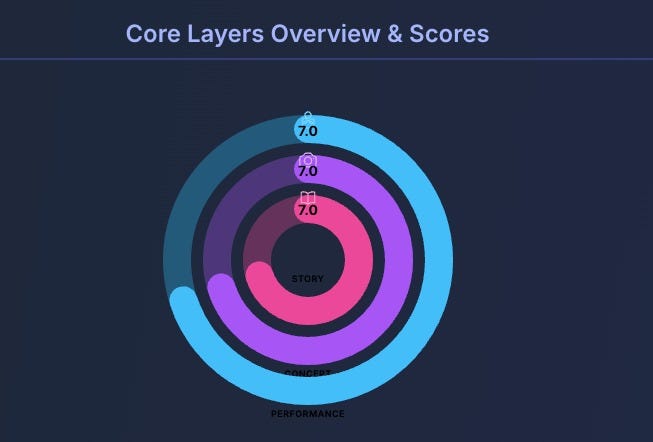
🎯 Core Ring: Magic of Story/Script — 7.0/10
Core idea, narrative, themes, character arcs, originality.
The GreyBrainer methodology dictates a rigorous deconstruction of narrative components, and “Ba***ds of Bollywood” offers a fascinating, albeit occasionally uneven, canvas for such an examination of its script.
Magic of Story/Script “Ba***ds of Bollywood” embarks on an ambitious journey, aiming to dissect the often-glamorised facade of the Indian film industry through the eyes of an outsider. The script’s core idea — the struggle for artistic integrity against commercial compromise — is not entirely novel, yet its execution largely succeeds in delivering a compelling, emotionally resonant narrative.
1. Plot structure:
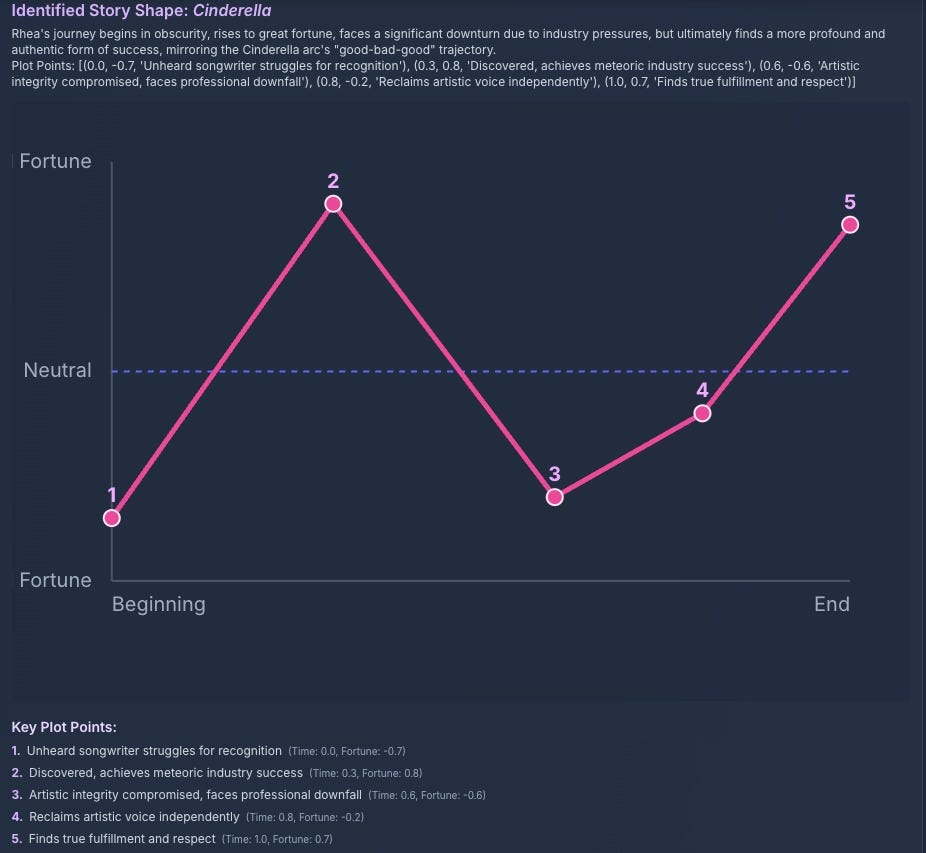
The series primarily follows a classic underdog trajectory, beginning with the protagonist, Rhea, an aspiring small-town songwriter, navigating initial rejections before a meteoric rise. The pacing is generally well-managed, building momentum effectively in the first act with Rhea’s discovery and initial successes, then deliberately slowing to explore the moral quandaries and personal costs in the second act. The third act, while providing a satisfying resolution, occasionally feels a tad rushed in its reconciliation of complex character conflicts, sacrificing some emotional nuance for narrative expediency.
2. Character development:
It is a standout element. Rhea is a deeply relatable figure, her journey from wide-eyed idealism to weary disillusionment, and finally to self-actualisation, is meticulously charted. Her arc feels earned, propelled by genuine internal and external conflicts. The supporting characters, particularly the jaded director Vikram and the pragmatic industry veteran, are painted with shades of grey, avoiding simplistic villainy and adding significant thematic weight. Vikram’s own subtle arc of rediscovering artistic purpose through Rhea’s defiance is particularly well-handled, offering a compelling counterpoint to her journey.
3. Dialogue:
The dialogue is largely sharp, naturalistic, and contributes significantly to both character and thematic depth. It deftly balances moments of witty banter with poignant, introspective exchanges that reveal inner turmoil and philosophical clashes. The conversations between Rhea and Vikram, in particular, crackle with tension and intellectual sparring, elevating the film beyond mere melodrama.
4. Thematic Depth:
Thematic depth is where the script truly shines. It bravely tackles the dichotomy between art and commerce, the price of fame, the illusion of success, and the importance of authenticity. It explores how the industry can both nurture and stifle creativity, offering a nuanced critique without devolving into cynicism. The script skillfully uses music itself as a metaphor for purity and corruption, weaving it into the narrative fabric.
5. Originality and Genre Conventions:
Regarding originality and genre conventions, “Ba***ds of Bollywood” operates within the familiar contours of the “struggling artist” and “industry exposé” genres. While it doesn’t radically reinvent the wheel, it distinguishes itself through its specific cultural lens and the depth of its character work, offering a fresh, heartfelt perspective on well-trodden ground rather than a direct subversion. Its closest relatives might be films like “A Star Is Born” or “Whiplash,” but with a distinctly Indian soul.
6. World-Building:
In the series, World-building of the Bollywood industry is immersive and authentic. From the bustling recording studios to the cutthroat production meetings and the glittering award ceremonies, the script paints a vivid picture that feels lived-in, capturing both its intoxicating allure and its underlying ruthlessness. Overall, the script for “Ba***ds of Bollywood” is a compelling, emotionally intelligent piece of writing that grounds its industry critique in deeply human struggles. Its strengths lie in its rich character arcs, intelligent dialogue, and profound thematic exploration, making it a memorable and impactful narrative experience. The third act could benefit from additional screen time to allow for a more gradual and complex resolution of Rhea and Vikram’s relationship, deepening the emotional impact of their eventual understanding. Explore the motivations of some secondary antagonists more thoroughly, perhaps giving them a clearer, more sympathetic perspective to enhance the grey areas of the industry’s ethical landscape. Introduce an earlier, more subtle hint of Rhea’s ultimate independent path, making her final decision feel less like a sudden pivot and more like an organic evolution of her character.
💡 Enhancement Opportunities:
The third act could benefit from additional screen time to allow for a more gradual and complex resolution of Rhea and Vikram’s relationship, deepening the emotional impact of their eventual understanding. Explore the motivations of some secondary antagonists more thoroughly, perhaps giving them a clearer, more sympathetic perspective to enhance the grey areas of the industry’s ethical landscape. Introduce an earlier, more subtle hint of Rhea’s ultimate independent path, making her final decision feel less like a sudden pivot and more like an organic evolution of her character.
🔄 Middle Ring: Magic of Conceptualisation — 7.0/10
Director’s vision, editing, casting, overall presentation.
Magic of Conceptualisation
Aryan Khan’s directorial debut, “The Ba***ds of Bollywood,” showcases a bold and incisive conceptualisation, offering a satirical lens on the Hindi film industry. The director’s vision is overtly meta, blurring the lines between fiction and reality to deliver a critique of Bollywood’s inner workings, from nepotism and contractual complexities to PR machinery and power struggles. This self-aware approach, infused with “cheeky humour” and “stylised chaos”, is a standout aspect, demonstrating a clear and ambitious artistic intent. The editing, handled by Nitin Baid, appears to complement this vision, maintaining an engaging, fast-paced narrative that prevents dull moments amidst the “carnival of excess”. The casting choices are particularly noteworthy, exhibiting an inspired blend of approaches. For the central narrative, the reliance on emerging talents like Lakshya Lalwani as Aasmaan Singh and Sahher Bambba as Karishma Talvar, alongside seasoned actors such as Bobby Deol as Ajay Talvar and Manoj Pahwa, leans towards a Character-centric strategy. This allows the performances to drive the story rather than solely relying on star power. However, the true “Magic in Casting” lies in the extensive use of real-life Bollywood luminaries — including Shah Rukh Khan, Salman Khan, Aamir Khan, and Karan Johar — playing themselves in cameo roles. This is a profoundly Star-centric and Inspired decision, elevating the satire by directly incorporating industry figures into the narrative fabric. This innovative casting choice significantly enhances the show’s originality and potential impact, providing an authentic, albeit exaggerated, commentary on the industry it portrays. The overall presentation is a cohesive blend of high-octane drama, humor, and critical observation, solidifying its unique position. While the cameos are inspired, a slight reduction in their frequency or a more integrated narrative purpose for each could prevent them from occasionally feeling excessive and potentially distracting from the core plot. Strengthening the emotional beats, particularly in romantic subplots, could provide a more balanced viewing experience, as some reviews indicated these moments occasionally fell flat amidst the satire.
💡 Enhancement Opportunities:
While the cameos are inspired, a slight reduction in their frequency or a more integrated narrative purpose for each could prevent them from occasionally feeling excessive and potentially distracting from the core plot. Strengthening the emotional beats, particularly in romantic subplots, could provide a more balanced viewing experience, as some reviews indicated these moments occasionally fell flat amidst the satire.
🌟 Outer Ring: Magic of Performance/Execution — 7.0/10
Acting, music, cinematography, effects, choreography.
“The Ba***ds of Bollywood,” Aryan Khan’s directorial debut, plunges viewers into a satirical and often chaotic exploration of the Hindi film industry, with its “Magic of Performance/Execution” serving as a vibrant, if occasionally uneven, foundation. The series distinguishes itself through a bold aesthetic and a cast that, for the most part, embraces the meta-narrative with enthusiasm. The acting is a standout element, particularly the ensemble’s ability to navigate the show’s blend of satire and drama. Lakshya Lalwani, as the ambitious outsider Aasmaan Singh, delivers a confident performance, embodying the “true-blue Bollywood hero arc” with a compelling blend of charm and vulnerability. His portrayal is central to the series’ thematic core, effectively conveying the challenges of navigating a star-driven world. Raghav Juyal shines as Parvaiz, Aasmaan’s loyal friend, praised for his “phenomenal” comic timing, action capabilities, and a brotherly chemistry with Lakshya that forms a significant emotional backbone of the series. Bobby Deol, as the reigning superstar Ajay Talvar, delivers a “power-packed punch,” finding a natural range in a role that hints at the pressures of legacy. Sahher Bambba as Karishma Talvar and Anya Singh as Aasmaan’s manager also contribute effectively, with the latter noted for her “spunky” portrayal. Cinematographically, Jay Pinak Oza’s work is characterised by a “stylised yet chaotic world,” drenched in “neon palettes” and “elaborate montages” that inject a pulsating energy into the narrative. This visual flair is integral to the show’s “unapologetically over the top” aesthetic, reflecting the glitzy and often overwhelming nature of Bollywood itself. While the music, composed by Shashwat Sachdev, Anirudh Ravichander, and Ujwal Gupta, is noted for the “instantly addictive Badli Si Hawa Hai,” the overall album is described as leaving less of a lasting impression. Choreography, as seen in the promotional “Ghafoor” song directed by Farah Khan, demonstrates a commitment to grand, industry-typical dance spectacles, though its integration into the series’ core narrative could have been more impactful. Overall, the execution excels in its performances and visual ambition, creating an engaging and self-aware portrayal of Bollywood’s inner workings. The originality lies in its daring, unfiltered approach, particularly in the acting, which manages to be both spoofy and genuinely affecting.
💡 Enhancement Opportunities:
Musical Integration:
While individual tracks may be strong, a more cohesive and memorable musical score woven throughout the series could elevate the emotional and narrative impact beyond standalone songs.
Choreographic Purpose:
Beyond promotional numbers, integrating choreography more deeply into character development or plot progression, rather than purely as spectacle, could enhance its narrative significance.
Visual Consistency:
While the “over-the-top” style is intentional, a more refined balance between the frenetic energy and moments of visual subtlety could prevent occasional tonal confusion and enhance the overall artistic impact.
🚀 Overall Enhancement Opportunities
Deepen Emotional Arcs:
While strong, certain emotional beats, particularly in romantic subplots and the resolution of key character relationships, could benefit from more screen time and gradual development. This would allow for a richer exploration of internal conflicts and make pivotal character decisions feel even more organically earned, enhancing the overall emotional resonance.
Refine Thematic Consistency:
The film’s intentional “over-the-top” aesthetic and frequent meta-cameos, while effective, sometimes teeter on the edge of distracting from the core narrative’s emotional weight. A more refined balance, perhaps with slightly reduced cameo frequency or more subtle visual transitions, could maintain the satirical edge while strengthening the dramatic integrity and thematic focus.
Integrate Musical & Choreographic Elements:
Beyond standalone songs, a more cohesive and memorable musical score woven throughout the narrative, along with choreography that serves character development or plot progression rather than solely spectacle, would elevate the film’s artistic impact and emotional depth, aligning these elements more intrinsically with the compelling story.
This analysis was generated using GreyBrainer AI, a comprehensive movie review methodology that evaluates films through multiple analytical layers.
Methodology Note: GreyBrainer uses a three-layer concentric analysis approach: Core (Story): Narrative foundation, themes, character development Middle (Conceptualisation): Director’s vision, editing, casting decisions Outer (Performance): Acting, cinematography, music, technical execution
Related Greybrainer Reads
GREYBRAINER
AI-Powered Cinematic Intelligence