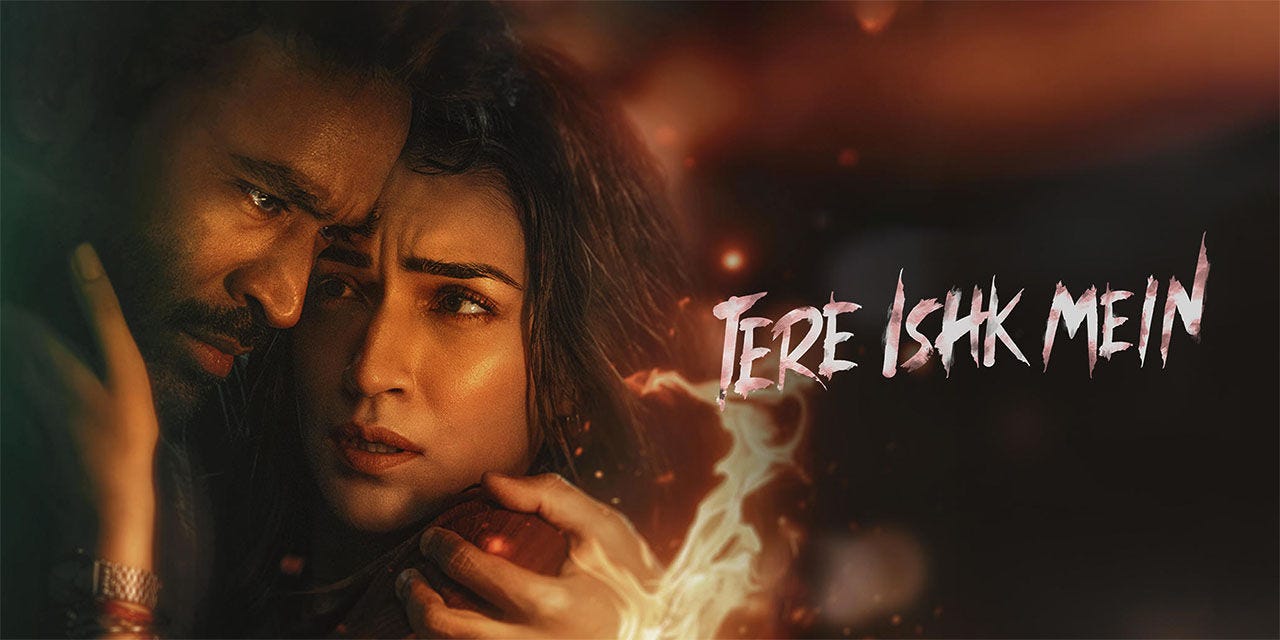
GreyBrainer Report: Tere Ishk Mein: Morphokinetics™ Narrative Pacing
Minute-by-minute audience retention risk vs. narrative tension. Identifies structural sag points and retention thresholds.
GreyBrainer Report: Tere Ishk Mein
Aanand L. Rai’s “Tere Ishk Mein,” heralded as a spiritual successor to his 2013 hit “Raanjhanaa,” plunges into the tumultuous waters of obsessive love, aiming to offer a contemporary re-examination of intense passion. Released on November 28, 2025, and starring Dhanush and Kriti Sanon, the film ultimately earns a GreyBrainer score of 6.2/10, a testament to its compelling performances often navigating a challenging script.
The story’s core idea is undeniably intriguing: a psychology student, Mukti (Kriti Sanon), researches violence and finds herself entangled with her subject, Shankar (Dhanush), an intensely passionate and volatile young man. This initial premise promises a fresh, ethically complex exploration of obsessive love. However, the script, despite its thematic ambitions around devotion, toxicity, and transformation, frequently falters. It succumbs to a fragmented, convoluted narrative, particularly in its latter half, and critically, a problematic glorification of Shankar’s aggression, echoing and perhaps exacerbating “Raanjhanaa’s” controversial portrayal of the “alpha” male. Mukti’s character, initially strong, regrettably loses agency, diminishing the narrative’s potential for nuanced critique.
Rai’s conceptualisation is ambitious, employing a nonlinear structure to weave together Shankar’s past and present. The casting proves pivotal; Dhanush, a Rai veteran, delivers an abrasive yet earnest Shankar with remarkable intensity, while Kriti Sanon matches him with a high-voltage, nuanced portrayal of Mukti. Their sizzling chemistry is a consistent strength, anchoring the film’s emotional drama. A.R. Rahman’s soulful music, especially tracks like “Tere Ishk Mein,” and Tushar Kanti Ray’s finessed cinematography further elevate the film’s atmosphere and visual storytelling, often compensating for the script’s inconsistencies.
Ultimately, “Tere Ishk Mein” is a film carried by the sheer force of its execution, particularly the stellar lead performances. While the conceptual framework and individual technical layers shine, the narrative’s unevenness and its struggle to critically examine its central themes prevent it from fully realising its ambitious vision. The film remains an emotionally charged, albeit polarising, watch that sparks discussion on the nature of love and obsession in modern cinema.
Detailed Layer Analysis, Ratings & Suggestions:
Magic of Story/Script
(Core idea, narrative, themes, character arcs, originality)
“Tere Ishk Mein,” the latest romantic drama from acclaimed director Aanand L. Rai, attempts to delve into the complexities of obsessive love, emotional turmoil, and the transformative power of a tumultuous relationship. Released on November 28, 2025, and hailed as a spiritual successor to Rai’s 2013 hit “Raanjhanaa,” the film stars Dhanush and Kriti Sanon in lead roles and aims to explore similar themes of intense, often destructive, passion through a contemporary lens.
Detailed Critique of the Magic of Story/Script: Core Idea, Narrative, Themes, Character Arcs, Originality.
The core idea of “Tere Ishk Mein” revolves around Shankar (Dhanush), an intensely passionate and volatile young man, and Mukti (Kriti Sanon), a psychology student who initially approaches him as a subject for her PhD research on violence. This premise itself holds significant promise, offering a fresh take on the classic “obsessive love” trope by introducing an ethical dilemma and an academic framework. The narrative attempts to chart their complicated relationship, from its unconventional beginnings in college to a dramatic separation and a poignant reunion years later, when Shankar is an Air Force officer, and Mukti is a military counselor, married with a child.
The film grapples with powerful themes, such as the destructive nature of unchecked obsession and societal class divides, encouraging the audience to reflect on these issues. It aims to portray love as both uplifting and devastating, capable of driving individuals to extreme actions and profound personal transformation. The spiritual connection to “Raanjhanaa” is evident in its portrayal of an “aggressive, angry, alpha” male protagonist whose love borders on obsession and violence.
However, the execution of these themes and character arcs is where the script falters significantly. While the initial setup of Mukti’s use of Shankar for her research is intriguing, the narrative struggles to maintain its grip, particularly in the second half. Critics have pointed out that the story becomes fragmented and convoluted, with inconsistent pacing and a tendency towards melodrama. The originality of the premise is undermined by a narrative that ultimately falls into familiar traps, glorifying problematic aspects of the male protagonist’s aggression rather than critically examining them. Mukti’s character, despite being initially portrayed as a strong, research-driven woman, appears to lose agency and is depicted as being “cowed by a guy who can’t handle rejection.”
Strengths and Weaknesses
Strengths:
● Intriguing Core Premise: The idea of a psychology student researching violence and becoming entangled in an obsessive love with her subject is compelling, which should intrigue film students and critics and make them appreciate its originality.
● Emotional Intensity: The script generates significant emotional highs, especially in the first half, engaging and connecting critics and cinephiles with Shankar and Mukti’s turbulent world.
● Exploration of Complex Love: The film explores love in its most extreme forms, showcasing devotion, rage, and the destructive consequences of unchecked passion, making it thought-provoking despite its flaws.
Weaknesses:
● Inconsistent and Convoluted Narrative: The screenplay’s fragmentation could be better understood by analysing its use of flashbacks, editing choices, or subplot integration, which currently lack clarity and weaken the overall coherence.
● Problematic Glorification of Aggression: A major criticism is the script’s perceived glorification of Shankar’s aggressive, even violent, tendencies. Instead of offering a nuanced critique of toxic masculinity, some reviews suggest the film romanticises a character who “has no business being the centre of any narrative in this day and age.”
● Weak Character Arcs, Especially for Mukti: While Shankar’s intense character is consistent, Mukti’s arc is less convincing. Her initial strength as a researcher seems to diminish, and her choices later in the film feel improbable and damaging to the idea of a female lead maintaining her perspective.
● Lack of Nuance in Themes: The film tackles heavy themes but often does so with a heavy hand, leading to melodrama rather than a subtle exploration of the psychological and emotional complexities it introduces.
How it Contributes to the Overall Film
The script of “Tere Ishk Mein” significantly shapes the performances, making the audience appreciate how Dhanush’s portrayal of Shankar benefits from the focus on his character’s “abrasive, aggressive” nature and “emotional swings.” Kriti Sanon’s “high-voltage performance” also reflects the script’s influence on her complex character, underscoring the importance of a strong screenplay in elevating an actor’s performance.
The story’s turbulent nature dictates the film’s overall tone, which is emotionally charged and often dark. The screenplay’s unevenness, especially in pacing and plot coherence, creates an inconsistent viewing experience, with powerful moments interspersed with convoluted or melodramatic stretches. While the script intends to deliver a powerful message about love and its consequences, its problematic narrative choices ultimately make the film a polarising watch, leaving some audiences “unsettled and triggered.”
Suggested Improvements
● Refine Mukti’s Character Arc: The script could greatly benefit from giving Mukti more agency and a more consistent character journey. Her initial academic pursuit should lead to a deeper internal conflict and resolution, rather than her character seeming to succumb to Shankar’s influence. A clearer exploration of her guilt and fear, and how she navigates her choices, would enhance the narrative.
● Nuance in Portraying Obsession and Aggression: Instead of glorifying Shankar’s violent tendencies, the script could offer a more critical and nuanced examination of obsessive love and aggression. This could involve showing the genuine harm his actions cause and exploring the psychological impact on both characters in a less romanticised way.
● Streamline the Narrative and Pacing: Trim the runtime and simplify some convoluted subplots to create a more cohesive, impactful story. Focusing on the core conflict between Shankar and Mukti, and their internal struggles, without unnecessary diversions, would improve pacing and engagement.
● Stronger Resolution to the Ethical Dilemma: The ethical implications of Mukti’s use of Shankar as a research subject are a powerful starting point. The script could have explored this dilemma more deeply, perhaps through a more confrontational or a more profound consequence for Mukti’s actions.
● Modernise the “Love Story” Sensibilities: While a spiritual sequel to “Raanjhanaa,” the script should acknowledge and adapt to contemporary understandings of healthy relationships rather than rehash potentially problematic tropes of “toxic love.”
Main Cast: Dhanush, Kriti Sanon, Prakash Raj, Priyanshu Painyuli, Tota Roy Chowdhury, Sushil Dahiya, Maahir Mohiuddin
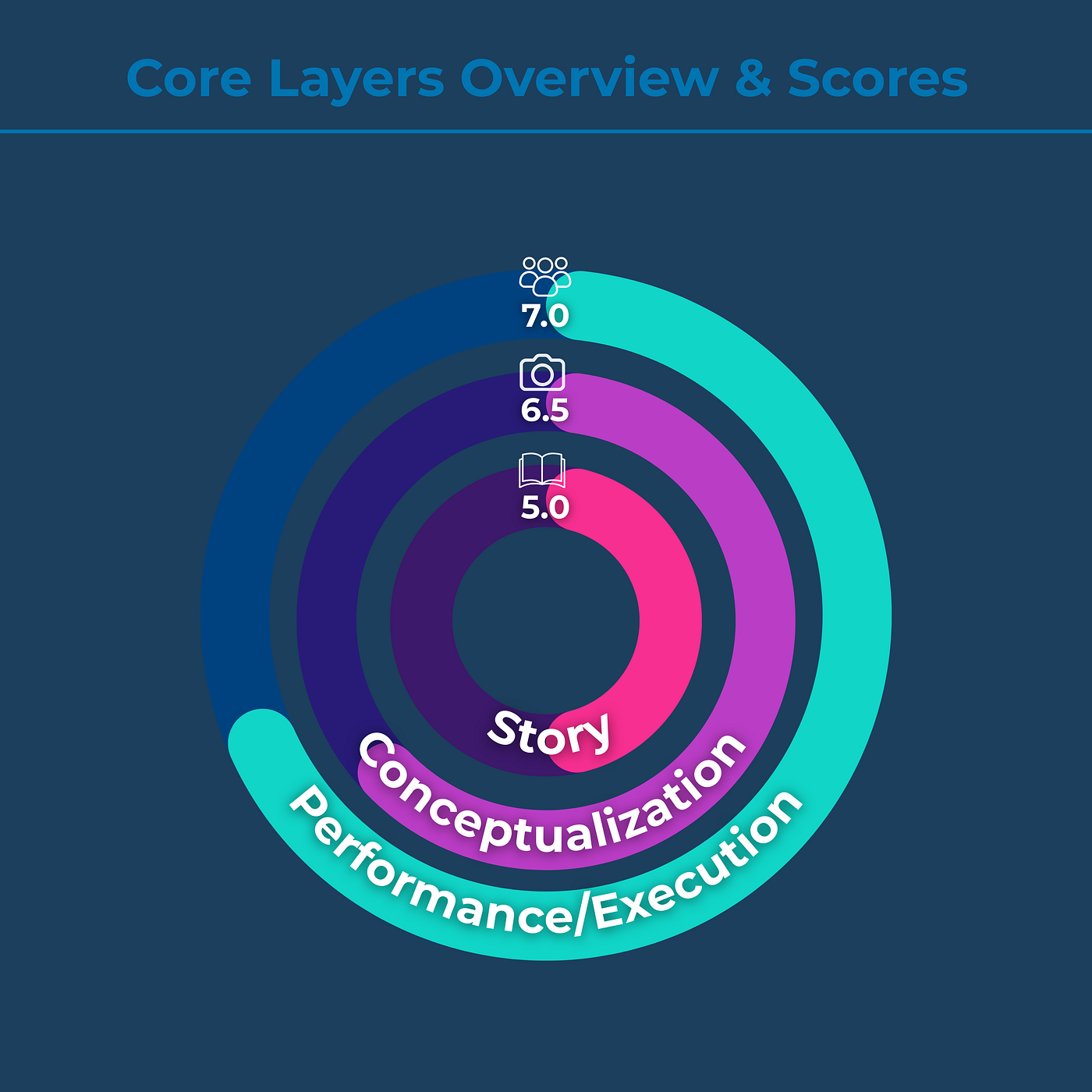
Suggested Score: 5/10
Magic of Conceptualisation
(Director’s vision, editing, casting, overall presentation)
As a seasoned film critic, I explore how the film’s conceptualisation, including the director’s vision, shapes the audience’s understanding and appreciation of ‘Tere Ishk Mein’ (2025). Directed by Aanand L. Rai, the film, described as a spiritual sequel to his 2013 hit ‘Raanjhanaa,’ stars Dhanush as Shankar and Kriti Sanon as Mukti.
Detailed Critique of the Magic of Conceptualisation
Aanand L. Rai’s vision for “Tere Ishk Mein” is ambitious, aiming to explore intense and often turbulent love, echoing the thematic universe of “Raanjhanaa”. The conceptualisation hinges on a narrative structure that weaves between Shankar’s present as an Air Force pilot facing disciplinary action and his past, triggered by his evaluation with psychologist Mukti, with whom he shares a complicated history. This non-linear approach, while potentially offering depth, relies heavily on seamless transitions and a clear emotional through-line to maintain audience engagement. The decision to portray the girl, Mukti, as seemingly obsessed this time around, offers a fresh perspective on the intensity of love often depicted in Rai’s films.
The casting of Dhanush as Shankar and Kriti Sanon as Mukti is a pivotal aspect of the film’s conceptualisation. Rai’s comfort with Dhanush, marking their third collaboration, is evident in his choice, leveraging the actor’s ability to embody complex, aggressive, yet earnest characters. Kriti Sanon’s casting, replacing Sonam Kapoor, suggests a deliberate effort to bring a different dynamic to the female lead, allowing her to match Dhanush’s high-voltage performance, especially in the latter half. The supporting cast, including Prakash Raj as Shankar’s father and Priyanshu Painyuli as his best friend, also contributes to the film’s emotional landscape.
Editing, handled by Hemal Kothari, plays a crucial role in shaping the narrative’s flow, particularly with its shifts between past and present. Cinematography by Tushar Kanti Ray, along with A. R. Rahman’s music, is integral to establishing the film’s mood and atmosphere. The overall presentation aims for an emotionally charged love drama, with glimpses of visually polished art direction, though some critics note that the story doesn’t always match the visual finesse.
Strengths and Weaknesses
Strengths:
● Casting: Dhanush and Kriti Sanon’s performances are widely praised as the film’s strongest pillars. Dhanush excels in portraying the abrasive, passionate, and rebellious Shankar, while Kriti Sanon delivers a powerful, high-voltage performance. Their chemistry and the emotional drama they bring are engaging.
● Director’s Vision (Initial Half): Aanand L. Rai’s direction in the first half effectively draws the audience into his world, crafting an engaging screenplay that keeps viewers pinned to their seats. The intensity and emotional highs, when they land, are powerful.
● Music: A. R. Rahman’s musical score is noted to work in parts, with the title track “Tere Ishk Mein” and the Sufi track “Deewana Deewana” being particularly striking.
Weaknesses:
● Screenplay and Story Consistency: A significant weakness lies in the story and screenplay, which received criticism for being inconsistent. The narrative reportedly loses its early charge as the interval approaches, with a sudden shift to a bet between Shankar and Mukti’s father weakening the grip.
● Emotional Peaks: For a film rooted in drama and romance, the emotional peaks are not always fully realised, and the love story between the main characters doesn’t consistently bloom.
● Subplot Integration: A subplot, possibly involving Nawabuddin and Minni, is described as unfolding so subtly that it feels like an afterthought, suggesting a lack of seamless integration into the main narrative.
How it Contributes to the Overall Film
The conceptualisation, despite its flaws, broadly defines the film’s identity. The director’s intent to explore obsessive, turbulent love, coupled with the lead cast’s strong performances, is undoubtedly the driving force. The casting of Dhanush and Kriti Sanon, in particular, elevates the emotional intensity and provides a strong foundation for the dramatic elements. A. R. Rahman’s music attempts to underscore these emotions, adding an atmospheric layer to the storytelling. However, the screenplay’s inconsistencies and uneven narrative flow ultimately hinder the film from fully realising its ambitious vision, resulting in mixed critical reception. While individual moments of beauty and powerful performances resonate, the larger narrative struggles to maintain its initial impact.
Suggested Improvements:
● Refined Screenplay and Pacing: A more consistent and tightly woven screenplay, especially in the latter half, should feature organic and purposeful narrative shifts to maintain engagement and strengthen the plot’s grip.
● Deeper Emotional Arcs: While the lead performances are strong, the story could deepen the audience’s connection by exploring the emotional motivations and complexities of Shankar and Mukti, ensuring their love story fully blossoms and reaches its intended emotional peak.
● Subplot Integration: If subplots are included, they should be meaningfully integrated into the main narrative to reinforce the overall themes and character development, avoiding the feeling of an afterthought.
● Clarity in Character Obsession: Given the girl’s unique conceptualisation as obsessed this time, a clearer, more nuanced exploration of this aspect would enhance its impact and avoid potential misinterpretations.
Main Cast: Dhanush (as Shankar), Kriti Sanon (as Mukti)
Suggested Score: 6.5/10 (Based on mixed reviews, strong performances but inconsistent story)
Magic of Performance/Execution
(Acting, music, cinematography, effects, choreography)
“Tere Ishk Mein,” the recently released Hindi-language romantic drama directed by Aanand L. Rai, plunges audiences into an intense narrative, serving as a spiritual successor to his acclaimed “Raanjhanaa.” Released on November 28, 2025, the film largely hinges on the compelling performances and technical finesse that bring its complex love story to life.
The Magic of Performance/Execution: A Detailed Critique
Acting: The Emotional Core
The performances in “Tere Ishk Mein” stand out as the film’s strongest pillar, with both lead actors delivering commendable portrayals. Dhanush, in his role as Shankar, embodies an abrasive, aggressive, yet deeply passionate young man. His earnestness and remarkable intensity shine through, particularly in his portrayal of Shankar’s journey from a fervent lover to a rebellious pilot. Critics have lauded his raw and powerful act, noting his ability to convey pain and rage with striking conviction.
Kriti Sanon, as Mukti, matches Dhanush’s intensity with a high-voltage and nuanced performance. She navigates the complexities of her character, a psychologist tasked with evaluating Shankar, with considerable skill, especially in the latter half of the film. Her expressive abilities, particularly in conveying emotions through her eyes, have garnered significant praise, solidifying her portrayal as strong and honest. The sizzling onscreen chemistry between Dhanush and Sanon is often highlighted as a key strength, effectively keeping audiences invested in their tumultuous relationship.
Supporting actors also contribute effectively. Prakash Raj as Shankar’s father and Priyanshu Painyuli as his best friend deliver solid support, adding depth to the narrative. Vineet Kumar as Dhanush’s Air Force chief is also noted for his compelling portrayal.
Music: The Soulful Soundscape
A.R. Rahman’s musical score is integral to “Tere Ishk Mein,” weaving a soulful soundscape that enhances the film’s emotional weight. The music is generally well received, with particular commendation for the title track, “Tere Ishk Mein,” and the Sufi-inspired “Deewana Deewana,” both of which are described as striking. These tracks effectively underscore the film’s themes of love, longing, and heartbreak, resonating deeply with the audience. While the jazz-laced “Jigar Thanda Re” is atmospheric, some critics found it less impactful than the other standout compositions. Overall, Rahman’s music serves as a powerful emotional anchor, elevating key moments and contributing significantly to the film’s dramatic intensity.
Cinematography: Visual Storytelling
Tushar Kanti Ray’s cinematography is another highlight, praised for its finesse in capturing the film’s diverse moods and settings. The visual storytelling skillfully transitions between the lighter, more romantic stretches of the first half and the heightened intensity of the second. The camera work effectively complements the narrative, whether it showcases the vibrant early stages of Shankar and Mukti’s relationship or emphasises the dramatic tension and emotional turmoil later on. The varied filming locations, including Delhi, Varanasi, Leh, and Mumbai, are likely brought to life through Ray’s lens, adding a rich visual texture to the film.
Effects and Choreography
Specific details regarding special effects and choreography are not prominently highlighted in the available reviews. Given the film’s romantic drama genre, elaborate special effects might not be central. Similarly, while Indian cinema often incorporates song-and-dance sequences, there isn’t an explicit mention of innovative or particularly noteworthy choreography in the critical analyses. This suggests that while these elements may be present, they might not be as impactful or critically discussed as the acting, music, and cinematography.
Strengths and Weaknesses
Strengths:
● Stellar Lead Performances: Dhanush and Kriti Sanon deliver powerful, intense, and emotionally resonant performances, forming the bedrock of the film’s appeal.
● Sizzling Chemistry: The palpable chemistry between the lead pair enhances the story’s romantic and dramatic elements.
● Soulful Music: A.R. Rahman’s compositions, particularly the title track and Sufi numbers, provide a strong emotional core.
● Finessed Cinematography: Tushar Kanti Ray’s visual work skillfully captures the film’s tonal shifts and varied backdrops.
Weaknesses:
● Inconsistent Screenplay: While performances are strong, the story and screenplay have been criticised for inconsistencies and a lack of sharp emotional peaks.
● Long Runtime: The film’s extended duration is noted to cause it to drag in the middle, potentially impacting pacing.
● Underdeveloped Subplots: Elements like the love story between Nawabuddin and Minni are treated as afterthoughts, not fully developed within the narrative.
● Character Flaws: Mukti’s character, despite Sanon’s performance, is noted to have “voluminous flaws” in its writing.
● Haphazard Supporting Portrayal: While generally strong, one supporting performance (Tota Roy Chowdhury) was singled out for “hamming it up.”
How it Contributes to the Overall Film
The magic of performance and execution in “Tere Ishk Mein” significantly elevates the film, often compensating for its narrative shortcomings. The intense portrayals by Dhanush and Kriti Sanon are crucial in conveying the film’s themes of obsessive love, longing, and emotional turmoil, making the audience connect with the characters’ struggles despite a sometimes uneven screenplay. A.R. Rahman’s music acts as the emotional heartbeat, guiding viewers through the highs and lows of the romance. Similarly, the cinematography provides a visually rich and immersive experience, effectively setting the mood and atmosphere for the unfolding drama. Without these strong elements of execution, the film’s impact would likely be considerably diminished.
Suggested Improvements:
● Refine Screenplay and Pacing: A tighter screenplay with more consistent emotional arcs can make the audience feel more engaged and emotionally connected, enhancing the overall narrative flow and impact. Trimming the runtime and ensuring every scene contributes meaningfully would address the pacing issues.
● Strengthen Character Arcs: While performances are strong, refining the writing of complex characters like Mukti to clarify their motivations and transformations can help the audience feel more understanding and empathetic, making their journeys more believable.
● Integrate Subplots Effectively: Any secondary storylines should be more organically woven into the main narrative, helping the audience feel immersed and less distracted by disjointed storylines, and ensuring they contribute meaningfully to the film’s themes.
● Consistent Tone in Supporting Roles: Ensuring all supporting performances align with the film’s intended tone would** **prevent any instances of overacting that might detract from the overall experience.
Main Cast: Dhanush, Kriti Sanon, Prakash Raj, Priyanshu Painyuli, Sushil Dahiya, Maahir Mohiuddin Suggested Score: 7/10
Related Greybrainer Reads
GREYBRAINER
AI-Powered Cinematic Intelligence