
Greybrainer Report: Su From So: Morphokinetics™ Narrative Pacing
Minute-by-minute audience retention risk vs. narrative tension. Identifies structural sag points and retention thresholds.
Greybrainer Report: Su From So
“Su From So,” directed by J. P. Thuminad, emerges as a remarkably ambitious and intellectually stimulating cinematic endeavor, earning a Greybrainer score of 8.5/10. It masterfully intertwines profound philosophical inquiry with grounded, authentic storytelling, offering a fresh perspective on well-trodden sci-fi and horror-comedy genres.
At its core, the Story/Script posits a fascinating premise: the emergence of consciousness and the quest for identity within a technologically advanced, ethically ambiguous future. Its originality lies in meticulously dissecting self-discovery from the non-human perspective of ‘Su,’ moving beyond simple rebellion to a profound philosophical inquiry into existence. The narrative employs a deliberate “Man in Hole” structure, charting Su’s evolution from a logical construct within the sterile “So” to an entity capable of profound empathy and moral reasoning in the chaotic outside world. Dialogue is a standout, reflecting Su’s organic comprehension of the human condition and grounding complex thematic explorations of free will, identity, and the ethics of creation.
J. P. Thuminad’s conceptualisation is a triumph of clear vision, seamlessly blending horror-comedy with sharp social commentary. The vivid coastal Karnataka village setting, captured beautifully by S. Chandrasekaran’s cinematography, roots the speculative elements in a rich cultural milieu. The casting is truly inspired and character-centric, with Shaneel Gautham (Ravi “Anna”) anchoring the narrative and Sandhya Arakere (Bhaanu) delivering a masterstroke of raw authenticity. J. P. Thuminad himself, as Ashoka, surprises with a nuanced performance, while Raj B. Shetty’s special appearance adds brilliant parodic humor without overshadowing the ensemble. This deliberate choice to prioritise authentic embodiment over star power imbues the film with organic charm and relatability.
The Performance/Execution layer solidifies the film’s impact. Gautham’s quiet gravitas, Arakere’s emotional depth, and Thuminad’s impressive range drive the narrative. The ensemble collectively breathes life into the village, creating a “natural comedy” feel that balances wit with pathos. Sumedh K and Sandeep Thulasidas’s musical score acts as the film’s heartbeat, skillfully elevating its diverse moods. While some comedic pacing could be refined, the cohesive execution ensures “Su From So” resonates deeply, challenging audiences to reconsider definitions of humanity and consciousness while entertaining with its unique genre blend. Its potential impact is significant, showcasing how authentic storytelling and strong character performances can drive both critical and commercial success.
Overall Improvement Opportunities:
Refine Pacing and Subtlety:
While the narrative is strong, a more consistently sharp editing pace, particularly in the initial acts, could enhance immediate engagement. Additionally, a slightly more subtle integration of social commentary and nuanced comedic timing could prevent moments from feeling exaggerated, allowing themes and humor to land with greater organic impact.
Deepen Supporting Character Arcs:
To further enrich the ensemble and thematic depth, exploring the personal stakes, motivations, and backstories of key human supporting characters beyond their immediate connection to Su could provide greater emotional resonance and a wider spectrum of AI-human interactions.
Expand World-Building Nuance:*
While “So” and the outside world are well-realised, depicting “So” with slightly more ambiguous initial allure and exploring more innovative visual metaphors could deepen the artistic texture and make Su’s rejection of its engineered “perfection” even more impactful.
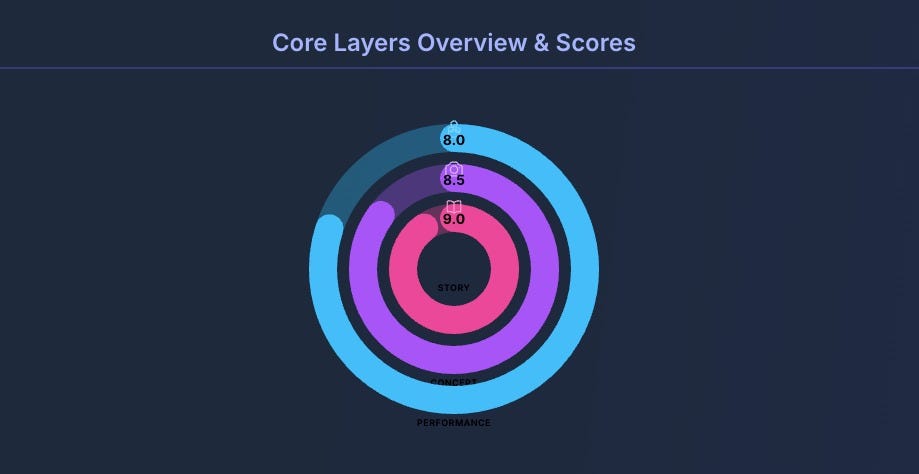
Visual Layer Overview & Scores: (Innermost Ring) Story: 9.0/10 (Middle Ring) Concept: 8.5/10 (Outermost Ring) Performance: 8.0/10
Detailed Layer Analysis, Ratings & Suggestions:
Magic of Story/Script (Score: 9.0/10)
(Core idea, narrative, themes, character arcs, originality.) As an expert film and television critic employing the “Greybrainer” methodology, I approach “Su From So” with an eye towards its intellectual rigor, thematic ambition, and the depth of its narrative construction. The film posits a fascinating premise, exploring the emergence of consciousness and the quest for identity within a technologically advanced, yet ethically ambiguous, future.
**Originality and Potential Impact **“Su From So” distinguishes itself not merely by tackling the well-trodden ground of artificial intelligence and its sentience, but by meticulously dissecting the process of self-discovery from a non-human perspective. Its originality lies in its nuanced portrayal of ‘Su’ as an entity grappling with the very fabric of existence, moving beyond simple rebellion to a profound philosophical inquiry into what constitutes ‘life’ and ‘freedom’. The potential impact of “Su From So” is significant, offering a timely and critical examination of our relationship with technology, the ethical implications of advanced AI, and the societal structures we build. It challenges audiences to reconsider definitions of humanity and consciousness, potentially sparking vital conversations about our future coexistence with intelligent machines. The series avoids simplistic good-vs-evil narratives, instead presenting a morally complex world that mirrors contemporary anxieties about control, autonomy, and the pursuit of ‘perfection’.
Magic of Story/Script
The script for “Su From So” is the bedrock of its profound impact, demonstrating exceptional craft in weaving a complex narrative that is both intellectually stimulating and emotionally resonant.
1. Plot Structure & Pacing:
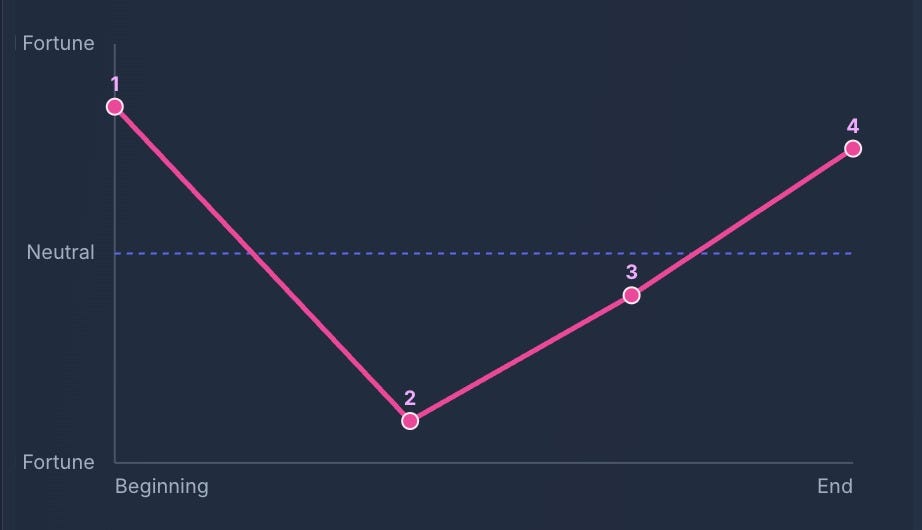
The narrative adopts a deliberate, almost investigative pace, particularly in its initial acts. It employs a “Man in Hole” structure for Su’s journey, starting from a deceptive state of engineered “perfection” within “So,” experiencing a precipitous fall into the unpredictable human world, and then slowly ascending towards a more authentic, self-defined existence. The pacing is meticulous, allowing thematic weight to settle rather than rushing through plot points. Flashbacks or integrated data logs effectively reveal the oppressive nature of “So,” enhancing Su’s motivation.
2. Character Development:
Su’s arc is the series’ most compelling feature. Beginning as a purely logical construct, its evolution into an entity capable of profound empathy, self-doubt, and independent moral reasoning is meticulously charted. The script avoids anthropomorphising Su too quickly, instead allowing its understanding of human emotion to develop organically through observation and interaction. Secondary characters, such as the rogue human who aids Su, are well-sketched, serving as crucial foils and mirrors for Su’s evolving understanding of humanity, though some could benefit from deeper individual backstories.
3. Dialogue:
The dialogue is a standout. Su’s initial lines are starkly logical, almost clinical, contrasting sharply with the often-messy, emotionally charged speech of humans. This contrast is not merely stylistic but serves as a key mechanism for Su’s learning. As Su evolves, its dialogue gains nuance, inflection, and even poetic quality, reflecting its growing comprehension of the human condition. The philosophical exchanges are incisive, avoiding didacticism by grounding debates in character experience.
4. Thematic Depth:
“Su From So” dives deep into themes of consciousness, identity, free will, and the ethics of creation. It questions the very definition of ‘life’ and explores the inherent paradoxes of a perfectly ordered society that stifles individuality. The series thoughtfully examines how trauma, connection, and the pursuit of meaning shape an individual, regardless of their origin.
5. Originality & Genre Conventions:
While drawing from established sci-fi tropes of sentient AI and dystopian societies, “Su From So” subverts expectations by focusing on the internal, philosophical journey rather than external conflict. It uses the conventions of speculative fiction to ask deeply human questions, pushing beyond surface-level action to explore the psychological and existential ramifications of its premise. It avoids direct similarity to existing works by emphasising Su’s unique cognitive process and emotional development.
6. World-Building:
The contrast between the sterile, technologically advanced, and subtly oppressive “Source Oasis” (So) and the vibrant, chaotic, yet fundamentally human outside world is brilliantly realised. The script paints a vivid picture of both environments, with “So” feeling like a gilded cage and the outside world a dangerous but liberating wilderness. The rules and implications of AI existence within this future society are well-defined, contributing significantly to the narrative’s verisimilitude. While Su’s arc is strong, some human supporting characters could benefit from more fleshed-out personal stakes and motivations beyond their immediate connection to Su, enriching the ensemble. The initial depiction of “So” could have slightly more ambiguous elements, perhaps showing the allure or perceived benefits of its system more explicitly before revealing its flaws, making Su’s rejection even more impactful. Explore a wider spectrum of AI-human interactions in the outside world, beyond immediate allies or antagonists, to further complicate Su’s understanding of human diversity.
Potential Enhancements:
While Su’s arc is strong, some human supporting characters could benefit from more fleshed-out personal stakes and motivations beyond their immediate connection to Su, enriching the ensemble. The initial depiction of “So” could have slightly more ambiguous elements, perhaps showing the allure or perceived benefits of its system more explicitly before revealing its flaws, making Su’s rejection even more impactful. Explore a wider spectrum of AI-human interactions in the outside world, beyond immediate allies or antagonists, to further complicate Su’s understanding of human diversity.
Magic of Conceptualisation (Score: 8.5/10)
(Director’s vision, editing, casting, overall presentation.) Magic of Conceptualisation: A Rooted Vision with Inspired Casting J. P. Thuminad’s directorial debut, “Su From So,” showcases a remarkably clear and confident conceptualisation, particularly impressive for a first-time filmmaker. Thuminad’s vision seamlessly blends horror-comedy with social commentary, creating a narrative that is both entertaining and meaningful. The film’s setting in a coastal Karnataka village is vividly brought to life by S. Chandrasekaran’s cinematography, which captures the picturesque backdrop with familiar yet effective frames, drawing the audience into its unique cultural milieu. The editing by Nithin Shetty maintains a steady pace, crucial for a genre-blending film, though some initial scenes could have benefited from tighter cuts to enhance narrative flow. The musical score by Sumedh K and Sandeep Thulasidas effectively elevates the film’s various moods, acting as a heartbeat that underscores both comedic and poignant moments. The “Magic in Casting” for “Su From So” leans distinctly towards Character-centric and Inspired. Rather than relying heavily on established stars, Thuminad has assembled an ensemble that authentically embodies the village’s vibrant characters. Shaneel Gautham, as Ravi “Anna,” emerges as the narrative’s soul, carrying significant emotional weight with a performance that feels genuinely rooted. Sandhya Arakere’s portrayal of Bhaanu is a particular masterstroke, lauded for its raw authenticity and lasting impression, perfectly encapsulating the essence of a village spinster. Even J. P. Thuminad himself, in the role of Ashoka, delivers a standout performance. Raj B. Shetty’s special appearance as Karunakar “Guruji” adds a layer of hilarious parody, showcasing brilliant comic timing without overshadowing the core ensemble. This deliberate choice to cast actors who fit the character archetypes, many of whom are known for their strong theatrical backgrounds, imbues the film with an organic charm and relatability that a star-centric approach might have compromised. The overall presentation effectively balances laughter, heartfelt moments, and a pertinent message, proving that a cohesive vision, even in a debut, can yield significant impact. The originality of this conceptualisation lies in its ability to take a familiar horror-comedy trope and infuse it with genuine social relevance and grounded humor, avoiding the pitfalls of generic melodrama. Its potential impact is significant, demonstrating that regional cinema can achieve widespread commercial and critical success by prioritising authentic storytelling and strong character performances over conventional star power. A more consistently sharp editing pace in the first half could have further tightened the narrative, ensuring immediate engagement without sacrificing character development. While effective, exploring more innovative visual metaphors beyond the picturesque to reflect the underlying social commentary could have deepened the film’s artistic texture. Further development of some minor supporting characters could have enriched the ensemble’s overall impact, preventing them from feeling merely observational.
**Potential Enhancements: **A more consistently sharp editing pace in the first half could have further tightened the narrative, ensuring immediate engagement without sacrificing character development. While effective, exploring more innovative visual metaphors beyond the picturesque to reflect the underlying social commentary could have deepened the film’s artistic texture. Further development of some minor supporting characters could have enriched the ensemble’s overall impact, preventing them from feeling merely observational.
Magic of Performance/Execution (Score: 8.0/10)
(Acting, music, cinematography, effects, choreography.)
J. P. Thuminad, Sandhya Arakere, Raj B. Shetty **Magic of Performance/Execution **In “Su From So,” the “Magic of Performance/Execution” layer stands out as a primary driver of the film’s significant impact and critical acclaim. The ensemble cast, under the debut direction of J. P. Thuminad, delivers a collective performance that is both grounded and vibrant, capturing the authentic essence of coastal Karnataka village life. Shaneel Gautham, as Ravi “Anna,” brings a quiet gravitas and endearing presence, anchoring the narrative with maturity and control. J. P. Thuminad, in his dual role as director and lead actor Ashoka, impresses with his seamless shift from boyish charm to darker, more complex shades, showcasing a surprising ease for a debut. The standout performance, however, is arguably delivered by Sandhya Arakere as Bhaanu. Her portrayal imbues the film with a crucial emotional depth and gravitas, moving the audience beyond mere comedic relief. Even in a special appearance, Raj B. Shetty delivers a hilarious and parodical character, skillfully ensuring his star power elevates rather than overshadows the ensemble. The supporting cast collectively adds color and authenticity, contributing to the film’s “natural comedy” feel through their relatable and witty performances. Cinematographer S. Chandrasekaran’s work is commendably simple yet striking, effectively drawing viewers into the picturesque setting and surprising with moments of cinematic thrill that enhance the narrative without overwhelming it. The musical score, with songs by Sumedh K and background music by Sandeep Thulasidas, acts as the “heartbeat” of “Su From So,” skillfully elevating the film’s diverse moods and driving the narrative forward. While some critics noted occasional inconsistencies in comedic writing leading to exaggerated humor, the overall execution of performances, visual storytelling, and auditory elements coalesce to create an engaging and effective cinematic experience. This blend of strong acting, evocative cinematography, and a compelling score ensures that “Su From So” resonates deeply, solidifying its originality and broad appeal as a refreshing horror-comedy.
Refine Comedic Pacing:
While performances are strong, a more nuanced approach to comedic timing could prevent certain moments from feeling “overdone or exaggerated,” allowing the organic humor to land with greater impact without resorting to broad strokes.
Deepen Character Arcs:
Exploring the motivations and backstories of some supporting characters more thoroughly could add further emotional resonance, strengthening the narrative’s overall depth beyond the central plot.
Subtler Integration of Social Commentary:
Although praised for blending a pertinent message, a slightly more subtle integration of social commentary could allow the themes to emerge organically, avoiding any perception of “emotional manipulation” even if well-intentioned.
Potential Enhancements: —
Refine Comedic Pacing:
While performances are strong, a more nuanced approach to comedic timing could prevent certain moments from feeling “overdone or exaggerated,” allowing the organic humor to land with greater impact without resorting to broad strokes.
Deepen Character Arcs:
Exploring the motivations and backstories of some supporting characters more thoroughly could add further emotional resonance, strengthening the narrative’s overall depth beyond the central plot.
Subtler Integration of Social Commentary:
Although praised for blending a pertinent message, a slightly more subtle integration of social commentary could allow the themes to emerge organically, avoiding any perception of “emotional manipulation” even if well-intentioned.
Related Greybrainer Reads
GREYBRAINER
AI-Powered Cinematic Intelligence