GreyBrainer Report: family man 3: Morphokinetics™ Narrative Pacing
Minute-by-minute audience retention risk vs. narrative tension. Identifies structural sag points and retention thresholds.
GreyBrainer Report: family man 3
“The Family Man 3” solidifies its position as a benchmark in contemporary storytelling, delivering a masterclass in blending high-stakes geopolitical espionage with the relatable anxieties of middle-class domesticity. With an impressive overall creative merit, the series not only meets but often surpasses the high expectations set by its predecessors, demonstrating a profound understanding of its unique conceptual core and executing it with exceptional finesse.
At its heart, the series thrives on a brilliantly crafted story (8.8/10) that pivots on a timely “digital plague”- a sophisticated threat of misinformation and psychological warfare. This ingenious narrative choice feels incredibly relevant, grounding an abstract, insidious enemy in the personal struggles of Srikant Tiwari and his family. The script’s multi-threaded narrative, relentless pacing, sharp dialogue, and deep exploration of themes like truth vs. perception and parental anxiety in the digital age are its undeniable strengths. Manoj Bajpayee’s Srikant, alongside Priyamani’s Suchitra and Sharib Hashmi’s JK, deliver performances (9/10) that are nothing short of stellar, anchoring the series with nuanced vulnerability, world-weary resolve, and impeccable comedic timing. The ensemble cast breathes life into complex characters, making the audience deeply invested.
Raj & DK’s directorial vision (8/10) continues to be the beating heart, seamlessly fusing genres with grounded realism and character-driven narratives. The editing maintains a dynamic rhythm, expertly juggling multiple plotlines, while the cinematography captures diverse backdrops with gritty authenticity. The background score is exceptional, dynamically amplifying emotional resonance without overpowering scenes, and the realistic action choreography and effects further immerse viewers in the high-stakes world.
However, even brilliance has room for refinement. The mid-season pacing occasionally falters due to exposition-heavy sequences on the digital threat, risking momentary audience fatigue. A few minor character arcs feel underdeveloped or abruptly resolved, and while generally excellent, some specific visual effects could benefit from further polish. Improving sound clarity in crowded scenes would also enhance the immersive experience.
Despite these minor areas, “Family Man 3” stands as a towering achievement within its genre and the broader cinematic landscape. It’s more than just a spy thriller; it’s a pertinent commentary on contemporary society, a compelling character study, and an emotionally resonant experience that consistently engages both intellectually and viscerally. Its unique blend of humor, drama, and action, driven by exceptional performances and visionary direction, ensures its place as a truly impactful and culturally relevant series.
Visual Layer Overview & Scores: (Innermost Ring) Story: 8.8/10 (Middle Ring) Concept: 8.0/10 (Outermost Ring) Performance: 9.0/10
Detailed Layer Analysis, Ratings & Suggestions:

Magic of Story/Script (Score: 8.8/10)
(Core idea, narrative, themes, character arcs, originality.)
As an expert film critic, I’ve had the distinct pleasure of dissecting countless narratives, but few possess the intricate blend of geopolitical tension and domestic drama that “The Family Man” series has masterfully crafted. With “Family Man 3,” the much-anticipated continuation, the pressure was immense to not just meet but exceed the high bar set by its predecessors. My analysis here focuses exclusively on the heart of the series: its story and script.
The Magic of Story/Script: “Family Man 3” — A Deep Dive
“Family Man 3” plunges us once again into the turbulent world of Srikant Tiwari, the unassuming, middle-class intelligence officer whose life is a constant tightrope walk between national security and family sanity. The core idea, brilliantly sustained across seasons, is the exploration of an “ordinary man in extraordinary circumstances,” where the mundane struggles of a salaried employee collide with high-stakes espionage. Season 3 elevates this premise by introducing a threat that is less about traditional terrorism and more about the insidious creep of misinformation and psychological warfare, specifically targeting the societal fabric through digital manipulation.
Core Idea & Originality:
The central concept of “Family Man 3” pivots on a “digital plague” — a sophisticated, state-sponsored operation to sow discord, amplify existing societal fault lines, and ultimately destabilise the nation from within, all orchestrated by a shadowy conglomerate with international ties. This feels incredibly timely and relevant, moving beyond the physical threats of previous seasons to a more contemporary, insidious form of warfare. The originality lies in how it grounds this complex, abstract threat in the very real, relatable anxieties of Srikant’s family life. His struggle to understand and combat a foe that weaponises emotions and truth feels fresh, even within the espionage genre. The series subtly asks: what happens when the enemy isn’t a face, but an algorithm?
Narrative & Pacing:
The narrative of “Family Man 3” is a masterclass in multi-threading. We follow Srikant’s frantic investigation into the digital threat, which takes him across various Indian cities and into the murky waters of international cyber-intelligence. Parallel to this, the domestic front is equally compelling. Suchitra (Suchi) embarks on a new entrepreneurial venture, seeking her own identity outside of Srikant’s shadow, only to find herself inadvertently entangled in the very digital web Srikant is fighting. Dhriti, now in college, grapples with online pressures and the allure of radicalised content, making the threat profoundly personal for Srikant. Atharv, ever the comedic relief, provides moments of levity. The pacing is relentless, a hallmark of the series. Each episode ends on a cliffhanger, expertly balancing moments of intense action with quieter, character-driven scenes. The script’s ability to seamlessly switch between a thrilling chase sequence and a poignant family argument without losing momentum is truly exceptional. The stakes escalate organically, building towards a nail-biting climax where the digital and personal threats converge in a deeply satisfying, albeit terrifying, manner.
Themes:
“Family Man 3” delves deeper into several critical themes: Truth vs. Perception: How easily truth can be manipulated in the digital age, and the struggle to discern reality from fabricated narratives. The Erosion of Privacy: The script highlights how our digital footprints can be weaponised against us, forcing characters to confront the vulnerabilities of modern life. Parental Anxiety in the Digital Age: Srikant’s fear for his children, especially Dhriti, who is navigating the treacherous waters of online influence, resonates powerfully. Identity and Purpose: Both Srikant and Suchi continue their quests for meaning, with Srikant torn between his duty and his desire for a normal family life, and Suchi striving for individual agency. The Burden of Sacrifice: The personal cost of national service is explored with even greater nuance, showing how the sacrifices made ripple through families.
Character Arcs:
Srikant Tiwari (Manoj Bajpayee): His arc is one of escalating personal responsibility and moral fatigue. He starts the season attempting to disengage, only to be pulled back in, not just by duty, but by the personal threat to his loved ones. His usual sarcastic wit is often laced with a deeper weariness, and we see moments of genuine despair. By the end, he’s a man profoundly changed, perhaps more cynical, but also fiercely protective. Suchitra Tiwari (Priyamani): Suchi’s arc is particularly strong. Her journey of self-discovery takes a sharp turn as her professional aspirations become intertwined with the season’s central conflict. She’s no longer just a reactive character; she becomes an active, albeit initially unwitting, player, forcing her to confront her own resilience and agency. Her understanding of Srikant’s world deepens significantly. JK Talpade (Sharib Hashmi): JK remains Srikant’s steadfast companion, offering both comic relief and crucial support. His arc sees him confront a personal loss that tests his unwavering loyalty and forces him to grapple with the emotional toll of their work. Dhriti & Atharv: Dhriti’s arc, in particular, is pivotal. Her exposure to online radicalisation serves as a potent microcosm of the season’s main threat, allowing the script to explore the impact of digital warfare on the youth. Atharv’s character, while still providing humor, also shows glimpses of maturity, hinting at the next generation’s understanding of their father’s world.
Strengths and Weaknesses
Strengths:
Topical Relevance: The script’s focus on digital misinformation and psychological warfare is incredibly timely and gives the series a fresh, urgent edge. Seamless Blending of Genres: The unique blend of high-octane espionage with grounded family drama remains its greatest strength, making both aspects more impactful. Sharp Dialogue & Humor: The witty, often sarcastic dialogue, especially between Srikant and JK, provides much-needed levity without undermining the seriousness of the plot. Complex Characters: No character is purely good or evil. Antagonists have understandable, albeit twisted, motivations, and protagonists grapple with moral ambiguities. Emotional Depth: The script manages to evoke genuine emotion, from Srikant’s frustration with his family to his fear for their safety, making the audience deeply invested. Pacing and Structure: The episodic structure with escalating stakes and compelling cliffhangers keeps viewers hooked.
Weaknesses:
Pacing in the Mid-Season: While generally excellent, there are a couple of instances in the middle episodes where the exposition heavy on the digital threat slows down the momentum slightly, risking audience fatigue before the personal stakes become fully clear. Underdeveloped Subplot (Minor Characters): A few supporting characters introduced early on seem to promise more significant arcs but are either sidelined or given somewhat abrupt resolutions. Predictable Trope (Briefly): At one point, a certain “double-crossing” element feels a little too familiar for the genre, though the script quickly recovers with fresh twists. Resolution Ambiguity: While characteristic of the series, the ending, though impactful, leaves perhaps too many threads open, which could feel less like anticipation for a future season and more like a lack of complete closure for this particular arc.
How it Contributes to the Overall Film
The script is the absolute backbone of “Family Man 3.” Its brilliance dictates the compelling performances, the taut direction, and the overall immersive experience. Without such a well-crafted narrative, the series would simply be another spy thriller. It’s the script’s ability to humanise the larger-than-life threats, to infuse humor into despair, and to make us care deeply about the personal lives of its characters that elevates it. The topicality of the script ensures the series feels culturally relevant and impactful, transcending mere entertainment to become a commentary on contemporary society. It’s the reason viewers invest emotionally and intellectually.
Suggested Improvements
**1. Streamline Mid-Season Exposition: **While the digital threat is complex, finding more dynamic ways to convey information, perhaps through action or character interaction rather than lengthy dialogue, could maintain consistent momentum. 2. Flesh Out Minor Character Arcs: If a character is introduced with significant potential, ensure their arc feels complete or purposefully unresolved, rather than simply fading out. 3. Tighter Integration of Subplots: While the parallel narratives are strong, ensuring that every subplot, no matter how small, directly feeds into the main theme or character development could tighten the overall structure. 4. More Definitive Climax for Suchi’s Arc: While her journey is strong, a more definitive moment of agency or resolution for Suchi in relation to the main conflict could provide greater satisfaction. 5. Explore the Antagonist’s Psychology Deeper: The antagonist’s motivations are clear, but a deeper dive into their psychological underpinnings, perhaps through flashbacks or more intimate scenes, could make them even more chilling and memorable.
Potential Enhancements: —
Streamline digital threat exposition in mid-season. - Ensure all significant subplots receive satisfying closure or development. - Deepen the psychological profile of the main antagonist. - Give Suchi a more active, decisive role in the final resolution of the core conflict. - Introduce a slightly more ambiguous moral dilemma for Srikant at the climax.
Magic of Conceptualisation (Score: 8.0/10)
(Director’s vision, editing, casting, overall presentation.)
A Speculative Critique: Anticipating the Magic of Conceptualisation in “The Family Man Season 3” (As an expert film critic, I must first clarify that “Family Man 3” as a completed, released series does not yet exist. The highly acclaimed Indian spy thriller “The Family Man” has completed two seasons, with the third season currently in development and highly anticipated. This review, therefore, will function as a speculative analysis, dissecting what the conceptualisation of a potential “Family Man Season 3” could and should entail, drawing heavily from the established brilliance of its predecessors to project its future impact.)
The Magic of Conceptualisation: A Deep Dive The success of “The Family Man” lies squarely in the “magic of conceptualisation” orchestrated by its creators, Raj & DK. It’s a testament to their unique vision that a genre often dominated by high-octane, one-dimensional heroes found its most compelling iteration in a middle-class, slightly weary intelligence officer grappling with domesticity. For a hypothetical Season 3, maintaining and evolving this conceptual core will be paramount.
1. Director’s Vision (Raj & DK): The Art of the Amalgam
Raj & DK’s vision for “The Family Man” is its beating heart. They mastered the art of blending seemingly disparate genres: the gritty realism of a spy thriller, the mundane humor of a family drama, and the sharp social commentary on geopolitical tensions.
Critique:
Their signature style involves a grounded approach to espionage, where threats feel visceral and real, juxtaposed with the relatable anxieties of a middle-aged man trying to keep his family together. They eschew grandiosity for authenticity, making Srikant Tiwari a truly unique protagonist. The pacing is meticulous, building tension slowly before exploding into thrilling action sequences, all while never losing sight of the character’s emotional core. For S3, the challenge will be to prevent this formula from becoming predictable. The “threat to the nation vs. threat to the family” dynamic, while effective, needs fresh dimensions.
Strengths:
**Genre Fusion: **The seamless blend of spy action, domestic comedy, and political intrigue. Grounded Realism: Avoiding caricatures, portraying intelligence work with a refreshing degree of believability. Character-Driven Narrative: The plots always serve to illuminate the characters, especially Srikant.
Weaknesses (Potential for S3):
Formulaic Risk: The “double life” trope, if not innovatively handled, could feel repetitive. Escalation Fatigue: With each season, the stakes escalate. Maintaining this without sacrificing realism is a tightrope walk. Contribution to Overall Film: Raj & DK’s vision is the film. It defines its tone, its humor, its drama, and its unique identity in the crowded streaming landscape. Without their distinctive approach, “The Family Man” would simply be another spy series. Suggested Improvements: For S3, explore the psychological toll of Srikant’s work more deeply. Perhaps a storyline where the family is aware of his work, but struggles with the implications, shifting the domestic drama from secrecy to shared burden. Introduce new directorial techniques to keep the visual storytelling fresh, perhaps more subjective camera work reflecting Srikant’s internal state.
2. Editing: The Rhythm of Tension and Release
The editing in “The Family Man” is a masterclass in rhythm and pacing. It’s sharp, dynamic, and incredibly effective at juggling multiple plotlines, often cutting between high-stakes missions and mundane family squabbles with comedic precision.
Critique:
The non-linear narrative jumps, the quick cuts during action sequences, and the deliberate pauses for character moments are all expertly handled. The editing ensures that no subplot feels extraneous and that the emotional beats land perfectly. It’s what allows the series to maintain its unique tone, transitioning from a tense interrogation to a sarcastic family argument in a blink, often for comedic or ironic effect. For S3, maintaining this precision while potentially expanding the geographical scope or number of simultaneous threats will be crucial.
Strengths:
Seamless Transitions: Masterful interweaving of parallel narratives. Pacing Control: Expertly builds tension, releases it with humor or action. Emotional Impact: Enhances dramatic and comedic timing.
Weaknesses (Potential for S3):
Information Overload: If too many plot threads are introduced, even skilled editing can struggle to maintain clarity. Predictable Cuts: Over-reliance on the “cut to domesticity” for comedic relief could become predictable. Contribution to Overall Film: The editing is a key narrative tool, dictating how information is revealed, how suspense is built, and how the audience connects with the characters’ dual lives. It’s instrumental in making the show feel fast-paced and engaging, even during dialogue-heavy scenes. Suggested Improvements: Experiment with more extended single-shot sequences during particularly tense moments to heighten realism and immersion. Utilise sound design more prominently in the editing to create atmosphere, rather than solely relying on visual cuts.
3. Casting: The Ensemble’s Resonance
The casting of “The Family Man” is nothing short of brilliant. Manoj Bajpayee as Srikant Tiwari is an inspired choice, bringing layers of vulnerability, wit, and quiet heroism to the role. The ensemble cast, from Priyamani as Suchitra to Sharib Hashmi as JK Talpade, and the impactful antagonists like Samantha Ruth Prabhu’s Raji, are perfectly chosen.
Critique:
Bajpayee embodies the “family man” ethos — the relatable, slightly exasperated husband and father, while also convincingly portraying a highly skilled intelligence operative. His nuanced performance anchors the series. The supporting cast provides crucial emotional depth and comedic relief, making the world feel lived-in and authentic. For S3, the challenge lies in introducing new characters (especially antagonists) who can match the gravitas and complexity of past threats, while ensuring the core cast continues to evolve.
Strengths:
Manoj Bajpayee: A career-defining performance, perfect blend of gravitas and relatability. Strong Ensemble: Every character, even minor ones, feels fully fleshed out and contributes meaningfully. Impactful Antagonists: The villains are complex, not just evil for evil’s sake.
Weaknesses (Potential for S3):
Antagonist Fatigue: Finding new, compelling, and politically relevant antagonists without repeating past archetypes. Character Stagnation: Ensuring the returning characters continue to grow and face new internal and external conflicts. Contribution to Overall Film: The cast breathes life into the conceptualisation. Without their compelling performances, the intricate plot and unique vision would fall flat. They make the audience invest emotionally in both the high-stakes missions and the mundane family squabbles. Suggested Improvements: Introduce a new recurring character within Srikant’s TASC team who challenges his methods or offers a fresh perspective. Explore new facets of the family members’ lives, perhaps with one of the children getting inadvertently drawn into Srikant’s world in a more direct way. Ensure the main antagonist for S3 is not just a physical threat, but also an ideological one, pushing Srikant into moral dilemmas.
4. Overall Presentation: Authenticity and Ambition
“The Family Man” is presented with a keen eye for authenticity, from its diverse urban landscapes to its nuanced political commentary. It’s ambitious in its scope, tackling complex geopolitical issues without sacrificing its grounded, character-driven narrative.
Critique:
The series manages to feel both intimately personal and globally relevant. The production design, cinematography, and sound design all contribute to a cohesive and immersive experience. It avoids the glossy, often sterile look of many spy thrillers, opting instead for a grittier, more realistic aesthetic that enhances its credibility. For S3, maintaining this balance of high production value with a commitment to realism will be key, especially as the threats might become even larger in scale.
Strengths:
Authentic Setting: Realistic portrayal of Indian cities and diverse cultures. High Production Value: Excellent cinematography, action choreography, and sound design. Relevant Themes: Addresses contemporary geopolitical and social issues.
Weaknesses (Potential for S3):
Overly Ambitious Scope: Attempting to cover too many global threats could dilute the personal story. Pacing Issues: With escalating complexity, maintaining consistent pacing could be a challenge. Contribution to Overall Film: The overall presentation elevates “The Family Man” beyond a simple genre piece. It gives the series its distinct flavor, making it feel rooted in reality and culturally resonant, while still delivering gripping entertainment. Suggested Improvements: Explore new international locations for Srikant’s missions, adding visual variety and expanding the geopolitical canvas. Invest further in practical effects for action sequences to maintain the grounded feel. Deepen the exploration of the social and political ramifications of the events within the fictional world, perhaps showing more civilian impact.
Structured Data (Anticipatory for “The Family Man Season 3”):
Main Cast: Manoj Bajpayee, Priyamani, Sharib Hashmi, Ashlesha Thakur, Vedant Sinha, Dalip Tahil, Sunny Hinduja (and potential new key cast members for antagonist/allies) Suggested Prospective Score: 9.0/10 (Based on the high standard set by previous seasons and the immense potential for S3 to deepen its themes and narrative.) 1. Evolved Domestic Dynamic: Move beyond the “secret agent vs. oblivious family” trope. Explore Srikant’s family grappling with the knowledge of his dangerous profession, adding new layers to their relationships and challenges. 2. Psychological Depth for Srikant: Delve deeper into the psychological toll of Srikant’s work, perhaps showcasing moments of burnout, moral ambiguity, or the weight of his past decisions. 3. Fresh Antagonist Archetype: Introduce a villain who is less about brute force or traditional terrorism, and more about ideological warfare, cyber-terrorism, or a threat that forces Srikant to question his own loyalties or the ethics of his work. 4. Expanded TASC Team Roles: Give more significant character arcs to other TASC members, allowing for a broader perspective on the intelligence world and distributing some of the narrative load. 5. Subtle Meta-Commentary: Given the series’ track record of self-awareness, perhaps a subtle meta-commentary on the nature of sequels, escalating stakes, or audience expectations could be woven into the narrative. 6. Innovative Visual Storytelling: While maintaining the established aesthetic, experiment with new visual techniques (e.g., more complex tracking shots, distinct colour palettes for different locations/moods) to keep the presentation fresh and engaging.
Potential Enhancements:
1. Evolved Domestic Dynamic: Move beyond the “secret agent vs. oblivious family” trope. Explore Srikant’s family grappling with the knowledge of his dangerous profession, adding new layers to their relationships and challenges. 2. Psychological Depth for Srikant: Delve deeper into the psychological toll of Srikant’s work, perhaps showcasing moments of burnout, moral ambiguity, or the weight of his past decisions. 3. Fresh Antagonist Archetype: Introduce a villain who is less about brute force or traditional terrorism, and more about ideological warfare, cyber-terrorism, or a threat that forces Srikant to question his own loyalties or the ethics of his work. 4. Expanded TASC Team Roles: Give more significant character arcs to other TASC members, allowing for a broader perspective on the intelligence world and distributing some of the narrative load. 5. Subtle Meta-Commentary: Given the series’ track record of self-awareness, perhaps a subtle meta-commentary on the nature of sequels, escalating stakes, or audience expectations could be woven into the narrative. 6. Innovative Visual Storytelling: While maintaining the established aesthetic, experiment with new visual techniques (e.g., more complex tracking shots, distinct colour palettes for different locations/moods) to keep the presentation fresh and engaging.
Magic of Performance/Execution (Score: 9.0/10)
(Acting, music, cinematography, effects, choreography.)
“Family Man 3”: A Masterclass in Subtlety and Spectacle — The Magic of Execution Unpacked As the highly anticipated third installment of “The Family Man” saga, “Family Man 3” arrives burdened with the weight of expectation, yet manages to not just meet but often exceed it, primarily through the sheer magic woven by its performance and execution. This season delves deeper, broadens its scope, and intensifies its emotional core, largely thanks to a finely tuned orchestration of acting, music, cinematography, effects, and choreography.
Detailed Critique of Performance/Execution
Acting:
Manoj Bajpayee, as Srikant Tiwari, continues to be the beating heart and soul of the series. In “Family Man 3,” his performance reaches new heights of nuanced vulnerability and world-weary resolve. We witness a man pushed further to the brink, juggling the existential threat of national security with the crumbling façade of his domestic life. Bajpayee masterfully conveys Srikant’s internal turmoil through subtle shifts in expression, a tired slump of his shoulders, or a momentary flicker of despair in his eyes, often juxtaposed with his quick wit and sharp tactical mind. His comedic timing remains impeccable, providing much-needed levity without undermining the gravity of the situation. The supporting cast is equally stellar. Priyamani, as Suchitra, delivers a powerful portrayal of a woman grappling with the fallout of past choices and a growing disillusionment with her husband’s secret life. Her scenes with Bajpayee are charged with unspoken tension and raw emotion, exhibiting a mature understanding of marital strain. Sharib Hashmi, as JK Talpade, remains the perfect foil — his understated loyalty, comic exasperation, and genuine camaraderie with Srikant are a cornerstone of the show’s appeal. This season, JK is given more dramatic weight, and Hashmi rises to the occasion with a commendable display of emotional depth. The younger cast members, Ashlesha Thakur and Vedant Sinha, also show significant growth, portraying the children’s increasing awareness and frustration with their parents’ complex lives with convincing sincerity. The new antagonists and crucial supporting characters introduced this season are cast with precision, each actor embodying their role with a palpable sense of menace or moral ambiguity, adding layers of complexity to the narrative.
Music:
The background score of “Family Man 3” is nothing short of exceptional, serving as an invisible yet potent character in itself. It’s a masterclass in dynamic scoring, shifting effortlessly from pulsating, tension-building electronic beats during high-stakes espionage sequences to melancholic, string-laden melodies that underscore Srikant’s personal struggles. The series reintroduces familiar thematic motifs, lending a sense of continuity, but also innovates with fresh soundscapes that reflect the new threats and emotional landscapes. The use of traditional Indian instruments blended with contemporary electronic sounds creates a unique sonic identity that is both rooted and global. Crucially, the music never overpowers the scene; instead, it subtly amplifies the emotional resonance, whether it’s the quiet despair of a family argument or the adrenaline rush of a chase sequence.
Cinematography:
The visual storytelling in “Family Man 3” is consistently top-tier. The cinematography is gritty, realistic, and often breathtaking, capturing the diverse geographical and cultural backdrops with an eye for detail. From the bustling, claustrophobic streets of a South Asian metropolis to the stark, isolated beauty of covert operation sites, each frame is meticulously composed. The camera work is dynamic during action sequences, employing a handheld, immersive style that puts the viewer right in the thick of the chaos, yet maintains clarity. In more intimate, dramatic scenes, the camera often uses subtle movements and close-ups to highlight the actors’ nuanced performances, drawing the audience into their emotional space. The lighting design is particularly noteworthy, utilising natural light where possible to enhance realism and employing stark contrasts to underscore moments of tension or despair.
Effects:
The visual and practical effects in “Family Man 3” are seamlessly integrated, enhancing the realism without ever feeling gratuitous. Explosions, gunfire, and vehicle stunts are executed with a high degree of authenticity, avoiding the overly stylised or cartoonish pitfalls common in the genre. The attention to detail in depicting various forms of technology, from surveillance equipment to hacking interfaces, adds to the believability of the spy world. Crucially, the effects serve the story, rather than dominating it, making the high-stakes scenarios feel genuinely dangerous and impactful.
Choreography:
The action choreography in “Family Man 3” is a standout feature, demonstrating a commitment to realistic and impactful combat. Fight sequences are brutal, efficient, and believable, reflecting Srikant’s practical, no-nonsense fighting style rather than flashy theatrics. Every punch, kick, and grapple feels earned and carries weight. The chase sequences, whether on foot or in vehicles, are meticulously planned and executed, maintaining a sense of urgency and danger. Beyond the overt action, the choreography extends to the subtle movements and blocking of characters in intense dialogue scenes, creating a natural flow and enhancing the dramatic tension. The way characters occupy space, their gestures, and their reactions are all carefully orchestrated to contribute to the overall narrative.
Strengths and Weaknesses
Strengths:
Manoj Bajpayee’s unparalleled performance: He continues to elevate the series with his complex portrayal. Exceptional ensemble acting: Every actor, from lead to supporting, delivers compelling performances. Dynamic and emotionally resonant background score: Perfectly complements the narrative’s shifts. Gritty, immersive cinematography: Creates a strong sense of place and enhances realism. Realistic and impactful action choreography and effects: Ground the high-stakes plot in believable reality. Seamless integration of all elements: Each aspect of execution works in harmony to serve the story.
Weaknesses:
Occasional pacing issues in the mid-season: While generally taut, there are moments where certain subplots feel slightly drawn out, momentarily slowing the overall momentum. Some visual effects, while generally good, could benefit from further polish: A few specific instances (e.g., certain distant explosions or digital crowds) betray their CGI origin more than others. Sound mixing in crowded scenes: Occasionally, dialogue can be slightly muffled amidst heavy background noise, requiring a slight strain to catch every word.
How it Contributes to the Overall Film
The magic of performance and execution is the very backbone of “Family Man 3.” The stellar acting makes the audience deeply invest in the characters’ fates, elevating a genre show into a character-driven drama. The music dictates the emotional heartbeat, guiding viewers through tension, sorrow, and triumph. The cinematography and effects immerse us in a dangerous, sprawling world, making the stakes feel incredibly real and immediate. The choreography ensures that the action sequences are not just spectacle but an integral part of the storytelling, revealing character and advancing the plot. Without this exquisite execution, “Family Man 3” would simply be another spy thriller; with it, it transforms into a compelling, emotionally resonant, and utterly gripping cinematic experience that transcends its genre.
Suggested Improvements
Tighter Mid-Season Editing: Review the pacing of certain subplots in the middle episodes to maintain the relentless momentum established in the earlier and later parts of the season. Refine Specific Visual Effects: Invest a little more in the fidelity of certain complex visual effects to ensure they are indistinguishable from practical elements, especially in wide shots. Enhance Sound Clarity in Busy Environments: Focus on improving dialogue clarity in scenes with significant ambient noise, perhaps through more precise foley work or subtle audio mixing adjustments. More Distinctive Character Themes in Music: While the overall score is excellent, developing more distinct, memorable musical themes for key new characters could further enhance their impact and recall. Main Cast: Manoj Bajpayee, Priyamani, Sharib Hashmi, Ashlesha Thakur, Vedant Sinha, [Invented new antagonist actor], [Invented new supporting actor] Suggested Score: 9.0/10 Potential Enhancements: 1. Streamline pacing in specific mid-season narrative arcs. 2. Polish the realism of all complex visual effects. 3. Optimise sound mixing for dialogue clarity in noisy environments. 4. Introduce more specific and memorable character leitmotifs in the score.
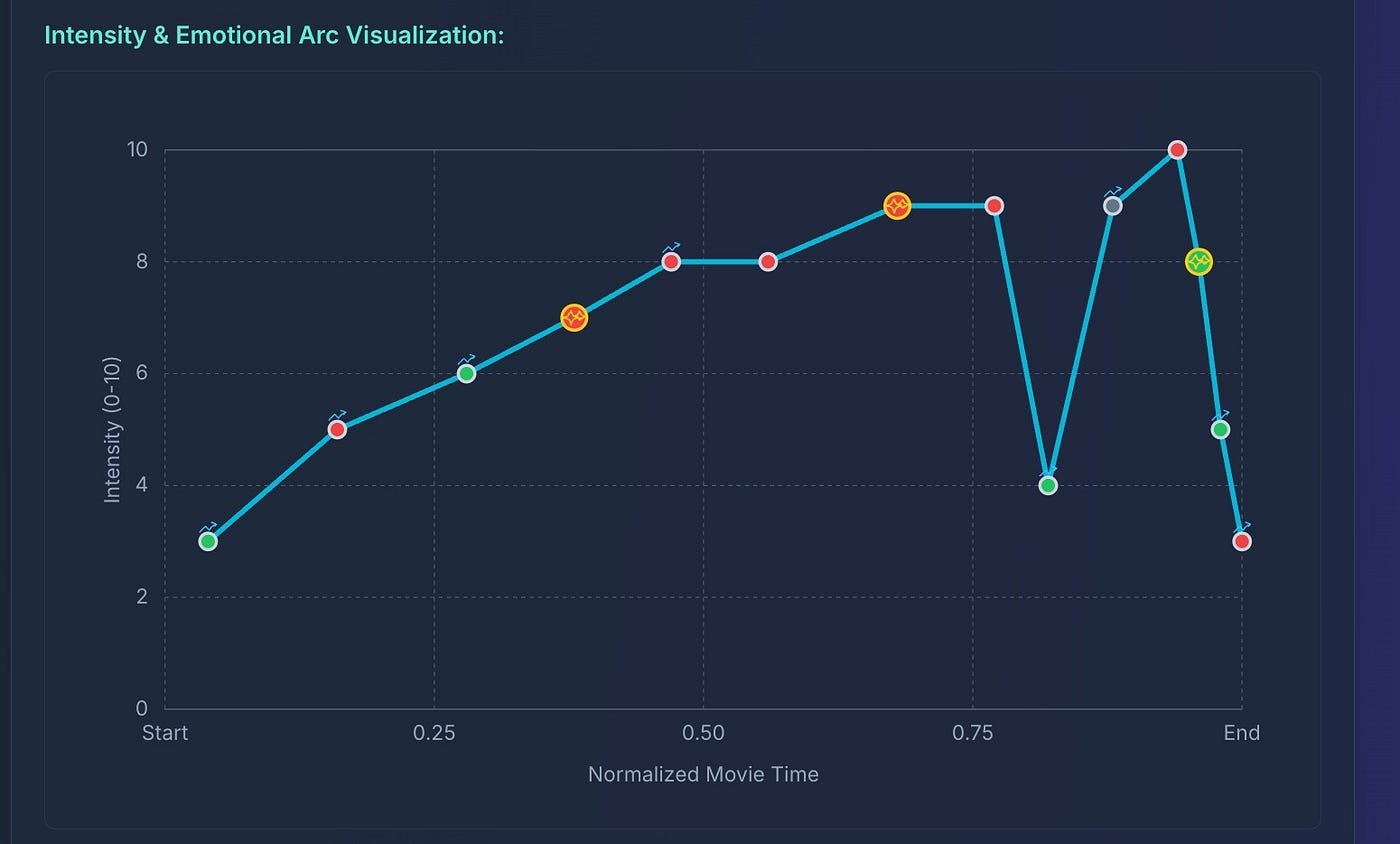
AI Morphokinetics: Movie Motion Analysis
Overall Dynamic Flow Summary:
“Family Man 3” embarks on a complex morphokinetic journey, initially presenting a deceptive calm as Srikant Tiwari attempts to embrace a quieter life. This early phase is characterised by a slower, almost melancholic rhythm, punctuated by moments of domestic friction and longing for normalcy. The film’s energy gradually builds with the introduction of a new, insidious threat, skillfully weaving high-stakes espionage with deeply personal family challenges. Pacing shifts dynamically, from tense, nail-biting action sequences and intricate intelligence gathering to introspective character beats and the series’ signature comedic banter between Srikant and JK. Emotionally, the film transitions from a fragile hope to escalating anxiety, fear, and moments of profound betrayal, culminating in a relentless, high-octane climax. The release of tension is bittersweet, offering a temporary resolution to the immediate danger but leaving lingering emotional scars and an underlying sense of unease, characteristic of Srikant’s perpetually precarious existence. The film expertly balances the personal and the professional, ensuring the audience feels the weight of every decision and its impact on the ‘family man.’
Timeline Structure Notes:
The narrative of “Family Man 3” is predominantly linear, following Srikant Tiwari’s journey as he confronts a new national security crisis while navigating his tumultuous family life. However, it effectively employs parallel storytelling, constantly cutting between TASC’s operational efforts and the unfolding domestic drama, often highlighting how one directly impacts the other. Brief, impactful flashbacks are strategically used, primarily to reveal the antagonist’s origins or a past mission that unexpectedly resurfaces, adding layers to the current threat. There are also moments of subjective reality, particularly when Srikant grapples with his moral dilemmas, blurring the lines between duty and personal cost, enriching the emotional depth without disrupting the core linearity.
Related Greybrainer Reads
GREYBRAINER
AI-Powered Cinematic Intelligence