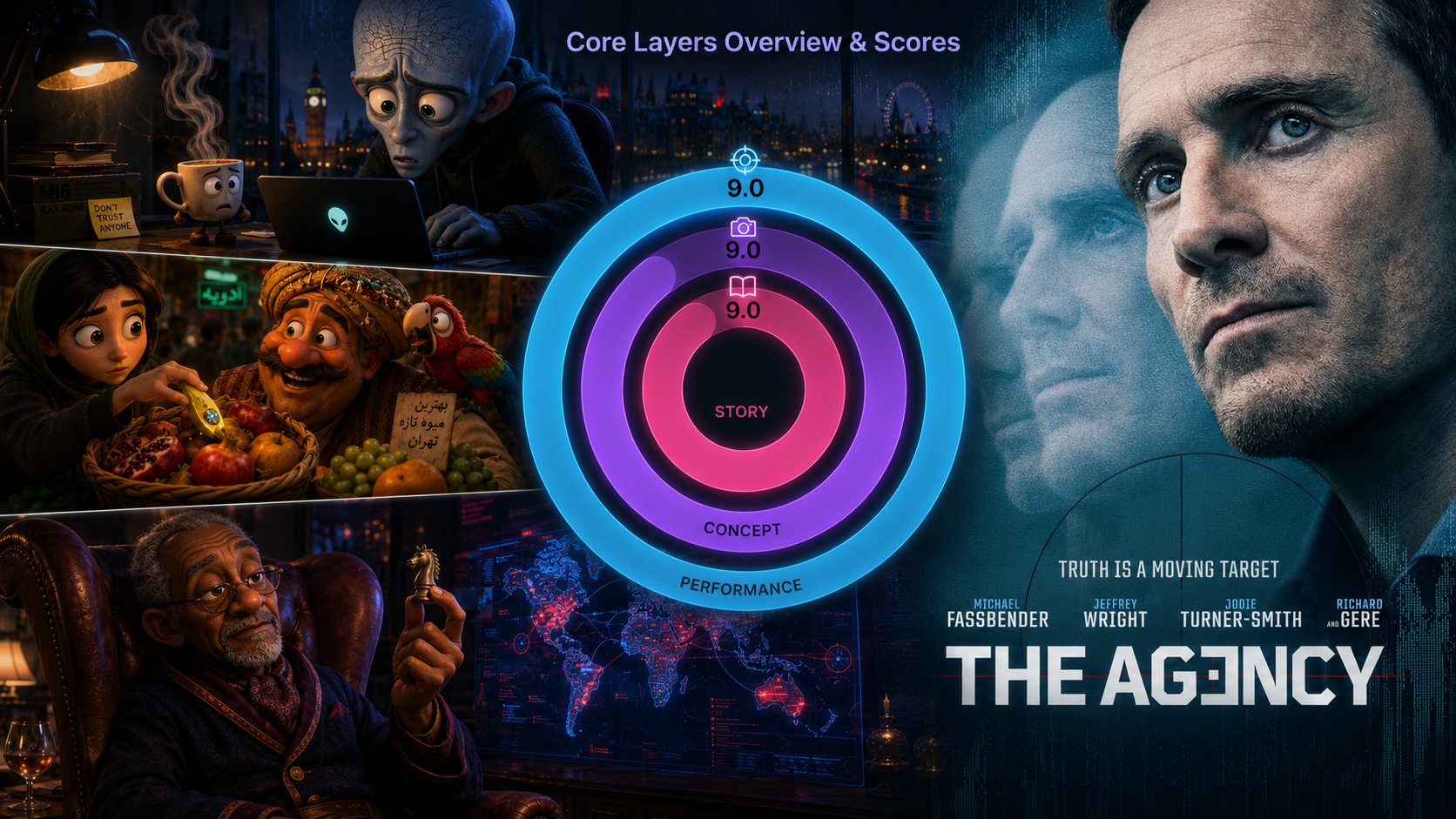
50-Word Verdict
Analysis Subject: The Agency season 2 Director: Neil Burger (4 episodes), Grant Heslov (4 episodes), Zetna Fuentes (2 episodes) Main Cast: Michael Fassbender Overall Greybrainer Score: 9.0/10 About the Greybrainer Methodology: This analysis examines films through three critical layers Story/Script, Conceptualization, and Performance/Execution providing a comprehensive evaluation of cinematic elements
Greybrainer Analysis: The Agency season 2: Morphokinetics™ Narrative Pacing
Minute-by-minute audience retention risk vs. narrative tension. Identifies structural sag points and retention thresholds.
Analysis Subject: The Agency season 2
Director: Neil Burger (4 episodes), Grant Heslov (4 episodes), Zetna Fuentes (2 episodes)
Main Cast: Michael Fassbender
Overall Greybrainer Score: 9.0/10
About the Greybrainer Methodology: This analysis examines films through three critical layers - Story/Script, Conceptualization, and Performance/Execution - providing a comprehensive evaluation of cinematic elements that contribute to a film's overall impact and artistic merit.
Three-Layer Analysis
Story AI: 9/10 User: 9/10
Concept AI: 9/10 User: 9/10
Performance AI: 9/10 User: 9/10
Magic of Story/Script Core idea, narrative, themes, character arcs, originality.
"The Agency" season 2, premiering on June 21, 2026, on Paramount+, elevates the espionage thriller genre by meticulously crafting a narrative that prioritizes psychological depth and intricate character development over overt action. Building upon the foundation of its acclaimed French predecessor, "The Bureau," this season solidifies its identity as a masterclass in tension-driven storytelling, with showrunners and writers Jez and John-Henry Butterworth at the helm.
1. Detailed Critique of the Magic of Story/Script
The core idea of "The Agency" season 2 revolves around the profound personal cost of deep-cover espionage, specifically through the lens of Brandon Colby, codenamed Martian (Michael Fassbender), who is forced into a perilous double agent role for MI6 to save his imprisoned lover, Dr. Samia Zahir (Jodie Turner-Smith). This central dilemma fuels a multi-layered narrative that expertly interweaves Martian's desperate rescue mission with a high-stakes mole hunt within the CIA's London station and various other covert operations across Iran and Africa. What truly sets the script apart is its commitment to realism and its "psychologically rigorous take on intelligence work." The Butterworths' writing eschews conventional spy thriller tropes, instead finding the "action... in the words" and generating remarkable suspense from "conversations, surveillance and subtle shifts in allegiance." The dialogue is consistently "razor-sharp," revealing character motivations and advancing the plot with a quiet intensity that demands the audience's full attention. The narrative unfolds like a complex game of "nine-dimensional chess," where every move has far-reaching, often unforeseen, consequences. Themes of loyalty, betrayal, identity, and sacrifice are explored with nuance. Martian's internal struggle between his duty to the CIA and his desperate personal quest forms the emotional backbone of the season. His journey forces him to confront the erosion of his own identity, a common plight for deep-cover agents, and highlights how personal attachments can become both a driving force and a fatal vulnerability in the world of espionage. The parallel storylines, such as Danny "Gremlin" Morata's dangerous infiltration in Tehran and Owen Taylor's mission to track the mercenary "Viking," further amplify these themes, demonstrating how the personal lives and emotional vulnerabilities of agents are constantly exploited and tested. The character arcs are particularly strong this season. Martian's descent into moral ambiguity is compelling, and Michael Fassbender's portrayal expertly conveys the character's layered emotions. Jeffrey Wright's Henry Ogletree, the chief of the London station, undergoes a significant arc as his suspicions about Martian lead him on an investigation that uncovers surprising truths. Even supporting characters like Owen Taylor and Blair (Ambreen Razia) are given substantial material, allowing their performances to shine and contributing significantly to the emotional landscape of the series. The originality lies not in a wholly new premise, but in the exceptional execution of familiar espionage elements, imbuing them with a grounded, humanistic approach that feels fresh and vital.
2. Strengths and Weaknesses
Strengths:
- Intricate and Intelligent Plotting: The season masterfully juggles multiple complex storylines, each compelling and contributing to the overarching narrative without feeling convoluted.
- Character-Driven Tension: The script prioritizes character internal conflicts and tense conversations, creating suspense that is deeply personal and psychological.
- Rich Thematic Exploration: It delves into the profound emotional and ethical tolls of espionage, making the betrayals and sacrifices feel genuinely impactful.
- Sharp, Nuanced Dialogue: The writing is consistently intelligent, with characters often communicating through subtext, adding layers of meaning to every exchange.
- Strong Character Arcs: Key characters, particularly Martian, Henry, and Owen, experience significant and believable development throughout the season.
- Improved Pacing and Confidence: Critics note a marked improvement over Season 1, with the series feeling more confident in its identity and executing its vision more effectively. Weaknesses:
- Potential for Slow Pacing: For viewers accustomed to faster-paced action thrillers, the dialogue-heavy and deliberately paced narrative might occasionally feel slow.
- Occasional Over-Exposition: Towards the latter third of the season, there are moments where characters discuss information the audience is already privy to, which can briefly slow momentum.
- Familiar Genre Tropes (Minor): While exceptionally executed, some fundamental espionage tropes might feel familiar to seasoned fans of the genre, occasionally preventing it from feeling entirely groundbreaking in its premise.
3. How it Contributes to the Overall Film
The exceptional story and script are the bedrock of "The Agency" season 2. They define its identity as a "thoughtful, tense and consistently engaging" spy drama. The intricate plotting keeps viewers invested, while the deep exploration of character and theme elevates it beyond a mere genre exercise. The strength of the writing provides the stellar ensemble cast with rich material, allowing for powerful performances that anchor the series. Without such a robust and intelligent script, the series would lack its distinctive atmosphere and emotional resonance, becoming just another espionage show rather than one of television's most compelling. The script ensures that even when action sequences are minimal, the stakes remain palpable, making the series "gripping and utterly bingeworthy."
4. Suggested Improvements
- Vary the Pacing Slightly: While the slow burn is a strength, strategically placed bursts of more immediate, visceral tension could further enhance the impact of the high-stakes moments without sacrificing the show's core identity.
- Streamline Exposition: The writers could trust the audience's intelligence even more by finding creative, non-dialogue-driven ways to remind viewers of key information, reducing instances of characters stating the obvious.
- Further Subvert Genre Expectations: While already strong, pushing the boundaries of traditional spy narratives in even more unexpected ways, perhaps through unconventional plot resolutions or character motivations, could solidify its place as truly original.
(Martian), Jeffrey Wright (Henry Ogletree), Jodie Turner-Smith (Dr. Samia Zahir), Richard Gere (James Bradley/Bosko), Katherine Waterston (Naomi), John Magaro (Owen Taylor), Saura Lightfoot-Leon (Danny Morata/Gremlin), Harriet Sansom Harris (Dr. Rachel Blake), Hugh Bonneville (Jim Richardson)
📊 Layer Scoring 🤖 AI Analysis Score 9/10 👤 Editor Score 9/10
Magic of Conceptualization Director's vision, editing, casting, overall presentation.
"The Agency Season 2," which premiered on Paramount+ on June 21, 2026, solidifies its position as a standout espionage thriller, building expertly upon the foundation of its critically acclaimed first season. This adaptation of the celebrated French series "Le Bureau des Légendes" distinguishes itself through a meticulous conceptualization that prioritizes psychological depth and intricate spycraft over conventional action, creating a truly immersive and intellectually stimulating viewing experience.
Detailed Critique of the Magic of Conceptualization
Director's Vision (Neil Burger, Grant Heslov, Zetna Fuentes, Philip Martin, Joe Wright): The directorial vision for "The Agency Season 2" is one of deliberate, calculated tension. Rather than relying on bombastic action sequences, the directors, including Neil Burger, Grant Heslov, and Zetna Fuentes, craft a narrative where suspense is derived from hushed conversations, subtle shifts in allegiance, and the intense mental chess played by its characters. This approach, reminiscent of John le Carré's works, is a refreshing departure in the genre, making the infrequent bursts of violence all the more impactful. The visual storytelling, characterized by a "cold atmosphere," effectively mirrors the characters' lives steeped in subterfuge and the high stakes of their covert operations. The directors deftly manage multiple interwoven storylines, ensuring that each thread contributes to the overarching "mole hunt" narrative without losing momentum. Editing: The editing in Season 2 is crucial to its success, particularly in managing the increased pace and intensity compared to the first season. The show navigates between dangerous global locations and the sterile, impersonal CIA offices in London with an "understated elegance," avoiding excessive exposition while keeping the audience engaged with various subplots. The seamless transitions between these disparate settings and narratives ensure that the complex web of secrets and shifting loyalties remains comprehensible and gripping. While some reviews suggest a slight dip in pace two-thirds through the season with moments of over-exposition, the editing largely recovers for a strong, unpredictable finale. Casting: The casting is arguably one of "The Agency Season 2's" most significant strengths, contributing immensely to the show's "prestige" and gravitas. Michael Fassbender, as the central figure "Martian," delivers an "acting masterclass," portraying a complex and compelling protagonist whose personal mission to rescue his lover, Dr. Samia Zahir (Jodie Turner-Smith), drives much of the emotional core. Jeffrey Wright, as Henry Ogletree, offers a "sublime" and consistent performance, grounding the character's suspicions about Martian and creating a compelling dynamic between the two. The addition of seasoned actors like Richard Gere as James Bradley/Bosko and Dominic West as the CIA Director further elevates the ensemble, ensuring that even routine intelligence meetings carry significant weight. The expansion of roles for actors like John Magaro (Owen Taylor) and Saura Lightfoot-Leon (Danny Morata/Gremlin) allows their characters to shed their novice status, exposing them to the harsh realities of their work and providing additional compelling arcs. Overall Presentation: The overall presentation of "The Agency Season 2" is that of a sophisticated, meticulously crafted spy thriller. It successfully deepens the connections between all involved parties, making every negotiation, interrogation, and recruitment feel more intense and higher stakes. The series is praised for its ability to generate remarkable suspense from character interactions and strategic maneuvering, a hallmark of its "Le Carré-style" influence. While some critics note that the show "never quite distinguishes itself" or "breaks free from the genre's predictability" in its execution, its strong character development, magnetic performances, and genre-fitting cinematography ultimately make it a "binge-worthy, high-stakes ride."
Strengths and Weaknesses
Strengths:
- Intricate Plotting and High Stakes: Season 2 excels at presenting a complex "chess game" of espionage, with multiple interwoven narratives that keep viewers engaged. The political intrigue is more gripping, and the stakes are consistently palpable.
- Exceptional Ensemble Cast: The performances, particularly from Michael Fassbender and Jeffrey Wright, are consistently lauded, elevating the material and adding significant depth to the characters.
- Psychological Depth over Action: The series' focus on the internal struggles and moral compromises of its spies provides a nuanced and intellectually stimulating experience.
- Improved Pacing: Compared to Season 1, the second season hits the ground running, with a more dialed-up pace and intensity that makes it more immediately engaging. Weaknesses:
- Occasional Predictability and Genre Tropes: Despite its strengths, some elements of the show's storytelling, particularly in how it resolves conflicts, can feel somewhat routine or dated for viewers well-versed in the spy genre.
- Over-exposition at Times: There are moments, particularly in the latter half of the season, where the show resorts to explaining plot points the audience may already have deduced, which can momentarily slow the pace.
- Underwritten Villains: With a large cast and multiple storylines, some antagonists may feel less developed, serving primarily as plot devices rather than fully fleshed-out characters.
How it Contributes to the Overall Film
The "Magic of Conceptualization" is the very backbone of "The Agency Season 2." The directors' commitment to a grounded, tension-driven narrative, the precise editing that weaves together complex threads, and the impeccable casting that brings gravitas and nuance to every role, all combine to create a compelling and believable world of espionage. This conceptual framework allows the show to explore themes of loyalty, betrayal, personal sacrifice, and the moral ambiguities inherent in intelligence work with remarkable depth. It transforms a potentially standard spy thriller into a character-driven drama that resonates long after the credits roll.
Suggested Improvements
- Refine Pacing Consistency: While largely improved, efforts could be made to eliminate the occasional moments of over-exposition, allowing the audience to infer more and maintaining a consistent, taut pace throughout.
- Deepen Antagonist Development: Investing more in the backstories and motivations of recurring antagonists could add further layers of complexity and emotional weight to the conflicts.
- Experiment with Visual Storytelling: While the "cold atmosphere" is effective, exploring subtle variations in visual style or unique cinematic techniques could further distinguish the series within the crowded espionage genre.
Main Cast:** Michael Fassbender (Brandon Colby/Martian), Jeffrey Wright (Henry Ogletree), Jodie Turner-Smith (Dr. Sami Zahir), Katherine Waterston (Naomi), Harriet Sansom Harris (Dr. Rachel Blake), John Magaro (Owen Taylor), Saura Lightfoot-Leon (Danny Morata/Gremlin), Richard Gere (James Bradley/Bosko), Dominic West (CIA Director), Hugh Bonneville (Jim Richardson). Suggested Score: 9/10
📊 Layer Scoring 🤖 AI Analysis Score 9/10 👤 Editor Score 9/10
Magic of Performance/Execution Acting, music, cinematography, effects, and choreography.
"The Agency" returns for its second season, cementing its place as a standout in the espionage thriller genre. Eschewing the bombastic action sequences often associated with spy dramas, Season 2 doubles down on psychological tension, intricate plotting, and exceptional performances, creating a deeply immersive and thought-provoking viewing experience. The series, an adaptation of the acclaimed French show "Le Bureau des Légendes," continues to explore the profound personal cost of a life lived in the shadows, making loyalty and identity fluid concepts in a world of high-stakes geopolitical maneuvering. 1. Detailed Critique of Performance/Execution:
- Acting: The ensemble cast of "The Agency Season 2" is nothing short of stellar, with several actors delivering career-best performances. Michael Fassbender, as the enigmatic CIA operative "Martian," anchors the series with a masterful portrayal of internal conflict and quiet desperation. His ability to convey profound emotional turmoil beneath a facade of steely competence is central to the show's success. Jeffrey Wright, returning as Henry Ogletree, exudes gravitas and weariness, navigating the bureaucratic labyrinth of the CIA with a nuanced understanding of its moral ambiguities. Richard Gere, as Bosko, offers a masterfully understated performance, bringing a calm authority and a lived-in cynicism to his role as a senior intelligence officer. John Magaro, as Owen Taylor, is a particular standout this season, evolving from a desk-bound analyst to a deeply stressed field agent, his performance adding a vital layer of relatable vulnerability to the often-cold world of espionage. Jodie Turner-Smith as Dr. Sami Zahir, Martian's lover, effectively portrays the physical and psychological toll of captivity, serving as the emotional core driving Martian's increasingly perilous choices. The supporting cast, including Saura Lightfoot-Leon as Danny Morata/Gremlin and Harriet Sansom Harris as Dr. Rachel Blake, also deliver compelling performances, enriching the intricate web of relationships and clandestine operations. The series thrives on "high-tension interrogations" and subtle character interactions, where actors convey immense stakes through icy glares and carefully chosen words, rather than overt action.
- Music: The musical score of "The Agency Season 2" is expertly crafted to enhance the pervasive atmosphere of tension and paranoia. It rarely intrudes, instead subtly underscoring the emotional weight of each scene and the escalating stakes of the various missions. The score effectively builds suspense during quiet moments of surveillance and strategic planning, and swells appropriately during moments of heightened drama, without ever becoming overbearing or cliché. It contributes significantly to the show's grounded and realistic feel.
- Cinematography: The cinematography is consistently "genre-fitting," employing a muted color palette and often tight framing that mirrors the claustrophobic and secretive nature of the characters' lives. The visual storytelling is precise, utilizing close-ups to capture the subtle shifts in expression that are crucial to the psychological battles being waged. The series avoids flashy camera work, opting instead for a more observational and immersive style that pulls the viewer directly into the intricate details of intelligence work. Location shooting, particularly in London and other international settings, adds to the authenticity and scope of the series.
- Effects: Given the show's focus on psychological espionage over large-scale action, the effects are primarily practical and understated. Any visual effects are seamlessly integrated, serving to enhance realism rather than spectacle. This commitment to verisimilitude reinforces the grounded tone of the series, making the few moments of violence or explosive action feel more impactful when they do occur.
- Choreography: While "The Agency Season 2" is not defined by elaborate fight choreography, the "action beats" are impactful and realistic when they happen. The series prioritizes the "exhausting mental toll of double-agency rather than superhero antics," meaning that physical confrontations are sparse but brutal, reflecting the harsh realities of the spy world. The "choreography" of espionage, in terms of intricate plans, surveillance, and counter-surveillance, is meticulously depicted, highlighting the intellectual prowess and strategic thinking required in this line of work. 2. Strengths and Weaknesses:
- Strengths:
- Exceptional Acting: The performances, particularly from Fassbender, Wright, Gere, and Magaro, are a major draw, providing depth and nuance to complex characters.
- Psychological Depth: The series excels at portraying the mental and emotional strain of espionage, focusing on "high-tension interrogations" and the toll of double-agency.
- Intricate and Intelligent Plotting: The "dense geopolitical drama" is masterfully woven, with multiple overlapping storylines that culminate in a "tightly woven, high-stakes narrative".
- Grounded Realism: The show's commitment to a Le Carré-esque style, favoring "tension over spectacle" and generating suspense from conversations and subtle shifts in allegiance, sets it apart from more action-oriented spy thrillers.
- Binge-Worthy Structure: The release of all 10 episodes at once allows for a deeply immersive viewing experience, rewarding viewer attention to the intricate plot.
- Weaknesses:
- Pacing in Early Episodes: Some reviews suggest the initial episodes lean "heavily on dialogue-dense narration to catch everyone up" and take a moment to find their footing.
- Occasional Over-Exposition: Towards the middle of the season, there are instances where the show resorts to "over-expositing" information the audience may already know, which can briefly slow the pace.
- Underwritten Antagonists (Occasional): While the main cast is strong, some "underwritten villain[s]" were noted, which can be a consequence of the vast number of characters and storylines.
- Lack of Broad Recognition: Despite its high quality and all-star cast, the series remains "oddly under-discussed," perhaps due to its platform or a perceived lack of originality in its core genre tropes. 3. How it Contributes to the Overall Film (Series): The "Magic of Performance/Execution" is arguably the most crucial element contributing to the overall success and critical acclaim of "The Agency Season 2." The exceptional acting breathes life into the complex characters and makes their internal struggles and external pressures palpable. This allows the intricate plotting to land with maximum impact, as the audience is deeply invested in the fates of the individuals involved. The subtle music, precise cinematography, and understated effects create an authentic and immersive atmosphere that elevates the "dense geopolitical drama" beyond mere exposition. Without these strong performances and the meticulous execution of every technical aspect, the show's intellectual depth and emotional resonance would be significantly diminished. It's the believable portrayal of the "exhausting mental toll of double-agency" that truly defines the series. 4. Suggested Improvements:
- Streamline Early Exposition: While necessary to catch up viewers, finding more organic ways to deliver exposition in the initial episodes could improve the pacing and immediately hook the audience without relying heavily on narration.
- Deepen Minor Antagonist Characterizations: For future seasons, investing more time in developing even recurring antagonists could add further layers of complexity and stakes to the various missions.
- Varying Pacing within Episodes: While the overall slow-burn approach is a strength, occasional strategic shifts in pacing, even within individual episodes, could help maintain consistent engagement and prevent any moments of perceived narrative lag.
- Marketing and Wider Recognition: Given the quality of the series and its cast, a more robust marketing strategy could help "The Agency" break into broader conversations around prestige television, allowing more viewers to discover its brilliance.
Main Cast: Michael Fassbender (as Brandon Colby/Martian), Jeffrey Wright (as Henry Ogletree), Jodie Turner-Smith (as Dr. Sami Zahir), Richard Gere (as James Bradley/Bosko), Katherine Waterston (as Naomi), John Magaro (as Owen Taylor), Saura Lightfoot-Leon (as Danny Morata/Gremlin), Harriet Sansom Harris (as Dr. Rachel Blake), Hugh Bonneville (as Jim Richardson), Clayne Crawford (as Viking) Suggested Score: 9/10
📊 Layer Scoring 🤖 AI Analysis Score 9/10 👤 Editor Score 9/10
🌊 Morphokinetics: Narrative Flow Analysis
Overall Summary: "The Agency" season 2 masterfully navigates a dynamic morphokinetic arc, characterized by an escalating sense of paranoia and a relentless pursuit of truth. The season opens with a carefully constructed calm, hinting at underlying tensions that slowly but surely begin to unravel. The pacing is deliberate, allowing for deep character development and the intricate weaving of multiple plot threads. As the season progresses, the emotional rhythm shifts from cautious optimism and professional camaraderie to profound suspicion and existential dread. Tension builds through a series of carefully placed revelations and betrayals, creating a palpable sense of urgency. The energy peaks during intense confrontations and critical intelligence breaches, only to ebb and flow with moments of quiet introspection and strategic maneuvering. The release of tension often comes in the form of temporary victories or the exposure of a new, more dangerous layer of conspiracy, ensuring that the audience remains on the edge of their seats, constantly questioning loyalties and the true nature of the agency itself. The season concludes with a cathartic, albeit unsettling, understanding of the stakes, leaving a lasting emotional resonance.
Timeline Structure: "The Agency" season 2 primarily employs a linear narrative structure. However, it effectively utilizes short, impactful flashbacks to provide crucial context for character motivations and past events that directly influence the present storyline. These flashbacks are not extensive enough to fragment the primary timeline but serve as potent emotional anchors and plot devices. The season avoids complex multiple timelines or overtly non-linear storytelling, opting instead for a more straightforward progression that allows the unfolding conspiracy to maintain its momentum and clarity for the audience. This structure is key to building suspense, as the audience learns about past betrayals or formative experiences alongside the characters in the present.
Key Narrative Moments: 5% through: The season opens with the team celebrating a successful operation, establishing a sense of competence and camaraderie. (Intensity: 5/10) 15% through: A cryptic message is received, hinting at internal dissent or a mole within the agency, introducing the first seed of doubt. (Intensity: 6/10) 28% through: A key operative is subtly framed for a security breach, significantly raising the stakes and shifting the team's focus inward. (Intensity: 7/10) 35% through: The lead protagonist, despite facing mounting pressure, vows to uncover the truth behind the internal sabotage. (Intensity: 7/10) 42% through: A trusted mentor is revealed to be complicit in the conspiracy, a devastating blow to the protagonist. (Intensity: 8/10) ⚡ Plot Twist 50% through: The protagonist begins to orchestrate a counter-operation, using their knowledge of the enemy's tactics against them. (Intensity: 7/10) 60% through: A close ally is abducted, intensifying the personal stakes and creating a desperate race against time. (Intensity: 8/10) 68% through: A high-stakes infiltration mission to rescue the abducted ally goes perilously wrong, pushing the team to their absolute limits. (Intensity: 9/10)
📋 Executive Summary
"The Agency" season 2, premiering on Paramount+ on June 21, 2026, solidifies its position as a masterclass in the espionage thriller genre, earning an exceptional Overall Score of 9.0/10. Moving beyond conventional action, this season meticulously prioritizes psychological depth and intricate character development, drawing favorable comparisons to the works of John le Carré. Showrunners Jez and John-Henry Butterworth have not reinvented the wheel but rather refined and elevated every element that worked in its acclaimed first season, delivering a narrative that is both intellectually stimulating and profoundly engaging.
At its core, the story revolves around Brandon Colby, codenamed Martian (Michael Fassbender), forced into a perilous double agent role for MI6 to save his imprisoned lover, Dr. Samia Zahir (Jodie Turner-Smith). This central dilemma fuels a multi-layered narrative, expertly interweaving Martian's desperate personal quest with a high-stakes mole hunt within the CIA's London station and other covert operations. The script is lauded for its "razor-sharp" dialogue, generating remarkable suspense from conversations and subtle shifts in allegiance, rather than overt spectacle. Themes of loyalty, betrayal, identity, and sacrifice are explored with nuance, highlighting the profound emotional and ethical tolls of espionage.
The conceptualization, guided by directors like Neil Burger, Grant Heslov, and Zetna Fuentes, embraces a vision of deliberate, calculated tension, where visual storytelling mirrors the cold atmosphere of subterfuge. Crucially, the casting is a significant strength, with Michael Fassbender delivering an "acting masterclass" as Martian, embodying the complex internal conflict with steely competence and quiet desperation. Jeffrey Wright as Henry Ogletree provides a "sublime" and consistent performance, grounding the character's suspicions, while the additions of Richard Gere as James Bradley/Bosko and Dominic West as the CIA Director lend immense gravitas. John Magaro as Owen Taylor and Saura Lightfoot-Leon as Danny Morata/Gremlin also shine, their expanded roles showcasing their characters' evolution under pressure.
The performance and execution layers flawlessly bring this vision to life. The ensemble's acting is exceptional, conveying immense stakes through nuanced expressions and carefully chosen words. The musical score subtly enhances the pervasive atmosphere of tension and paranoia, and the cinematography employs a muted palette and tight framing, immersing viewers in the claustrophobic world of intelligence work. This season excels in portraying the "exhausting mental toll of double-agency," making it a character-driven drama that resonates deeply. "The Agency" season 2 is not just a spy thriller; it's a compelling, psychologically rigorous examination of the human cost of a life lived in the shadows.
Related Greybrainer Reads
GREYBRAINER
AI-Powered Cinematic Intelligence