Greybrainer Analysis: Save The Tigers Season 3: Morphokinetics™ Narrative Pacing
Minute-by-minute audience retention risk vs. narrative tension. Identifies structural sag points and retention thresholds.
Greybrainer Analysis: Save The Tigers Season 3
“Save The Tigers Season 3” boldly reinvents its beloved franchise, transcending its established slice-of-life marital comedy into an ambitious cosmic social experiment. Under the seasoned direction of Sriraam Eragam, this latest installment pivots from relatable domestic squabbles to a fantastical exploration of alternate realities, initiated by Lord Indra himself. This conceptual leap is the series’ most striking original contribution, injecting fresh narrative vitality while striving to retain its signature blend of humor and emotional resonance.
The story, driven by an ingenious core idea, thrusts our exasperated trio — Ghanta Ravi (Priyadarshi Pulikonda), Rahul, and Vikram — into worlds where their perceived marital burdens are absent, and professional success abounds. This narrative structure cleverly facilitates a deeper thematic dive into marriage, mutual respect, and personal accountability. While the initial episodes retain familiar chaotic humor, the journey through parallel universes is designed for profound self-discovery, forcing the protagonists to confront whether external success truly equates to happiness. Priyadarshi, along with Abhinav Gomatam and a standout Chaitanya Krishna, anchors this fantastical premise with dependable, nuanced performances, particularly excelling in their dual roles. The ensemble cast, including the wives and Rohini, also delivers effectively, grounding the outlandish plot in relatable human emotions.
Conceptualization shines in its audacious decision to embrace the fantasy element, with Eragam successfully maintaining the series’ “flavour” while navigating the new narrative territory. The casting, a clear strength, leverages established chemistry, though the comedic genius of Vennela Kishore as Lord Indra feels somewhat underutilized, despite his pivotal role as the catalyst for the divine experiment. Visually, S.V. Vishweshwar’s clean cinematography and Ajay Arasada’s complementary music effectively support the narrative without relying on excessive effects, subtly differentiating the alternate realities. However, across all layers, a recurring challenge emerges in pacing, with several middle portions feeling stretched and repetitive arguments impacting narrative flow. The series also grapples with dialogue content, as an increased use of cuss words and references to adultery may limit its appeal to the broader family audience it traditionally serves.
Despite these minor missteps, “Save The Tigers Season 3” is a commendable evolution. It successfully balances its comedic roots with a newfound thematic depth, offering a compelling, if occasionally uneven, exploration of modern relationships through a uniquely Indian fantastical lens. Overall, the series earns a Greybrainer Score of 7.2/10, a testament to its innovative spirit and strong core performances.
Three-Layer Analysis
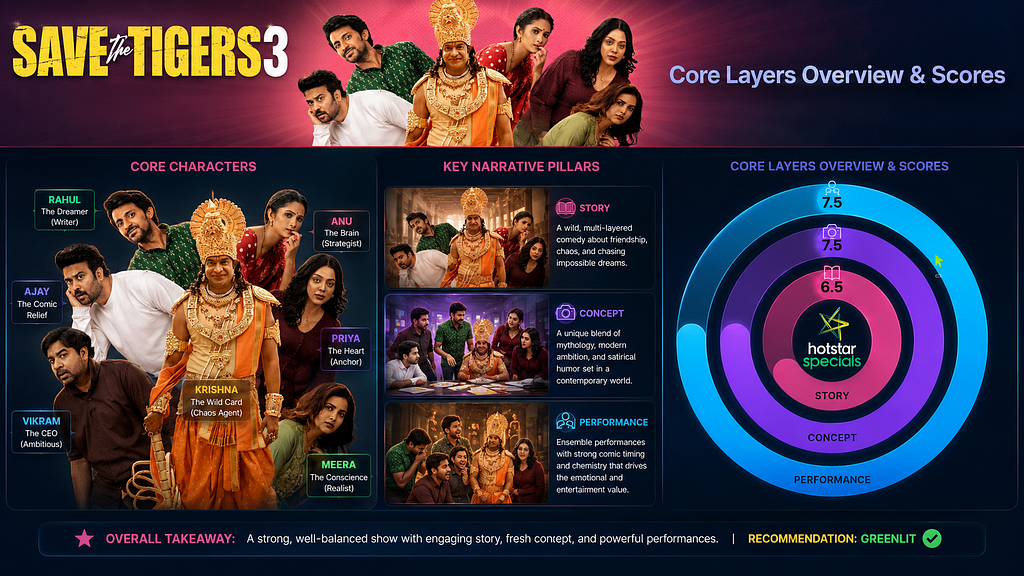
Layer Score Visualisation
Magic of Story/Script
Core idea, narrative, themes, character arcs, originality.
“Save The Tigers Season 3” takes a bold, fantastical leap, steering its beloved trio of exasperated husbands from relatable domestic squabbles into a cosmic social experiment. While retaining the series’ signature blend of humor and relationship drama, this installment introduces a parallel universe concept that fundamentally reshapes its narrative and thematic explorations.
Detailed Critique of Story/Script: Core idea, narrative, themes, character arcs, originality.
The core idea of “Save The Tigers Season 3” is refreshingly ambitious for a web series known for its slice-of-life comedy. It centers on three married men — Ghanta Ravi, Rahul, and Vikram — who are perpetually frustrated with their marital lives and often blame their wives for their misfortunes. Their collective grievances reach Lord Indra, who, curious about the widespread unhappiness among husbands, initiates a “divine experiment.” The trio is thrust into alternate realities where they achieve significant professional success and seemingly ideal lives, free from their perceived domestic burdens. Ravi becomes a powerful MLA, Rahul a successful screenwriter, and Vikram a high-profile CEO.
The narrative masterfully intertwines comedy, relationship drama, and a newfound fantasy element. The initial episodes set the stage with the familiar frustrations, but the introduction of parallel worlds marks a significant shift. The script cleverly uses this fantastical premise to explore the age-old question: does external success and freedom from marital “troubles” truly lead to happiness? The first half reportedly maintains a chaotic, humorous tone, while the second half introduces more heart and emotional depth. The characters are portrayed in “double roles,” navigating their original lives and their successful, unencumbered alternate versions, leading to a series of comical and often insightful situations.
The themes explored are more profound this season, delving into marriage, mutual respect, women’s empowerment, and personal accountability. Through their experiences in the alternate realities, the protagonists are meant to realize that every life has its own struggles, and true happiness stems from understanding, acceptance, and gratitude rather than comparison or escape. This thematic depth elevates the series beyond mere marital comedy.
Character arcs are central to this season’s premise. The men begin in a state of blame and dissatisfaction, but their journey through the parallel worlds is designed to be one of self-discovery. They are forced to confront the consequences of their desires and, presumably, grow to appreciate their original lives and partners. Priyadarshi and Abhinav Gomatam continue to deliver dependable performances, while Chaitanya Krishna, as Vikram, particularly shines in portraying a frustrated man dealing with personal issues, showcasing significant growth in his role. The wives, too, are given more nuanced portrayals, adding balance to the narrative with their anger, sarcasm, and patience.
The originality of this season lies in its bold departure from the previous seasons’ largely slice-of-life approach by integrating a cosmic twist and parallel universes. While cosmic elements are not new in cinema, their application to a relatable marital comedy web series is an exciting premise that effectively changes the show’s dynamic.
Strengths and Weaknesses
Strengths:
- Fresh Fantasy Twist: The introduction of Lord Indra and alternate realities breathes new life into the franchise, offering a unique blend of comedy and fantasy.
- Relatable Premise with a Twist: Despite the fantastical elements, the core frustrations of the married men remain relatable, grounding the outlandish plot in human emotions.
- Strong Performances: Priyadarshi, Abhinav Gomatam, and Chaitanya Krishna are praised for their performances, with Chaitanya Krishna being a standout. The supporting cast, including the wives, also contributes effectively.
- Humor and Dialogues: The series retains its light-hearted fun, with humor stemming from situations rather than forced jokes, and features sharp, conversational dialogues that are expected to resonate with audiences.
- Thematic Depth: The exploration of gratitude, mutual respect, and personal accountability adds meaningful layers to the entertainment.
Weaknesses:
- Pacing Issues: The middle portions of the series are noted to feel stretched, with some situations continuing longer than necessary, impacting the overall pacing. Repetitive arguments in the first half also contribute to this.
- Underutilized Potential: Vennela Kishore, despite playing the pivotal role of Lord Indra, is reportedly not fully utilized, with his potential as a performer not completely tapped.
- Content for Family Audiences: The excessive use of cuss words and repeated references to adultery might not sit well with all family audiences, which could be a concern for a series otherwise positioned as a family entertainer.
- Some Jokes Miss the Mark: While generally humorous, some jokes might not resonate with everyone.
How it contributes to the overall film
The story and script are the backbone of “Save The Tigers Season 3,” driving its shift from a simple marital comedy to a more ambitious narrative. The fantasy twist not only provides a fresh comedic canvas but also allows for a deeper exploration of its characters’ desires and the true meaning of marital bliss. It aims to balance humor, family emotions, and fantasy elements, successfully evolving the franchise while staying true to its core essence of three friends grappling with marital challenges. The script’s ability to maintain the series’ “flavour” despite a new director and a fantastical premise is crucial to its success. It transforms the characters’ journey into a lesson about gratitude and understanding, making the series more impactful.
Suggested Improvements
- Tighten the Mid-Section: A tighter screenplay in the middle episodes would enhance engagement and prevent the narrative from feeling stretched. This could involve streamlining repetitive arguments and situations.
- Maximize Vennela Kishore’s Role: Given Vennela Kishore’s comedic talent and the significance of his character, expanding his screen time or giving him more direct interactions with the protagonists could add significant value and humor.
- Refine Dialogue for Broader Appeal: While sharp dialogues are a strength, a review of the “excessive use of cuss words and repeated references to adultery” could make the series more universally appealing to family audiences without compromising its comedic edge.
- Vary Humorous Situations: While humor from situations is good, ensuring a wider variety of comedic scenarios could prevent certain jokes from feeling repetitive and ensure broader resonance.
Main Cast: Ghanta Ravi, Abhinav Gomatam (Rahul), Chaitanya Krishna (Vikram), Jordar Sujatha (Hymavathi), Pavani Gangireddy (Madhuri), Deviyani Sharma (Rekha), Vennela Kishore (Lord Indra/Gupta), Gundu Sudarshan (Chitragupta), Rohini, Harshavardhan.
Suggested Score:
Layer Scoring
- AI Analysis Score: 6.5/10
- Editor Score: 6.5/10
Magic of Conceptualisation
Director’s vision, editing, casting, overall presentation.
“Save The Tigers Season 3,” the latest installment in the popular Telugu web series franchise, plunges its beloved trio of frustrated husbands into an imaginative new dimension, marking a significant conceptual shift from its predecessors. Released on June 19, 2026, on JioHotstar, this season attempts to blend its signature brand of relatable marital comedy with a fresh fantasy twist, courtesy of a divine intervention that transports the protagonists into alternate realities.
Detailed Critique of Conceptualisation: The Magic and the Misfires
The “Magic of Conceptualization” in “Save The Tigers Season 3” primarily lies in its ambitious decision to introduce a “cosmic twist” and “parallel worlds” into an established comedic framework. This bold move by creators Mahi V Raghav and Pradeep Advaitham, executed under the direction of Sriraam Eragam, aims to inject novelty and expand the narrative scope beyond the domestic squabbles of the first two seasons.
Director’s Vision (Sriraam Eragam): Sriraam Eragam, taking the directorial reins for this season, successfully maintains the core “flavour” and “light-hearted fun” that made the franchise popular. His vision embraces the fantasy element, using Lord Indra’s intervention to explore the protagonists’ lives in dramatically different scenarios. This conceptual leap allows for a humorous yet thought-provoking examination of whether external success can truly resolve internal personal and marital frustrations. The challenge for Eragam was to seamlessly integrate this fantastical premise without alienating the audience accustomed to the series’ grounded humor, a task he largely accomplishes by ensuring the underlying emotional struggles remain relatable.
Editing (Shravan Katikaneni): With a plot revolving around parallel worlds and double roles, the editing, handled by Shravan Katikaneni, was crucial for clarity and pacing. The non-linear shooting schedule, requiring actors to be intimately familiar with the script’s intricate jumps between realities, underscores the complexity of the editing task. While the editing generally serves the story, some reviews point to “pacing issues” and “stretched middle portions,” suggesting that a tighter narrative flow could have enhanced engagement, especially during the transitions between the alternate realities.
Casting: The casting remains a significant strength, leveraging the established chemistry of the lead trio: Priyadarshi Pulikonda (Ghanta Ravi), Abhinav Gomatam (Rahul), and Krishna Chaitanya (Vikram). Their dependable performances and natural camaraderie are instrumental in grounding the fantastical elements in relatable human reactions. Krishna Chaitanya, in particular, receives commendation for his standout portrayal of a frustrated man grappling with his new reality. The addition of Vennela Kishore as Lord Indra is a “surprise package” that fits perfectly with his renowned comic timing, although some critics feel his character’s potential wasn’t fully exploited. The supporting cast, including Jordaar Sujatha, Pavani Gangireddy, and Deviyani Sharma, also contribute effectively, navigating their “double roles” with commendable ease.
Overall Presentation: The overall presentation successfully balances the familiar with the fresh. Cinematography by S.V. Vishweshwar “serves the story well,” creating distinct visual tones for the different realities without overcomplicating the aesthetic. Ajay Arasada’s music effectively “complements both the humorous and emotional moments.” The series maintains its situational humor, delivering sharp, conversational dialogues that resonate with the audience. This season’s “cosmic twist” is an exciting premise that genuinely changes the dynamic of the show, offering both laughs and moments of reflection on life choices and marital dynamics.
Strengths and Weaknesses
Strengths:
- Ambitious Conceptual Shift: The introduction of a fantasy element and parallel worlds is a brave and refreshing move that prevents the series from becoming stale.
- Retained Core Humor: Despite the new premise, the series successfully retains its signature light-hearted and situational comedy.
- Strong Lead Performances: The core trio’s chemistry and individual performances, especially Krishna Chaitanya’s, continue to be a major draw.
- Relatable Themes: Beneath the fantasy, the series continues to explore relatable themes of marital frustration, self-doubt, and the search for happiness.
Weaknesses:
- Pacing Issues: The middle portions of the series are noted to be “stretched,” potentially impacting viewer engagement.
- Underutilized Potential: While Vennela Kishore’s addition is positive, his role as Lord Indra could have been expanded to maximize his comedic and narrative impact.
- Complexity Management: While the parallel worlds add intrigue, ensuring consistent clarity and avoiding narrative confusion throughout such a complex storyline can be challenging.
How it Contributes to the Overall Film
The conceptualization of “Save The Tigers Season 3” significantly elevates the franchise beyond a simple slice-of-life comedy. By introducing a fantasy-driven “social experiment,” it broadens the scope for both humor and thematic depth. It allows the series to explore universal questions about contentment, success, and personal identity through an exaggerated yet accessible lens. This expansion ensures the franchise remains fresh and engaging, offering a new perspective on the characters’ ongoing struggles and aspirations, rather than simply repeating past formulas. The “double roles” also provide a fertile ground for the actors to showcase their range and for the writers to craft unique comedic situations born from identity confusion and contrasting realities.
Suggested Improvements
- Tighter Editing and Pacing: A more rigorous editing pass, particularly in the middle episodes, could condense stretched sequences and maintain a brisk pace, ensuring consistent engagement.
- Maximize New Character Potential: Fully explore the comedic and narrative possibilities of characters like Lord Indra, allowing seasoned actors like Vennela Kishore more screen time and impactful contributions.
- Refined Narrative Transitions: While the parallel worlds are a strength, ensuring even smoother and clearer transitions between realities could further enhance viewer comprehension and immersion.
- Deeper Exploration of Alternate Realities: While hinted at, a more profound exploration of the consequences and philosophical implications of the alternate realities could add a layer of depth to the humor.
Main Cast: Priyadarshi Pulikonda (Ghanta Ravi), Abhinav Gomatam (Rahul), Krishna Chaitanya (Vikram), Jordaar Sujatha (Hymavathi), Pavani Gangireddy (Madhuri), Deviyani Sharma (Rekha), Vennela Kishore (Lord Indra), Harshavardhan, Rohini, Seerat Kapoor (Hamsalekha)
Suggested Score: 7.5/10
Layer Scoring
- AI Analysis Score: 7.5/10
- Editor Score: 7.5/10
Magic of Performance/Execution
Acting, music, cinematography, effects, choreography.
“Save The Tigers Season 3” continues the popular Telugu web series with a fresh, fantastical twist, offering a blend of humor, emotions, and a unique exploration of marital dynamics. Directed by Sriraam Eragam, the latest installment, released on JioHotstar, retains the franchise’s beloved flavor while venturing into new narrative territory with a parallel universe concept.
Detailed Critique of Performance/Execution
Acting: The core strength of “Save The Tigers Season 3” undeniably lies in its performances. Priyadarshi, Abhinav Gomatam, and Chaitanya Krishna effortlessly step back into their roles, exhibiting natural chemistry that fuels many of the series’ funniest moments. Abhinav Gomatam, in particular, delivers a standout performance, brilliantly portraying contrasting double roles as Rahul and his successful, confident alternate self. This duality allows him to showcase impressive range and provides numerous laugh-out-loud instances. Chaitanya Krishna also shines, balancing sarcasm with vulnerability effectively, particularly in his portrayal of a frustrated man dealing with personal issues. Priyadarshi brings both comedic timing and quiet emotional depth as his character grapples with new realizations.
The supporting cast is equally commendable. Jordaar Sujatha, Pavani Gangireddy, and Deviyani Sharma are good in their respective roles, adding balance to the narrative by portraying wives with anger, sarcasm, and patience. Deviyani Sharma handles a noticeably different character with ease, generating amusing moments through her innocent and fearful attitude. Rohini’s comic timing is spot on, proving to be a major asset, especially in the climax. Vennela Kishore, in his role as Lord Indra, serves as the catalyst for the fantasy element, adding an extra spark with his unique one-liners, though some critics feel his potential could have been further utilized. Gundu Sudarshan also performs his role well, contributing to the comedic backdrop.
Music: The music, primarily handled by N. Venkata Swamy and Ajay Arasada (with Sriram Madduri also credited), effectively complements the series’ humorous and emotional beats. The background score supports both the comedic timing and the more heartfelt moments, enhancing the overall viewing experience. While songs are limited, they are strategically placed, serving the narrative rather than distracting from it.
Cinematography: S.V. Vishweshwar (also credited as Vishveshwar Silakoti) delivers clean cinematography that serves the story well. The visual palette features bright colors, and the sets feel realistic. The depiction of the “alternate world” is handled with a subtle visual difference, avoiding overt special effects and allowing the narrative to drive the distinction between realities.
Effects & Production Design: The production values are consistently neat, maintaining the standards set by previous seasons. The series makes a conscious choice to avoid heavy VFX, opting instead to focus on strong storytelling, which proves to be an effective approach. The production design for the parallel world is simple yet effective, subtly conveying the shift in reality without relying on elaborate visual trickery.
Choreography: As a comedy-drama series primarily focused on character interactions and situational humor, “Save The Tigers Season 3” does not feature significant dance or action choreography. Therefore, this aspect is not a central element for critique.
Strengths and Weaknesses
Strengths:
- Strong Lead Performances: Priyadarshi, Abhinav Gomatam, and Chaitanya Krishna deliver captivating performances, with Abhinav Gomatam’s dual roles being particularly noteworthy.
- Effective Ensemble Cast: The supporting actors, including the wives’ portrayals and Rohini’s comedic timing, significantly enhance the narrative.
- Complementary Music: The background score and limited, well-placed songs effectively support the series’ mood and pacing.
- Functional Cinematography and Production Design: The visuals are clean, and the subtle approach to depicting the parallel world works well, prioritizing storytelling over flashy effects.
- Retained Flavor: Despite a new director, the series successfully maintains the light-hearted, engaging essence of its predecessors.
Weaknesses:
- Underutilized Potential (Vennela Kishore): While Vennela Kishore’s role as Lord Indra is interesting, some reviews suggest his comedic potential could have been more fully exploited.
- Pacing Issues: While generally well-paced, some middle portions reportedly feel a bit stretched.
- Content for Family Audiences: The increased use of cuss words and repeated references to adultery might not resonate well with the family audience that the franchise traditionally caters to.
How it Contributes to the Overall Film
The magic of performance and execution is crucial to “Save The Tigers Season 3” as it successfully brings to life the series’ new fantasy-comedy premise. The strong acting ensures that even with the introduction of a parallel universe, the characters remain relatable and their emotional journeys resonate. The effective music and cinematography create an immersive yet unobtrusive backdrop, allowing the comedic and emotional beats to land effectively. The restrained use of effects and thoughtful production design for the “alternate world” prevents the fantasy element from feeling gimmicky, keeping the focus on the characters’ growth and realizations. This cohesive execution ensures that the comedic chaos and underlying message of gratitude are delivered with impact, making the fantastical journey believable within the series’ established tone.
Suggested Improvements
- Maximise Supporting Talent: While Vennela Kishore’s role is pivotal, expanding his screen time or giving him more impactful comedic sequences could further elevate the series.
- Tighten Pacing: Reviewing and potentially trimming some of the middle episodes could enhance the overall flow and maintain audience engagement throughout.
- Refine Dialogue for Broader Appeal: Considering the series’ wide family following, a slight moderation of excessive cuss words and sensitive references could broaden its appeal without compromising its humour.
- Subtle Visual Cues: While the subtle visual distinction for the parallel world is a strength, perhaps a few more creative, non-VFX-heavy visual cues could further emphasise the “alternate reality” without becoming distracting.
Main Cast: Priyadarshi, Abhinav Gomatam, Chaitanya Krishna, Jordaar Sujatha, Pavani Gangireddy, Deviyani Sharma, Seerat Kapoor, Vennela Kishore, Rohini, Gundu Sudarshan
Suggested Score: 7.5/10
Layer Scoring
- AI Analysis Score: 7.5/10
- Editor Score: 7.5/10
Morphokinetics: Narrative Flow Analysis
Overall Summary:
“Save The Tigers Season 3” maintains the series’ signature blend of domestic comedy, relatable marital strife, and underlying emotional warmth, while escalating the stakes for its three protagonists. The morphokinetics are characterized by a dynamic flow, frequently shifting between brisk, farcical sequences and more introspective, dramatic moments. Tension primarily builds around the men’s escalating marital misunderstandings, professional setbacks, and their often ill-conceived schemes to navigate these challenges. The emotional rhythm fluctuates from exasperation and anxiety to camaraderie, frustration, and eventual moments of heartfelt reconciliation or bittersweet acceptance. Pacing is generally lively, driven by rapid-fire dialogue and escalating predicaments, punctuated by slower scenes that allow for character reflection and deeper emotional beats. The season expertly builds towards a multi-layered climax involving all three men, where their individual and collective problems converge, leading to a satisfying yet realistic release of tension that leaves room for continued character growth.
Timeline Structure:
The narrative structure of “Save The Tigers Season 3” is predominantly linear, following the concurrent storylines of the three main characters — Ghattam, Ghanta, and Priyadarshi — and their respective families. Each episode typically presents a mini-arc contributing to a larger overarching season plot. While the primary focus remains on their present-day struggles, brief, illustrative flashbacks are occasionally employed to provide context for new characters or to highlight past marital grievances that resurface. The parallel narratives of the three men often intersect, leading to shared comedic misadventures or collective support systems, reinforcing the theme of male camaraderie amidst domestic chaos.
Key Narrative Moments:
- 5% through: The season opens with the three friends seemingly having achieved a fragile peace in their marriages, only for a new, seemingly minor domestic issue to emerge, hinting at fresh challenges. (Intensity: 4/10)
- 15% through: Ghattam faces a significant professional setback, jeopardising his family’s financial stability and fueling his wife’s anxieties, leading to their first major argument of the season. (Intensity: 6/10)
- 25% through: Ghanta’s latest “brilliant” business idea backfires spectacularly, involving the other two friends in a hilarious, public mishap that temporarily unites them in embarrassment. (Intensity: 5/10)
- 35% through: Priyadarshi misinterprets a situation involving his wife and a new male colleague, leading to a tense, silent treatment period and a growing sense of insecurity. (Intensity: 7/10)
- 45% through: A shocking revelation about a past misunderstanding resurfaces, creating a deep rift between one of the friends and his wife, threatening their marriage more seriously than ever before. (Intensity: 8/10) ⚡ Plot Twist
- 55% through: The three friends, realizing the gravity of their collective situations, come together for a heartfelt, vulnerable discussion, offering each other genuine emotional support and advice. (Intensity: 6/10)
- 65% through: A grand, last-ditch scheme concocted by the friends to fix their problems goes spectacularly wrong, exposing more lies and leading to a public confrontation involving all their wives. (Intensity: 9/10)
- 75% through: Each friend has a separate, emotional reckoning with their wives, where painful truths are spoken, and the depth of their misunderstandings becomes clear. (Intensity: 7/10)
Overall Greybrainer Score: 7.2/10
Related Greybrainer Reads
GREYBRAINER
AI-Powered Cinematic Intelligence