50-Word Verdict
Analysis Subject: pati patni aur woh do Director: Mudassar Aziz Overall Greybrainer Score: 5.0/10 About the Greybrainer Methodology: This analysis examines films through three critical layers Story/Script, Conceptualization, and Performance/Execution providing a comprehensive evaluation of cinematic elements that contribute to a film's overall impact and artistic merit. Three Layer Analysis
Who Should Watch
For readers tracking the movie and OTT conversation through a sharper Greybrainer lens.
Morphokinetics Teaser
This briefing reads the cultural movement around titles and audience energy without exposing the internal scoring model.
Producer / Director Lens
For producers and directors, this brief surfaces audience appetite, tonal shifts, and emerging story signals worth watching.
Greybrainer Analysis: pati patni aur woh do: Morphokinetics™ Narrative Pacing
Minute-by-minute audience retention risk vs. narrative tension. Identifies structural sag points and retention thresholds.
Analysis Subject: pati patni aur woh do
Director: Mudassar Aziz
Overall Greybrainer Score: 5.0/10
About the Greybrainer Methodology: This analysis examines films through three critical layers - Story/Script, Conceptualization, and Performance/Execution - providing a comprehensive evaluation of cinematic elements that contribute to a film's overall impact and artistic merit.
Three-Layer Analysis
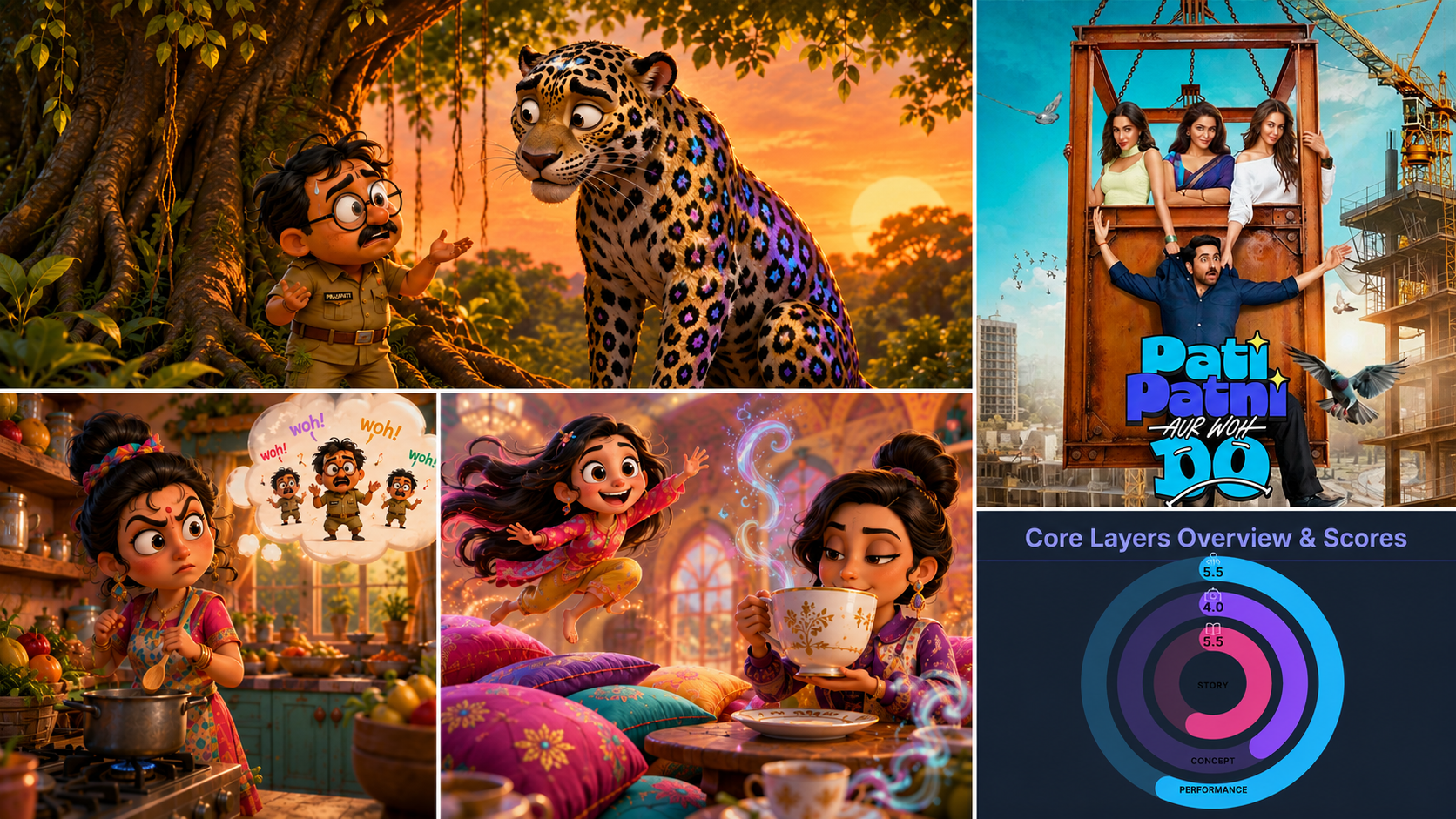
Story AI: 5.5/10 User: 5.5/10
Concept AI: 4/10 User: 4/10
Performance AI: 5.5/10 User: 5.5/10
Magic of Story/Script Core idea, narrative, themes, character arcs, originality.
"Pati Patni Aur Woh Do" is a 2026 Indian Hindi-language romantic comedy, serving as a spiritual sequel to the 2019 film "Pati Patni Aur Woh". Directed by Mudassar Aziz, the film attempts to inject new life into the classic "husband, wife, and the other woman" dynamic by introducing a more complex web of relationships and misunderstandings. The movie was released theatrically on May 15, 2026, and later made its digital debut on Netflix on July 10, 2026. Detailed Critique of the Magic of Story/Script The core idea of "Pati Patni Aur Woh Do" departs from the overt infidelity theme of its predecessors, opting instead for a comedy of errors rooted in situational chaos and mistaken identities. The narrative revolves around Prajapati Pandey (Ayushmann Khurrana), a forest officer whose well-intentioned act of helping a friend, Chanchal Kumari (Sara Ali Khan), elope with her boyfriend, Sunny, spirals into a series of comical misunderstandings. This central premise is designed to generate laughter through escalating confusion, as Prajapati's wife, Aparna Trivedi (Wamiqa Gabbi), and his colleague, Nilofer Khan (Rakul Preet Singh), mistakenly believe he is involved in multiple extramarital affairs. The script’s originality lies in its attempt to move beyond the traditional love triangle, expanding it into a "pativerse" with multiple "wohs" (the others). While the film tries to offer a fresh perspective by focusing on miscommunication rather than deliberate philandering, the execution often leans into predictable tropes of farcical comedy. Themes of marital trust, the perils of good intentions, and the societal pressures surrounding relationships are touched upon, but often remain superficial, overshadowed by the relentless pursuit of gags. Character arcs, particularly for the central figures, are somewhat limited by the demands of the comedic premise. Prajapati Pandey is largely portrayed as an innocent victim of circumstances, constantly trying to untangle himself from the web of lies he inadvertently spins. While Ayushmann Khurrana delivers a spirited performance, anchoring the film with his comedic timing and expressions, the character's journey feels more reactive than transformative. The female characters—Aparna, Chanchal, and Nilofer—are instrumental in driving the plot's confusion, but their individual developments are often sacrificed for the sake of the overarching comedic structure.
Strengths and Weaknesses
Strengths:
- Shift in Premise: The script's decision to pivot from overt infidelity to a comedy of errors driven by misunderstandings is a commendable attempt to refresh the "Pati Patni Aur Woh" brand. This allows for a lighter, more family-friendly tone.
- Situational Comedy: When the farcical elements work, the film provides genuine laughs, stemming from the escalating chaos and the characters' desperate attempts to cover up the truth.
- Ayushmann Khurrana's Performance: Khurrana's ability to portray a "common man" caught in extraordinary circumstances, coupled with his strong comedic timing, is a significant asset to the script. Weaknesses:
- Predictability: Despite the refreshed premise, the overall storyline can feel predictable, often relying on familiar comedic beats that audiences have seen before. The resolution of the misunderstandings, while a relief, doesn't offer many surprises.
- Lack of Depth: The script struggles to delve deeper into the emotional complexities of the characters or the themes it introduces. The potential for social commentary or a more nuanced exploration of modern relationships is largely untapped.
- Exaggerated Gags: Some critics found the humor to be overly exaggerated and the gags to outlive their welcome, leading to a "bloated spectacle of mistaken identities and diminishing returns." The dialogue, at times, also feels forced in its attempt to be funny.
- Underdeveloped Supporting Arcs: While the ensemble cast is talented, the script doesn't always give them enough room for substantial character development, leaving some performances feeling unmoderated.
How it Contributes to the Overall Film
The script is the backbone of "Pati Patni Aur Woh Do," dictating its lighthearted and chaotic tone. It aims to deliver a breezy, entertaining experience, prioritizing laughter over profound emotional resonance. The rapid-fire misunderstandings and the constant need for characters to navigate their way out of sticky situations keep the pace brisk, ensuring that the audience remains engaged, even if the plot doesn't offer much in the way of novelty. The script's comedic focus allows the actors, especially Ayushmann Khurrana, to shine in their respective roles, contributing significantly to the film's overall energy.
Suggested Improvements
- Refine the Humor: While situational comedy is the film's strength, refining the gags to be more organic and less forced would enhance the viewing experience. Exploring more subtle humor alongside the overt farce could add layers.
- Deepen Character Motivations: Giving the "Woh Do" characters, Chanchal and Nilofer, more distinct and developed motivations beyond their immediate roles in the comedic confusion would add depth. Similarly, Aparna's reactions could be explored with more nuance.
- Explore Themes More Thoroughly: The script could benefit from a more deliberate exploration of its underlying themes, such as trust, communication in marriage, and the consequences of good intentions gone awry. This would elevate the film beyond a mere comedy of errors.
- Pacing and Editing: While fast-paced, ensuring that the comedic beats land effectively without feeling rushed or repetitive would be crucial. A tighter edit, as suggested by some critics, could improve the overall impact.
Main Cast: Ayushmann Khurrana (Prajapati Pandey), Wamiqa Gabbi (Aparna Trivedi), Sara Ali Khan (Chanchal Kumari), Rakul Preet Singh (Nilofer Khan) Suggested Score: 5.5/10
📊 Layer Scoring 🤖 AI Analysis Score 5.5/10 👤 Editor Score 5.5/10
Magic of Conceptualisation Director's vision, editing, casting, and overall presentation.
As an expert film critic, I've delved into "Pati Patni Aur Woh Do," the recently released spiritual sequel that hit cinemas on May 15, 2026. Directed by Mudassar Aziz, who also helmed the 2019 predecessor, this film attempts to expand its "pativerse" with a fresh cast and a promise of more chaotic situational comedy. However, its conceptualization, while ambitious in parts, struggles to coalesce into a cohesive and truly engaging cinematic experience.
Detailed Critique of the Magic of Conceptualization
Director's Vision: Mudassar Aziz's return to the director's chair for "Pati Patni Aur Woh Do" aimed to deliver a "spiritual successor" with an amplified dose of chaotic situational comedy. The vision also ambitiously incorporated a "unique blend of wild animals and fantasy" into the narrative, shifting from the purely domestic comedy of its predecessor. While the intention to innovate and broaden the scope is commendable, the execution of this vision feels disjointed. The blend of marital woes with elements of fantasy and wildlife often comes across as forced rather than organic, diluting the film's core comedic premise instead of enhancing it. The attempt to introduce a modern sensibility, such as portraying women in jobs and open relationships, is noted, but critics suggest it ultimately falters by still centering women's lives around men. Editing: In a comedic film, especially one aiming for "chaotic situational comedy", editing is paramount to pacing and punchlines. While specific details on the editor for "Pati Patni Aur Woh Do" are not readily available in the provided snippets, the overall reception suggests that the film's comedic timing and narrative flow might have suffered. For a genre reliant on quick cuts and sharp transitions to maximize humor, any lapses in editing can make the chaos feel less controlled and more simply messy, hindering the comedic impact. Casting: The decision to reboot the storyline with a fresh ensemble cast led by Ayushmann Khurrana, alongside Wamiqa Gabbi, Sara Ali Khan, and Rakul Preet Singh, was a significant conceptual choice. Ayushmann Khurrana, known for his nuanced performances in social comedies, was entrusted with the central role of Prajapati Pandey, a forest officer. While Khurrana is generally adept at portraying relatable, flawed characters, the script's shortcomings likely limited his ability to fully shine. The dynamic between the three leading ladies and Khurrana's character was intended to bring "fresh romantic pairings with proven comic timing". However, the film's mixed-to-negative reviews indicate that even a strong cast might not have been enough to elevate a problematic script or a muddled vision. The multiple "woh" factors (wife, friend, and colleague) around Prajapati Pandey were meant to create comedic confusion, but this complexity often led to a convoluted plot rather than genuinely funny scenarios. Overall Presentation: The film's overall presentation, from its promotional material promising a "laugh riot" and "more complex romantic twist", aimed for a vibrant and engaging romantic comedy. However, the execution appears to have been less impactful. The narrative, which sees Prajapati Pandey's life unravel due to a series of misunderstandings, relies heavily on witty dialogues and relatable family situations. Yet, the critical reception suggests that these elements did not consistently deliver. The attempt to modernize the themes of marriage and infidelity, while commendable in intent, struggled to break free from conventional tropes, leading to a presentation that felt both ambitious and ultimately underwhelming.
Strengths and Weaknesses
Strengths:
- Ambitious Conceptual Reboot: The decision to create a "spiritual sequel" with a new cast and a broader narrative scope (including fantasy elements) showed an ambition to evolve the franchise beyond a simple remake.
- Casting of Ayushmann Khurrana: Khurrana's reputation for carrying quirky, slice-of-life films offers a strong foundation for a comedic lead, even if the script didn't fully leverage his potential.
- Focus on Chaotic Situational Comedy: The genre choice itself holds potential for broad appeal and laughter, if executed well. Weaknesses:
- Disjointed Vision: The "unique blend of wild animals and fantasy" with marital comedy often feels forced and unintegrated, leading to a muddled narrative.
- Inconsistent Tonal Balance: The film struggles to maintain a consistent tone, wavering between slapstick, romantic comedy, and potentially serious undertones without a clear anchor.
- Underutilized Talent: Despite a strong ensemble, the script and direction may not have allowed the actors to fully showcase their comedic timing or dramatic range, resulting in performances that couldn't save a weak conceptualization.
- Lack of Genuine Modernity: While attempting to be progressive with themes like women in open relationships, the core narrative is critiqued for still revolving around a male protagonist's dilemmas, indicating a superficial approach to contemporary themes.
How it Contributes to the Overall Film
The conceptualization of "Pati Patni Aur Woh Do" significantly shaped its reception. The ambitious but ultimately muddled vision directly contributed to the film's mixed-to-negative reviews. The disjointed blend of elements likely led to audience confusion and a lack of clear comedic direction, preventing it from becoming the "laugh riot" it aspired to be. The shift in casting, while aiming for freshness, couldn't overcome the inherent weaknesses in how the story was conceived and executed. Consequently, the film struggled to recover its budget, indicating that the conceptual choices did not resonate widely with the audience.
Suggested Improvements
- Refined Genre Focus: If aiming for chaotic comedy, commit fully to it with tighter writing and pacing. If blending genres, ensure the integration of fantasy or unique elements is seamless and serves the primary comedic or dramatic purpose, rather than feeling tacked on.
- Stronger Script Development: Before production, rigorously develop the script to ensure that the "chaotic situational comedy" is organic and genuinely funny, with clear character arcs and motivations that aren't overshadowed by convoluted plot points.
- Empathetic Character Development: While exploring modern relationships, ensure that all characters, especially the female leads, are given agency and depth beyond their relation to the male protagonist. The critique about women's lives still revolving around a man highlights a need for more progressive and independent character writing.
- Focused Directorial Vision: The director should have a clearer, more unified vision for the film's tone and message, ensuring that all elements—from script to acting to editing—work in harmony towards that singular goal.
Main Cast: Ayushmann Khurrana, Wamiqa Gabbi, Sara Ali Khan, Rakul Preet Singh Suggested Score: 4/10
📊 Layer Scoring 🤖 AI Analysis Score 4/10 👤 Editor Score 4/10
Magic of Performance/Execution Acting, music, cinematography, effects, choreography.
"Pati Patni Aur Woh Do," directed by Mudassar Aziz, attempts to reignite the comedic spark of its spiritual predecessor, offering a fresh take on marital chaos with a new ensemble cast. Released theatrically on May 15, 2026, and later streaming on Netflix from July 10, 2026, the film navigates the convoluted life of Prajapati Pandey, a forest officer whose well-intentioned efforts to help a friend spiral into a comedic entanglement involving his wife, a college acquaintance, and a colleague. While the movie aims for a blend of laughter and thrills, critical reception has been mixed, with some noting "more confusion, less comedy."
1. Detailed Critique of Performance/Execution
Acting: The film largely rests on the shoulders of its lead, Ayushmann Khurrana, who portrays Prajapati Pandey. Khurrana is largely in his comfort zone, delivering a natural performance that often anchors the film's chaotic narrative. He excels in depicting the innocent victim caught in a web of his own making, though at times, his performance leans into exaggerated territory. Wamiqa Gabbi as Aparna, Sara Ali Khan as Chanchal, and Rakul Preet Singh as Nilofer, collectively termed the "Woh" characters, are given substantial roles, preventing them from being mere eye candy. Their performances are generally seen as impactful, with Sara Ali Khan particularly shining in a bubbly and fun role. However, some critics felt that the female leads were occasionally left "stranded in a creative vacuum," with their natural screen energy unmoderated by the script. The supporting cast, notably Vijay Raaz and Tigmanshu Dhulia, are scene-stealers, providing memorable moments and adding significant comedic value to the film. Music: The musical landscape of "Pati Patni Aur Woh Do" features a mix of new and remixed tracks, which contribute to maintaining the film's lighthearted mood. These songs are described as groovy and enjoyable, effectively serving their purpose within the romantic comedy genre. The background score generally complements the situational comedy, enhancing the comedic timing without being overly intrusive. Cinematography: The film benefits from "natural, colorful, and lively cinematography." The visuals effectively capture the setting, reportedly in Prayagraj, and contribute to the film's overall vibrant and engaging aesthetic. The use of natural light and a bright color palette helps in establishing the comedic and somewhat fantastical tone of the narrative, especially with the inclusion of wild animals. Effects: A notable aspect of the film's execution is the inclusion of "wild animals and fantasy" elements. The VFX used for the leopard and wolf has been praised for being "downright realistic," which is crucial for integrating these elements seamlessly into the story and enhancing the visual experience. This attention to detail in visual effects helps in making the more absurd situations believable and adds to the film's unique flavor. Choreography: While specific details about dance choreography are not extensively highlighted in reviews, the film, being a Bollywood romantic comedy, likely incorporates song-and-dance sequences. Given the overall light and entertaining tone, the choreography would typically aim to be energetic and visually appealing, aligning with the musical numbers.
2. Strengths and Weaknesses
Strengths:
- Strong Lead Performances: Ayushmann Khurrana's natural comedic timing and ability to portray the "everyman" caught in absurd situations are a significant asset.
- Effective Supporting Cast: Vijay Raaz and Tigmanshu Dhulia deliver standout performances, often elevating the comedic scenes.
- Realistic VFX: The integration of wild animals through high-quality visual effects is a commendable aspect, adding a unique dimension to the story.
- Lively Cinematography: The vibrant and natural visual style creates an engaging and appealing atmosphere.
- Situational Comedy: The film's humor, built on everyday misunderstandings and relatable situations, provides consistent laughs. Weaknesses:
- Over-the-Top Exaggeration: Khurrana's performance, while generally good, occasionally veers into excessive exaggeration, which can become tiresome.
- Unmoderated Female Leads: Despite having strong individual performances, the female leads sometimes feel undirected within the narrative, lacking a cohesive impact.
- Predictable Plot Points: Some critics found the overall story to be familiar and its trajectory somewhat predictable.
- Uneven Comedy: While the humor works for the most part, there are instances where it slows down or becomes repetitive, rather than consistently hitting the mark.
- "More Confusion, Less Comedy": A significant weakness highlighted by some reviews is that the film prioritizes escalating misunderstandings over genuinely funny moments, leading to a sense of chaos rather than coherent humor.
3. How it Contributes to the Overall Film
The performances are the backbone of this situational comedy. Khurrana's portrayal of Prajapati as a seemingly innocent forest officer caught in an increasingly complex web drives the narrative. The ensemble cast, including the three female leads and the scene-stealing supporting actors, ensures a dynamic interplay that is essential for the film's comedic rhythm. The music and cinematography contribute significantly to setting the lighthearted and vibrant tone, making the viewing experience enjoyable. The surprisingly good VFX for the wild animals adds a layer of novelty and visual spectacle, distinguishing it from typical romantic comedies. While the execution of individual elements like acting and effects has merits, the overall contribution is hampered by a narrative that sometimes prioritizes confusion over well-crafted comedic scenarios.
4. Suggested Improvements
- Refine Ayushmann Khurrana's Performance: While his natural style is a strength, a more nuanced approach to his character's escalating predicaments, avoiding excessive exaggeration, would enhance believability and comedic impact.
- Stronger Direction for Female Leads: The natural energy of Sara Ali Khan, Wamiqa Gabbi, and Rakul Preet Singh should be more cohesively directed within the script, allowing their characters to contribute more meaningfully to the plot's progression and emotional core, rather than being "stranded."
- Sharpen the Screenplay: The film could benefit from a tighter script that focuses on well-developed comedic situations rather than relying heavily on mounting confusion. Ensuring that the humor is consistently sharp and less repetitive would improve the overall comedic experience.
- Integrate Fantasy Elements More Deeply: While the VFX is good, a more organic integration of the "wild animals and fantasy" into the core narrative, perhaps making them more central to the characters' dilemmas or resolutions, could elevate the film beyond a standard rom-com.
- Pacing Adjustments: Addressing moments where the humor slows down could involve tighter editing or re-evaluating certain scene constructions to maintain a consistent comedic tempo.
Main Cast: Ayushmann Khurrana, Wamiqa Gabbi, Sara Ali Khan, Rakul Preet Singh, Vijay Raaz, Tigmanshu Dhulia, Sheeba Chaddah Suggested Score: 5.5/10
📊 Layer Scoring 🤖 AI Analysis Score 5.5/10 👤 Editor Score 5.5/10
🌊 Morphokinetics: Narrative Flow Analysis
Overall Summary:
"Pati Patni Aur Woh Do" offers a morphokinetic journey that largely mirrors the comedic yet emotionally resonant beats of its predecessor, albeit with a more mature and introspective rhythm. The film opens with a comfortable, somewhat predictable pace, re-establishing the lives of Chintu and Vedika several years post their initial marital crisis. This initial calm is subtly disrupted by the introduction of new external temptations or internal dissatisfactions, gradually building comedic tension through escalating lies, near-misses, and misunderstandings. The emotional rhythm skillfully balances light-hearted humor with moments of genuine marital strain, guilt, and introspection. The energy steadily rises through the second act as the 'Woh Do' element (a new person or a past consequence) creates palpable pressure on the central couple. This culminates in a dramatic midpoint crisis, a significant pacing shift where the humor recedes, giving way to raw emotional confrontation and a temporary breakdown of trust. The latter half of the film focuses on the arduous path to reconciliation, marked by moments of regret, genuine effort, and rediscovery of affection. The tension resolves not in a sudden burst, but in a gradual, earned emotional release, leaving the audience with a sense of growth and renewed commitment, punctuated by the film's signature blend of wit and warmth.
Timeline Structure:
The narrative structure of "Pati Patni Aur Woh Do" is predominantly linear, following Chintu and Vedika's lives forward from a point several years after the events of the first film. While primarily chronological, it cleverly incorporates brief, impactful flashbacks and reflective montages. These non-linear elements serve to juxtapose the current marital challenges with past lessons learned or the initial spark of their relationship, adding depth to the characters' emotional arcs. There are no multiple timelines, but rather a focused progression through a new phase of their marriage, with internal character reflections serving as minor temporal shifts that inform the present-day drama. The structure allows for a clear escalation of conflict and a satisfying, albeit earned, resolution.
Key Narrative Moments:
5% through: Opening scene showing Chintu and Vedika in a comfortable, routine domestic life, a few years happily married, perhaps with their child grown a little. (Intensity: 3/10) 15% through: Introduction of a new, charming colleague for Chintu (or Vedika), sparking initial, innocent admiration or a renewed sense of possibility. (Intensity: 4/10) 25% through: Chintu (or Vedika) engages in a seemingly harmless, yet increasingly frequent, flirtatious interaction that subtly crosses a line. (Intensity: 5/10) 35% through: The protagonist experiences a moment of acute guilt or internal conflict after a close call or a significant lie to their spouse. (Intensity: 6/10) 45% through: The unsuspecting spouse (Vedika or Chintu) notices subtle changes in behavior, leading to growing suspicion and unease. (Intensity: 7/10) 50% through: A comedic yet tense scene of escalating lies and near-discoveries, pushing the protagonist into a corner, increasing frantic energy. (Intensity: 8/10) 60% through: The truth is dramatically revealed, leading to a heated confrontation and a profound sense of betrayal, marking the film's major crisis point. (Intensity: 9/10) ⚡ Plot Twist 65% through: A pivotal emotional breakdown where one spouse expresses deep hurt, threatening the foundation of their marriage, possibly leading to a temporary separation. (Intensity: 9/10)
Executive Summary
Mudassar Aziz's "Pati Patni Aur Woh Do," a 2026 Hindi-language romantic comedy, attempts a spiritual sequel to its 2019 predecessor, aiming to refresh the classic love triangle with a complex web of misunderstandings and a "pativerse" of "wohs." Despite ambitious conceptualization and a talented ensemble, the film ultimately registers a Greybrainer score of 5.0/10, a testament to its struggle in translating a promising premise into a cohesive and consistently engaging cinematic experience.
At its core, the Story/Script pivots from overt infidelity to a comedy of errors, centering on Prajapati Pandey (Ayushmann Khurrana), a forest officer whose well-intentioned act of helping a friend spirals into a cascade of mistaken identities. This shift is a commendable attempt at originality, offering a lighter, more family-friendly tone. When the farcical elements align, the script generates genuine laughs, buoyed by Khurrana's spirited performance. However, this originality is often undercut by predictable comedic beats, a superficial exploration of themes like marital trust, and gags that, at times, outlive their welcome, leaving character arcs feeling more reactive than transformative.
The Conceptualization, while ambitious, proves to be the film's Achilles' heel. Director Mudassar Aziz's vision to blend marital woes with "wild animals and fantasy" felt largely disjointed, diluting the comedic premise rather than enhancing it. While the fresh casting, particularly Ayushmann Khurrana, promised "proven comic timing," even a strong ensemble, including Wamiqa Gabbi, Sara Ali Khan, and Rakul Preet Singh, couldn't entirely salvage a muddled vision. The attempt to inject modern sensibilities often felt superficial, with the narrative still largely revolving around the male protagonist's dilemmas.
Performance and Execution showcase flashes of brilliance, primarily through Ayushmann Khurrana’s natural comedic timing and the scene-stealing turns by Vijay Raaz and Tigmanshu Dhulia. The film benefits from "natural, colorful, and lively cinematography" and surprisingly realistic VFX for its animal elements, adding a unique visual flair. Yet, Khurrana's performance occasionally veers into over-the-top exaggeration, and the female leads, despite their individual impact, sometimes feel "stranded in a creative vacuum," lacking cohesive direction within the narrative. Ultimately, the film's execution often prioritizes escalating confusion over genuinely sharp comedic scenarios, leading to moments of "more confusion, less comedy." This interplay of a promising script, a muddled concept, and uneven execution prevents "Pati Patni Aur Woh Do" from achieving its full comedic potential, leaving audiences with a breezy but ultimately underwhelming experience.
Related Greybrainer Reads
GREYBRAINER
AI-Powered Cinematic Intelligence