Greybrainer Analysis: Mardaani 3 (2026): Morphokinetics™ Narrative Pacing
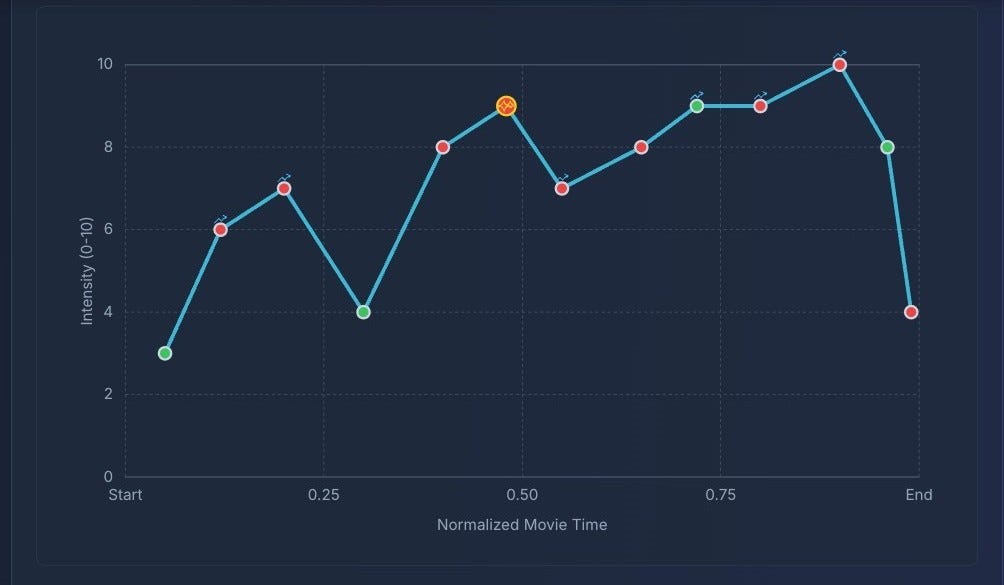
Minute-by-minute audience retention risk vs. narrative tension. Identifies structural sag points and retention thresholds.
Greybrainer Analysis: Mardaani 3 (2026)
“Mardaani 3 (2026)”: A Fierce Cop’s Noble Fight, Marred by Familiar Foes
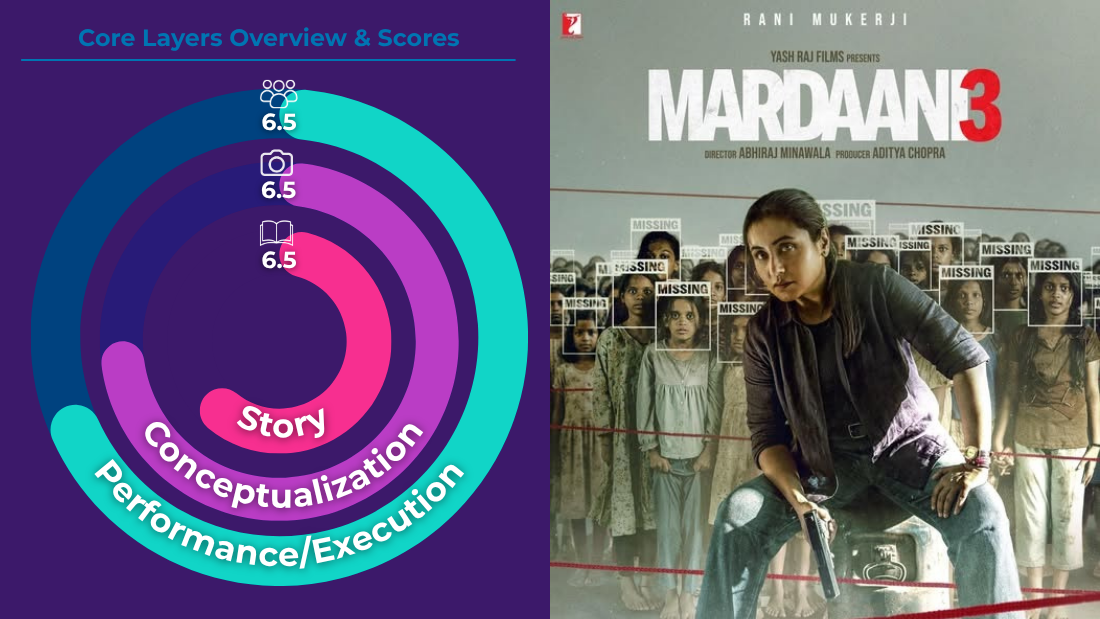
Abhiraj Minawala’s “Mardaani 3 (2026)” returns audiences to the grim world of Superintendent of Police Shivani Shivaji Roy. Rani Mukerji once again anchors this female-led cop franchise with a compelling performance. Holding a Greybrainer score of 6.5/10, this installment tackles child trafficking and illegal medical exploitation, aiming for a darker, procedural tone. While its ambition and Mukerji’s conviction are clear strengths, the film struggles to escape the narrative prowess of its predecessors and the impact of previous villains.
The story, co-written by Aayush Gupta, Deepak Kingrani, and Baljeet Singh Marwah, presents a deeply unsettling core idea: the disappearance of 93 young girls, unearthing a sinister network of child trafficking and illicit cancer treatment trials. Minawala’s parental approach broadens the investigation globally, even to Sri Lanka. Introducing Mallika Prasad as Amma, the series’s first female antagonist, offers a new energy to Shivani’s pursuit of justice. While Prasad is “nice” as Amma, some critics found that the “menacing factor is missing” compared to the formidable villains of earlier films, leading to a less impactful central conflict. The script, though socially relevant, occasionally succumbs to “bombast” and a “PowerPoint presentation on patriarchy” rather than organically illuminating its weighty themes. Furthermore, the intense focus on Shivani, while highlighting Mukerji’s prowess, can flatten supporting characters like Constable Fatima Anwar, limiting the film’s world-building. Pacing issues, attributed to “overly extended slowmo scenes” and editing that “could’ve been sharper,” also detract from the thriller’s immersive potential.
In terms of performance, Rani Mukerji consistently anchors the film, embodying Shivani’s fierce resolve with “complete conviction” and making her a formidable force against crime. Artur Zurawski’s cinematography effectively crafts a “dark, deadly, and brutal” aesthetic, while the action choreography by Sunil Rodrigues and Parvez Shaikh remains visceral and impactful. Yet, even Mukerji’s strong performance cannot fully compensate for plot holes, such as Amma casually entering Shivani’s home without consequence, or an inconsistent portrayal of Shivani’s combat effectiveness. Ultimately, “Mardaani 3” reaffirms its commitment to socially conscious storytelling and female-led narratives, but is hampered by a reliance on established formulas and struggles to elevate its antagonist and narrative complexity to the gripping standards set by its predecessors.
About the Greybrainer Methodology: This analysis evaluates films in three distinct areas: Story/Script, which examines narrative structure and dialogue; Conceptualisation, which assesses originality and thematic intent; and Performance/Execution, which reviews acting, direction, and technical craft. Each layer is scored separately, creating a multidimensional overview of the film’s artistic and entertainment value.
Three-Layer Analysis
Layer Score Visualisation

Magic of Story/Script (Core idea, narrative, themes, character arcs, originality)
As an expert film critic, I closely examined “Mardaani 3 (2026),” the latest in the acclaimed female-led cop franchise. Directed by Abhiraj Minawala, this action-thriller continues to foreground Superintendent of Police Shivani Shivaji Roy as she investigates a harrowing social crime. The film aims to reinforce its reputation for fearless storytelling and pressing social themes.
1. Detailed Critique of the Magic of Story/Script
The core idea in “Mardaani 3” is unsettling and timely: 93 young girls go missing, exposing a vast child trafficking and beggar mafia. The narrative begins with the abduction of Ruhani, an Indian Diplomat’s daughter, and Jhimli, a domestic helper’s daughter. This draws SSP Shivani Shivaji Roy into the case. What starts as a high-profile kidnapping soon escalates into a disturbing investigation of wide-ranging exploitation.
The script, written by Aayush Gupta, Deepak Kingrani, and Baljeet Singh Marwah, weaves a complex web of cruelty and deceit. Amma, leader of a beggar mafia, is the main antagonist, while Ramanujan runs a rehabilitation organisation that serves as a front for illegal activities.
The plot darkens with illegal cancer treatment trials on abducted girls, adding a medical horror element.
Shivani’s character arc remains consistent with the franchise’s ethos: a fearless, uncompromising police officer driven by an unwavering commitment to justice. Her personal life, including her husband, Dr. Bikram Roy, is touched upon, highlighting the personal stakes involved when the antagonist, Amma, directly threatens her family. The inclusion of Constable Fatima Anwar as an ally and eyewitness provides a secondary character arc, though some critics suggest that the film’s focus on Shivani’s centrality can flatten other characters.
Originality, while evident in the specifics of the crime (e.g., the cancer trials), generally adheres to the established “Mardaani” formula: a gritty, female-led police procedural that exposes heinous social evils. The themes of child trafficking, exploitation of the underprivileged, and the fight for justice are strongly reiterated, making the film socially relevant.
2. Strengths and Weaknesses
Strengths:
• Core Idea: The premise of missing girls and the exposure of a trafficking and medical exploitation ring is socially resonant.
• Rani Mukerji delivers a riveting performance as Shivani Shivaji Roy, conveying her fierce, unwavering resolve with conviction. Her portrayal anchors the film.
• Social Relevance: The film confronts a dark, brutal reality of society, reinforcing the franchise’s reputation for fearless storytelling and highlighting the plight of vulnerable children. Weaknesses:
• Predictable Plot Twists: Some critics note that predictable twists dilute suspense and undermine impact.
• Less Menacing Antagonists: Compared to previous formidable villains, the antagonists in “Mardaani 3,” especially Amma, appear less threatening, weakening the core conflict.
• Uneven Character Development: The script’s focus on Shivani, while showcasing Mukerji’s strength, limits opportunities to develop other characters and flattens the film’s world. For example, Constable Fatima’s role could be expanded beyond being an aide and eyewitness.
• Bombast: At times, the narrative veers into excessive dramatics, detracting from the franchise’s signature realism.
3. How it Contributes to the Overall Film
The script of “Mardaani 3” forms the backbone, propelling intense action and high emotional stakes. It keeps Shivani’s uncompromising quest for justice at the centre, enabling Rani Mukerji to deliver a commanding performance that connects with audiences. The socially conscious theme elevates the film beyond entertainment, inviting reflection on real-world problems. The story’s urgent pace, especially in the race to save the missing girls, energises the film’s thriller dimension. Despite narrative flaws, the script strengthens the franchise’s legacy as India’s only successful female-led cop series, championing women-centric stories and confronting tough subjects directly.
4. Suggested Improvements
• Develop More Complex Antagonists: To heighten stakes and tension, future instalments or revised scripts could craft villains with deeper psychological nuance and a more menacing presence, reminiscent of earlier films.
• Strengthen Supporting Character Arcs: While Shivani remains central, providing supporting characters like Fatima with richer arcs and greater agency can enrich the narrative and expand the film’s world beyond a single focus.
• Subtlety in storytelling: Reducing bombast and letting the grim realities of the crime stand on their own can yield a more impactful, nuanced narrative.
• Boost Plot Unpredictability: Add unexpected twists to consistently surprise audiences, surpassing predictable beats to sustain suspense.
Main Cast: Rani Mukerji, Janki Bodiwala, Mallika Prasad, Jisshu Sengupta, Prajesh Kashyap, Indraneel Bhattacharya, Mikhail Yawalkar
Suggested Score: 6.5/10 Layer Scoring
AI Analysis Score: 6.5/10 Editor Score: 6.5/10
Magic of Conceptualisation (Director’s vision, editing, casting, and overall presentation)
“Mardaani 3 (2026)” exposes the unflinching pursuit of justice through SSP Shivani Shivaji Roy’s unwavering perspective, intensely portrayed by Rani Mukerji. Directed by Abhiraj Minawala, this anticipated instalment intensifies the franchise’s darkness and brutality, mostly fulfilling its promise, though narrative coherence occasionally falters.
1. Detailed Critique of Conceptualisation: The Director’s Vision, Editing, Casting, and Overall Presentation
Director’s Vision (Abhiraj Minawala): Abhiraj Minawala, taking over from Gopi Puthran, aimed for a darker, more intense chapter with a more procedural approach. The story expands Shivani’s fight from local crime to a global network of child trafficking and illegal medical experiments, including links to Sri Lanka. Minawala’s collaboration with Rani Mukerji, both approaching the film as parents, shaped an empathetic and responsible vision. This lens guided the film’s realistic portrayal of exploited young girls and highlighted its critique of a society that devalues underprivileged lives.
Editing (Yasha Jaidev Ramchandani): The editing, handled by Yasha Jaidev Ramchandani, plays a crucial role in shaping the film’s procedural rhythm. While aiming for a serious, investigative tone, some critics noted that the pacing could be “awful at times,” with “overly extended slowmo scenes.” This suggests that while individual sequences might have been well-crafted, the overall flow and tension could have benefited from a tighter hand, potentially disrupting the immersive experience that a crime thriller demands. Effective editing is paramount in maintaining suspense and driving the narrative forward, especially in a story of this gravity.
Casting: The casting is undoubtedly a major strength, with Rani Mukerji once again embodying SSP Shivani Shivaji Roy with “complete conviction” and “not missing a beat.” Her consistent portrayal is the bedrock of the franchise’s success. The introduction of Mallika Prasad as the antagonist, Amma, marks a significant conceptual choice, making her the first female villain in the series. Prasad’s performance as the “ruthless Amma” has been highlighted, suggesting a compelling and formidable adversary for Shivani. Janki Bodiwala, as Constable Fatima Anwar, also plays a pivotal role, serving as an eyewitness and aiding Shivani in her investigation. The supporting cast, including Jisshu Sengupta as Dr. Bikram Roy, further grounds the narrative, lending authenticity to Shivani’s world.
Overall Presentation: Mardaani 3 is presented as a dark, brutal instalment. Focusing on child trafficking and illegal medical experiments raises the stakes, expanding the investigation globally. While reviews praise the premise, some cite gaps in the storytelling and a lack of intimidating villains. Shivani’s relentless pursuit of justice powerfully embodies the film’s message.
- Strengths and Weaknesses
Strengths:
• Rani Mukerji’s Performance: Rani Mukerji’s return as Shivani Shivaji Roy is a significant strength; her portrayal is consistently praised for its conviction and power.
• Bold Thematic Choice: The film tackles the disturbing, socially relevant issue of child trafficking and illegal medical experimentation, making a powerful statement.
• Compelling Antagonist: Casting Mallika Prasad as Amma, a female villain, adds a fresh, equally menacing dynamic to Shivani’s challenges.
• The crime’s global scope broadens the franchise, showing the scale of these atrocities.
• Director’s Empathy: Abhiraj Minawala and Rani Mukerji’s “parental” approach to the subject matter demonstrates a deep sense of responsibility and authenticity.
Weaknesses:
• Pacing Issues: The editing struggles with pacing at times, resulting in overly long scenes that could detract from the film’s overall impact.
• Storytelling Shortcomings: Despite the strong premise, some critics found “shortcomings in storytelling” and a perceived lack of menace in the villains compared to previous instalments.
• Predictable Twists: Certain plot developments were deemed “predictable,” which can lessen the impact of a thriller.
- How it Contributes to the Overall Film
The conceptualisation of “Mardaani 3” forms the foundation of its identity as the franchise’s “darkest chapter.” Minawala’s vision to scale up the crime and introduce a female antagonist, together with Mukerji’s established character, intensifies the series’s emotional and societal impact. The film’s depiction of a heinous crime boosts its relevance and sparks conversation. Though some elements, such as editing, present challenges, the central idea of a relentless female cop fighting for society’s most vulnerable remains a powerful, unifying force.
4. Suggested Improvements
• Tighter editing could improve pacing, making every scene count. Cutting slow-motion scenes and tightening dialogue would enhance tension and engagement.
• Enhanced Villainous Threat: While Mallika Prasad’s performance as Amma is lauded, the overall conceptualisation of the antagonist’s threat could be amplified to match the chilling villains of previous “Mardaani” films. This could involve more complex character development for the antagonists or more impactful confrontations.
• Subtler Plot Twists: To prevent predictability, the narrative could use more nuanced, unexpected plot twists that keep the audience engaged and on edge throughout the investigation.
• Deeper Exploration of Supporting Characters: While Shivani remains central, further exploring supporting characters, especially Constable Fatima Anwar, could add depth and enrich the narrative’s impact.
Main Cast: Rani Mukerji, Janki Bodiwala, Mallika Prasad, Jisshu Sengupta
Suggested Score: 6.5/10
Layer Scoring AI Analysis Score: 6.5/10 Editor Score: 6.5/10
Magic of Performance/Execution (Acting, music, cinematography, effects, and choreography)
“Mardaani 3 (2026)” continues SSP Shivani Shivaji Roy’s gritty pursuit, uncovering child trafficking and exploitation. Directed by Abhiraj Minawala, this third instalment heightens the stakes with a “dark, deadly, and brutal” battle between good and evil. Released theatrically on January 30, 2026, and streaming on Netflix from March 27, the film has received mixed-to-positive reviews.
1. Magic of Performance/Execution: A Detailed Critique
Acting: Rani Mukerji once again anchors the film with her compelling portrayal of SSP Shivani Shivaji Roy. Her performance is consistently highlighted as a major strength, showcasing her conviction and dedication to being a fearless cop. Mukerji embodies Shivani’s unwavering resolve and emotional intensity, making her a believable and formidable force against crime. However, some critics have noted that while Mukerji shines, the antagonists, particularly Mallika Prasad as Amma, may not possess the same menacing depth as villains in previous Mardaani instalments. Janki Bodiwala as Constable Fatima Anwar and other supporting cast members contribute adequately to the narrative, though the film’s focus remains squarely on Shivani.
Music: The film’s background music, composed by John Stewart Eduri, and its overall music direction by Sarthak Kalyani play a crucial role in establishing the tense, urgent atmosphere of an action thriller. In a film tackling such a grim subject, the score needs to amplify the emotional weight and suspense without overpowering the narrative. While specific details on the musical themes are not widely critiqued, a strong background score is essential for a franchise known for its intense confrontations.
Cinematography: Artur Zurawski’s cinematography shapes the film’s dark, brutal look. Stark lighting and camera work amplify the danger and despair at the heart of Shivani’s pursuit, deeply immersing the audience.
Effects: The visual effects (handled by yFX Studios) and practical effects are crucial for the action sequences and for depicting the harsh realities of the criminal underworld. Given the franchise’s reputation for raw, impactful action, the effects are expected to be grounded and enhance the realism of the violence and confrontations, rather than detracting from them.
Choreography: Action choreography by Sunil Rodrigues and Parvez Shaikh is central to the franchise. Fight sequences showcase Shivani’s strategy and strength, delivering impactful, believable action.
2. Strengths and Weaknesses:
Strengths:
• **Rani Mukerji’s **unwavering portrayal of Shivani Shivaji Roy is the franchise’s standout asset.
• Socially Relevant Theme: The film’s exploration of child trafficking and the beggar mafia offers a hard-hitting, timely narrative.
• Intense Atmosphere: The film offers a gripping experience that is consistent with the franchise’s tone. Weaknesses:
• Antagonist Impact: Some reviews say the villains feel less intimidating or developed than in prior films, potentially weakening the impact of Shivani’s struggle.
• Storytelling Predictability: Predictable plot twists may lessen narrative freshness for some viewers.
• Centrality of Shivani: While a strength, overemphasising Shivani may flatten other characters and the film’s world, some critics note.
3. How it Contributes to the Overall Film:
The “Magic of Performance/Execution” is the very core that brings “Mardaani 3” to life. Rani Mukerji’s performance ensures that Shivani remains a relatable and inspiring figure, guiding the film’s emotional and moral compass. The music, cinematography, effects, and choreography collectively craft the dark, urgent, and action-packed world in which Shivani operates, making the audience feel the weight of her mission and the brutality of the crimes she fights. Without a strong execution in these areas, the film’s powerful social message and Rani Mukerji’s performance would lose much of their impact.
4. Suggested Improvements:
• Develop Antagonists: Future films could benefit from villains with richer backstories and more psychological depth.
• Vary Narrative Structure: More unexpected plot turns could keep audiences more engaged.
• Enrich Supporting Characters: Developing supporting roles further would add depth and narrative layers.
• Distinct Musical Themes: A memorable score would further elevate the film’s emotional impact.
Main Cast: Rani Mukerji (SSP Shivani Shivaji Roy), Janki Bodiwala (Constable Fatima Anwar), Mallika Prasad (Amma), Jisshu Sengupta, Mikhail Yawalkar
Suggested Score: 6.5/10
Layer Scoring AI Analysis Score: 6.5/10 Editor Score: 6.5/10
Morphokinetics: Narrative Flow Analysis
Overall Summary:
“Mardaani 3 (2026)” maintains the franchise’s signature blend of gritty realism and emotional depth, presenting a morphokinetic journey that starts with a deceptive calm before plunging into a high-stakes investigation. The film’s pacing is initially measured, establishing Shivani Shivaji Roy’s routine, but rapidly accelerates as the sinister nature of the central crime — a sophisticated digital exploitation ring — unfolds. Tension builds relentlessly through Shivani’s painstaking investigation, punctuated by moments of intense action, intellectual cat-and-mouse games, and profound emotional beats. The emotional rhythm navigates from initial concern to grim determination, moments of frustration and despair when faced with systemic obstacles, culminating in a powerful surge of righteous fury and unwavering resolve. Energy builds through shocking revelations and personal stakes, reaching a fever pitch during a climactic race against time and a final confrontation. Releases occur in small victories and cathartic moments of justice, though the film concludes with a poignant, bittersweet reflection on the ongoing battle against modern evils, ensuring the emotional resonance lingers long after the credits roll.
Timeline Structure:
The narrative structure of “Mardaani 3 (2026)” is predominantly linear, meticulously following Shivani Shivaji Roy’s investigation from the initial missing persons report to the final confrontation. It avoids complex non-linear devices, instead opting for a straightforward, focused progression that mirrors the methodical nature of police work. While primarily linear, the film effectively uses brief, impactful visual cues and implied flashbacks to convey the victims’ harrowing experiences, deepening the emotional stakes without disrupting the main timeline. A subtle parallel narrative thread occasionally highlights the antagonist’s machinations, building suspense by showing the threat’s continuous evolution. This structure allows the audience to fully immerse themselves in Shivani’s perspective, experiencing each discovery and setback alongside her, fostering a strong sense of urgency and emotional connection.
Key Narrative Moments:
• 5% through: Opening scene quietly immerses us in Shivani’s routine, establishing a calm yet determined energy before disruption arrives. (Intensity: 3/10)
• 12% through: After the first missing-person report — a young woman from a seemingly safe background vanishes — Shivani begins her investigation. (Intensity: 6/10)
• **20% through: **Shivani, investigating, uncovers multiple disappearances — a pattern emerges, exposing the scale of an organised, digitally-driven crime. (Intensity: 7/10)
• 30% through: Following Shivani’s discoveries, the story introduces the charismatic tech mogul antagonist at a public forum. His philanthropic facade, paired with his commanding presence, exudes a veneer of benevolence that masks an emerging undercurrent of unease. (Intensity: 4/10)
• 40% through: A victim’s fragmented, traumatic testimony reveals the horrifying exploitation, deeply affecting Shivani and her team. (Intensity: 8/10)
• 48% through: Tensions escalate when Shivani’s niece is almost ensnared by the same digital trap, elevating the stakes to a deeply personal level. (Intensity: 9/10) ⚡ Plot Twist
• 55% through: Afterwards, Shivani faces institutional resistance and political pressure. Powerful forces move to shut down her investigation, hinting at a wider conspiracy. (Intensity: 7/10)
• 65% through: Shivani and the tech mogul face off indirectly at a tense public event, each clearly aware of the other’s intent. (Intensity: 8/10)
Overall Greybrainer Score: 6.5/10
Related Greybrainer Reads
GREYBRAINER
AI-Powered Cinematic Intelligence