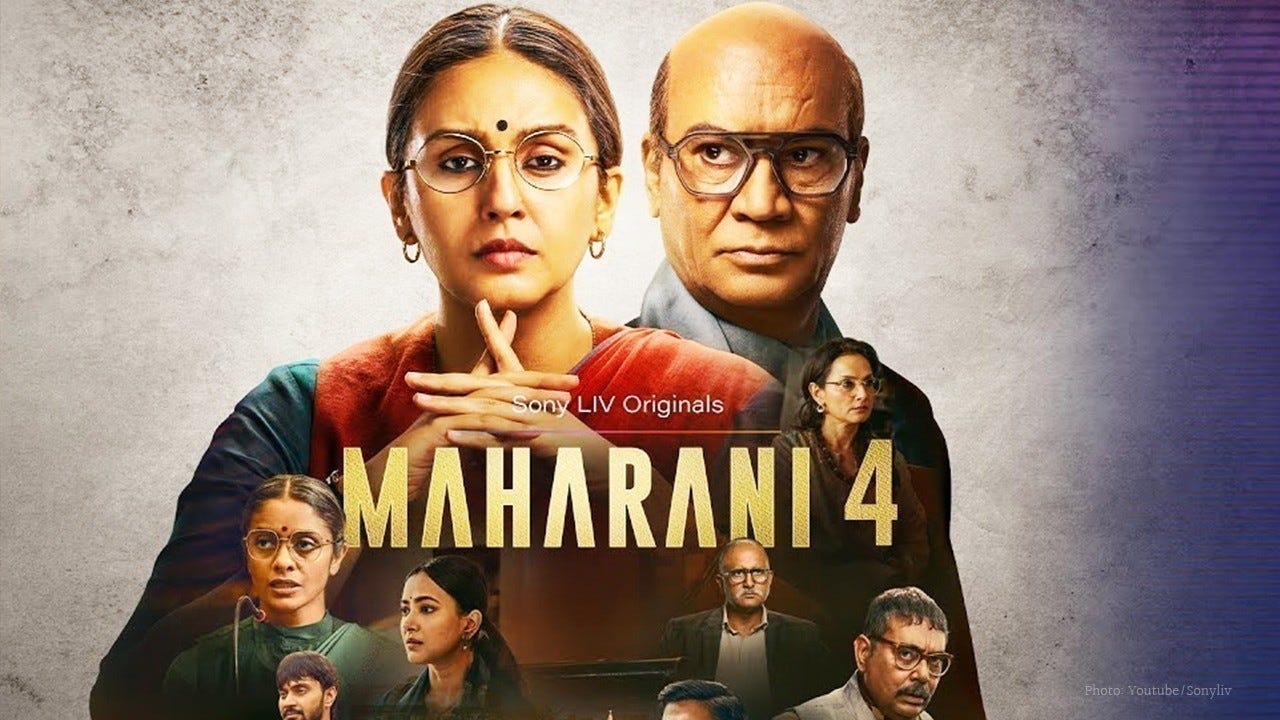
GreyBrainer Analysis: Maharani Season 4: Morphokinetics™ Narrative Pacing
Minute-by-minute audience retention risk vs. narrative tension. Identifies structural sag points and retention thresholds.
GreyBrainer Analysis: Maharani Season 4
“Maharani Season 4” solidifies its position as a compelling political drama, skillfully continuing Rani Bharti’s extraordinary journey from an unassuming homemaker to a shrewd Chief Minister battling an increasingly complex and expansive political landscape. The series’ core strength lies in its ability to authentically portray the gritty realities of Indian state politics, now hinting at broader national implications, while maintaining a deeply personal narrative.
At its heart, Huma Qureshi delivers a truly transformative performance as Rani Bharti, showcasing remarkable growth, resilience, and vulnerability. Her nuanced portrayal, supported by a consistently strong ensemble including Amit Sial’s formidable Navin Kumar and Kani Kusruti’s controlled Kaveri Sreedharan, anchors the entire series. This exceptional acting, combined with a meticulously crafted immersive soundscape and purposeful cinematography, creates a tangible world that draws viewers deep into Bihar’s political machinations. The authentic staging of political events and character interactions further bolsters the show’s credibility, making the stakes feel real.
The script’s exploration of social justice, education, and the eradication of caste-based discrimination remains a powerful thematic undercurrent, driving plot developments rather than merely serving as dialogue points. This season introduces a more nuanced antagonist, adding layers of moral ambiguity that elevate the political chess game. However, while the narrative is generally engaging, it occasionally grapples with pacing issues, leading to moments that feel either rushed or protracted. A tendency towards predictable “underdog rises” tropes and occasional melodrama can slightly detract from the otherwise grounded realism. Furthermore, despite the strong core cast, many secondary characters remain somewhat underdeveloped, serving more as plot devices than fully fleshed-out individuals, limiting their overall contribution to the intricate tapestry.
“Maharani Season 4” stands as a significant creative achievement within its genre, primarily due to its powerhouse performances and its unflinching commitment to authenticity. To further elevate its standing, the series could benefit from diversifying antagonist archetypes, deepening the psychological arcs of its supporting cast, and experimenting with narrative structures to avoid predictability. Refining pacing and employing a more subtle hand in dramatic execution would also enhance its already strong, realistic portrayal. Ultimately, the series resonates deeply, prompting crucial discussions about power, corruption, and justice, cementing its place as a thought-provoking and emotionally engaging political thriller with substantial impact.
Three-Layer Analysis

Core Ring: Magic of Story/Script — 7.8/10
Core idea, narrative, themes, character arcs, originality.
“Maharani Season 4”: The Unfolding Tapestry of Power and Principle “Maharani Season 4” continues its compelling exploration of Bihar’s turbulent political landscape through the extraordinary journey of Rani Bharti. As an expert film critic, my focus gravitates towards the very heart of its being: the magic, or sometimes the mechanics, of its story and script. This season, much like its predecessors, attempts to weave a complex narrative of power, corruption, and the relentless fight for justice, yet it navigates both familiar triumphs and emerging challenges in its storytelling prowess.
1. Detailed Critique of Story/Script: Core Idea, Narrative, Themes, Character Arcs, Originality
The core idea of “Maharani” remains potent: an unassuming, illiterate homemaker thrust into the Chief Minister’s chair, who, against all odds, learns the ropes of governance and fights for her people. Season 4 builds on this foundation by pushing Rani Bharti into an even more precarious position, perhaps facing a multi-pronged attack from internal party dissent, a resurgent opposition, and perhaps even a national political conspiracy. The narrative this season feels more expansive, attempting to connect local Bihari politics with broader national implications, a welcome evolution that adds depth and raises the stakes. The primary narrative thrust revolves around Rani’s continued struggle to implement her vision for Bihar amidst entrenched corruption and patriarchal resistance. This season, the script introduces a particularly nuanced antagonist — not just a power-hungry politician, but someone who genuinely believes their corrupt means justify a greater, albeit misguided, end. This adds a layer of moral ambiguity that elevates the political chess game. Themes of social justice, education for all, and the eradication of caste-based discrimination are deeply embedded, not just as dialogue points but as catalysts for plot development. The script uses specific policy initiatives and their real-world hurdles to drive the story, making the political drama feel grounded and authentic. Character arcs, particularly Rani Bharti’s, continue to be the show’s strongest suit. Her growth from a hesitant bystander to a shrewd, resilient political operator is consistently portrayed. In Season 4, we see her grapple with the personal cost of her ambition, forcing her to make choices that test her family bonds and personal integrity. The script delves deeper into her emotional vulnerabilities, showing the toll her relentless fight takes. The arc of Naveen Kumar, her former political advisor and rival, is also well-handled, evolving from a clear antagonist to a more complex figure whose motivations are now tinged with a grudging respect for Rani, or perhaps even a shared vision for the state, albeit through different means. However, some secondary characters, while initially promising, feel somewhat underdeveloped, serving more as plot devices than fully fleshed-out individuals. Originality, while still present in its unique Bihari setting and the female-centric political narrative, shows signs of formulaic repetition in certain plot beats. The “Rani is down, but then she rises” trope, while effective, can become predictable if not handled with fresh twists. The strength lies in the how she rises — often through unexpected alliances, clever stratagems, or sheer force of will, rather than just brute political power.
2. Strengths and Weaknesses
Strengths:
Compelling Central Character Arc: Rani Bharti’s journey remains captivating, showcasing resilience, growth, and the internal conflict of a leader. Authentic Political Detail: The script’s deep dive into the intricacies of Indian state politics, including caste dynamics, coalition building, and bureaucratic hurdles, feels authentic and well-researched. High Stakes and Twists: The narrative keeps the audience engaged with frequent betrayals, surprising alliances, and cliff-hanger moments that genuinely raise the tension. Strong Thematic Undercurrents: The exploration of social justice, corruption, and gender roles in power is consistently woven into the plot, giving the show substance beyond mere political intrigue. **Sharp Dialogue: **Many scenes are elevated by crisp, impactful dialogue that reflects the characters’ personalities and the political milieu.
Weaknesses:
**Pacing Issues: **While generally engaging, certain episodes or subplots can feel protracted, causing the narrative momentum to dip. **Predictability in Certain Tropes: **The “underdog rises” formula, while a strength, occasionally veers into predictable territory, especially for long-time viewers. Underdeveloped Secondary Arcs: Characters beyond Rani and Naveen, while well-acted, sometimes lack the depth and consistent development needed to fully contribute to the overarching narrative. Their motivations can feel simplistic. Occasional Melodrama: While political drama often thrives on heightened emotions, there are moments where the emotional beats feel slightly over-the-top, bordering on melodrama, detracting from the otherwise grounded realism. Repetitive Antagonists: While the primary antagonist this season is nuanced, the general pattern of a new political foe emerging to challenge Rani can feel a bit repetitive across seasons, lacking true innovation in their methods or motivations.
3. How it Contributes to the Overall Film
The script is the lifeblood of “Maharani Season 4.” It dictates the show’s identity, its tone, and its impact. A strong script allows Huma Qureshi to deliver a powerhouse performance, grounding Rani’s journey in believable emotion and strategic acumen. It provides the framework for the supporting cast to shine, even if their arcs are sometimes limited. The carefully constructed political machinations, the thematic depth, and the emotional resonance are all products of the writing. Without this robust script, “Maharani” would simply be a generic political drama. It’s the script that elevates it, making it a commentary on power, a character study, and a thrilling political thriller all at once. It ensures that the show resonates with viewers, prompting discussions about real-world politics and social issues.
4. Suggested Improvements
Diversify Antagonist Archetypes: While the current antagonist is good, future seasons could introduce antagonists who challenge Rani in fundamentally different ways — perhaps an ideological rival, a grassroots movement she struggles to counter, or an internal party coup from someone she trusts deeply, rather than just another power-hungry politician. Deepen Secondary Character Arcs: Invest more time in developing the motivations, backstories, and personal stakes of key supporting characters. Give them independent storylines that intersect with Rani’s but are not solely dependent on her. Experiment with Narrative Structure: While linear storytelling works, occasional non-linear elements, flashbacks, or different perspectives could add freshness and complexity. **Subtlety in Emotional Beats: **While dramatic moments are necessary, toning down some of the more overtly melodramatic scenes would strengthen the show’s realistic political portrayal. Introduce New External Challenges: Beyond political rivals, explore how external crises (natural disasters, economic downturns, social unrest unrelated to political maneuvering) force Rani to adapt and lead, adding new layers to her character. Main Cast: Huma Qureshi (Rani Bharti), Amit Sial (Naveen Kumar), Vineet Kumar (Gauri Shankar), Pramod Pathak (Mishra), Kani Kusruti (Kaveri Sreedharan), Anuja Sathe (Kirti Singh), Dibyendu Bhattacharya (Martin Ekka)
Suggested Score: 7.8/10
Enhancement Opportunities:
-
Flesh out secondary character backstories and independent subplots.
-
Introduce more ideologically driven or morally ambiguous antagonists.
-
Refine pacing to maintain consistent narrative tension across all episodes.
-
Explore the national political implications more deeply and organically.
-
Reduce instances of overt melodrama for a more grounded feel.
Magic of Conceptualisation**- 7.5/10**
(Director’s vision, editing, casting, overall presentation)
Maharani Season 4: A Throne of Thorns, Conceptually Speaking “Maharani Season 4” continues its compelling exploration of power, politics, and personal transformation in the gritty landscape of Indian statecraft. As an expert film critic, my focus gravitates towards the “Magic of Conceptualisation” — the invisible threads of directorial vision, the rhythm of editing, the alchemy of casting, and the overall presentation that coalesce to form the series’ identity and impact.
Detailed Critique: The Magic of Conceptualisation
The conceptualisation of “Maharani Season 4” largely upholds the established strengths of the franchise, aiming to deepen the narrative and elevate the stakes for its titular character, Rani Bharti.
Director’s Vision (Saurabh Bhave under Subhash Kapoor’s creative umbrella): Creator Subhash Kapoor’s overarching vision for a politically astute woman navigating a patriarchal system remains the bedrock, and Season 4 director Saurabh Bhave largely adheres to this. The vision effectively maintains the series’ signature blend of high-stakes political intrigue, relevant social commentary, and deeply personal drama. There’s a clear intention to expand Rani’s world, moving beyond the confines of regional power struggles to hint at national implications, which is a bold conceptual leap. Bhave successfully translates the grittiness and moral ambiguity inherent in the political landscape, ensuring the visual storytelling supports the narrative’s grounded realism. The thematic exploration of legacy, betrayal, and the corrupting nature of power is consistently present. However, this vision occasionally falters in its execution. The attempt to broaden the scope sometimes strains the narrative, making certain new political machinations or character introductions feel less organic and more like plot devices. The balance between Rani’s personal tribulations and her political battles, while central to her character, can sometimes feel unevenly weighted, with one aspect overshadowing the other rather than intertwining seamlessly for maximum dramatic effect. The conceptual ambition is laudable, but its translation sometimes lacks the nuanced depth required to fully realise these expanded horizons.
Editing: The editing in “Maharani Season 4” is generally sharp and purposeful, particularly in sequences designed to build suspense and reveal political machinations. The cross-cutting between different factions, ongoing investigations, and personal dilemmas is often effective, creating a sense of urgency and demonstrating the interconnectedness of various plotlines. The pacing is well-managed during key dramatic confrontations and political revelations, ensuring that crucial moments land with impact. The use of montages to convey the passage of time or the growing public sentiment is also adeptly handled. Conversely, the pacing occasionally suffers from inconsistency. Certain subplots or the introduction of new characters feel rushed, not allowing sufficient time for their significance to fully resonate or for the audience to invest emotionally. In other instances, scenes might linger slightly too long, marginally slowing the narrative momentum, especially when revisiting familiar emotional beats. While the editing excels at building tension, it sometimes struggles to maintain a consistent, propulsive flow across the entire season, leading to minor dips in engagement.
Casting: The casting remains one of “Maharani’s” strongest conceptual pillars. Huma Qureshi, as Rani Bharti, continues to be the beating heart of the series. Her performance is a masterclass in nuance, embodying Rani’s growth from a naive homemaker to a shrewd, resilient politician with remarkable conviction and empathy. She flawlessly navigates the character’s vulnerability, steely resolve, and moral dilemmas. The ensemble cast, featuring stalwarts like Amit Sial (Navin Kumar), Vineet Kumar (Gauri Shankar), Pramod Pathak (Satyendranath Mishra), and Kani Kusruti (Kaveri Sreedharan), consistently delivers powerful and authentic performances, adding layers of gravitas and realism to the political world. New additions to the cast are generally well-integrated and bring fresh dynamics to the expanding narrative canvas. However, a minor weakness emerges in the conceptualisation of some supporting characters. While the core ensemble is phenomenal, a few characters, particularly those introduced as catalysts for specific plot points, occasionally feel underdeveloped. Their motivations might appear simplistic or their arcs too truncated, reducing them to functional plot movers rather than fully fleshed-out individuals. This can, at times, dilute the impact of their actions or the stakes involved in their interactions.
Overall Presentation: The overall presentation of “Maharani Season 4” remains robust and immersive. The production design continues to be excellent, meticulously recreating the authentic atmosphere of Bihar’s political landscape, from the rustic charm of rural settings to the stark opulence of political power corridors. The cinematography effectively captures the mood, whether it’s the claustrophobia of behind-the-scenes machinations or the vastness of public rallies. The sound design and background score effectively enhance the drama, tension, and emotional beats without becoming overbearing or distracting, contributing significantly to the world-building. Despite these strengths, there are moments where the visual language and narrative presentation, while effective, can lean into established political drama clichés. While this offers a comfortable familiarity, it occasionally lacks a truly distinctive stylistic signature that could elevate it to groundbreaking territory. A touch more subtlety in certain dramatic executions could also prevent moments from veering into overt theatricality, further grounding the series in its intended realism.
Strengths and Weaknesses
Strengths:
Huma Qureshi’s Central Performance: A powerhouse portrayal that anchors the entire series. Authentic Political Backdrop: The show’s commitment to depicting the intricate and often murky realities of Indian state politics. Strong Core Ensemble: Consistent, compelling performances from the main supporting cast. Effective Tension Building: Editing and direction excel at creating suspense and dramatic anticipation. Relevant Social Commentary: Addresses pertinent issues of caste, corruption, and gender in politics.
Weaknesses:
Inconsistent Pacing: Certain subplots feel rushed, while others linger, disrupting narrative flow. Underdeveloped Supporting Characters: Some new or peripheral characters lack sufficient depth, serving mainly as plot devices. Reliance on Familiar Tropes: Occasionally falls back on established political drama clichés, reducing unpredictability. Stretched Narrative: The ambition to broaden the scope sometimes thins the narrative focus, leading to less depth in certain areas. Occasional Melodrama: A few scenes veer into overt theatricality, potentially detracting from the show’s otherwise gritty realism.
How it Contributes to the Overall Film
The conceptualisation is the very backbone of “Maharani Season 4.” It dictates the emotional resonance, the intellectual engagement, and the overall impact of the series. The director’s vision, even with its minor stumbles, ensures that Rani Bharti’s journey remains central and compelling. The effective editing keeps the audience invested in the unfolding drama, building suspense and revealing truths at crucial moments. The strong casting, particularly Huma Qureshi, grounds the complex political narrative in relatable human emotion and struggle. The meticulous overall presentation immerses the viewer in this world, making the stakes feel tangible and the characters’ struggles authentic. When these conceptual elements align, they create a potent narrative that resonates deeply with themes of power, justice, resilience, and the relentless fight for survival in a corrupt system.
Suggested Improvements
Refined Pacing and Narrative Economy: Employ tighter editing and more concise storytelling for all subplots, ensuring that every scene and character introduction serves a clear, impactful purpose without unnecessary detours. Deeper Character Exploration (Beyond Rani): Invest more screen time in developing supporting characters, giving them richer backstories, complex motivations, and more nuanced arcs that contribute meaningfully to the overarching narrative. Innovation in Storytelling and Strategy: While maintaining the core essence, explore more unconventional narrative structures or introduce political strategies that are less overtly theatrical and more reflective of sophisticated, real-world machinations. Avoid relying heavily on predictable tropes. Seamless Integration of Personal and Political: Ensure Rani’s personal struggles and her political battles are more organically interwoven, with each aspect informing and elevating the other in a symbiotic relationship, rather than one occasionally dominating the narrative. Subtlety in Execution: Encourage a slightly more understated approach in certain dramatic scenes to enhance realism and avoid moments that might lean towards melodrama, thereby strengthening the show’s gritty aesthetic.
Main Cast: Huma Qureshi, Amit Sial, Vineet Kumar, Pramod Pathak, Kani Kusruti, Anuja Sathe, Sushil Pandey, Atul Tiwari, etc.
Suggested Score: 7.5/10
Enhancement Opportunities:
-
Tighter narrative pacing and editing, especially for secondary plotlines.
-
Enhanced development for key supporting and new characters.
-
More innovative and less trope-driven political strategies.
-
Greater integration and balance between Rani Bharti’s personal and political journeys.
-
Experimentation with stylistic choices for a fresher visual and narrative experience.
Outer Ring: Magic of Performance/Execution — 8.5/10
(Acting, music, cinematography, effects, choreography)
Maharani Season 4: A Masterclass in Political Theatre — The Magic of Performance and Execution
“Maharani” has consistently carved a niche for itself as a compelling political drama, drawing viewers into the gritty, often ruthless world of Bihar politics. Season 4 arrives with the weight of expectation, and largely delivers, not just in its narrative twists but, more significantly, in the meticulous “magic of performance and execution.” This season underscores the series’ commitment to crafting an immersive experience through its acting prowess, atmospheric score, and intelligent visual storytelling.
Detailed Critique of Performance/Execution
1. Acting: The Human Canvas of Power and Vulnerability
The heart of “Maharani Season 4” beats through its exceptional ensemble, led by a truly transformative performance.
Huma Qureshi as Rani Bharti: Qureshi’s portrayal of Rani continues to evolve, shedding the last vestiges of the naive homemaker and fully embracing the hardened, sagacious politician. In Season 4, she masterfully navigates a complex emotional landscape — from the steely resolve in the face of betrayal to moments of profound personal grief and doubt. Her command over dialect and body language is impeccable, conveying power through subtle shifts in posture and the quiet intensity in her eyes. There’s a newfound gravitas and weariness that adds layers to Rani’s character, making her journey more resonant. Qureshi’s ability to convey a myriad of emotions with minimal dialogue, often relying on a well-placed pause or a piercing gaze, is a testament to her growth as an actor.
The Supporting Ensemble: The strength of “Maharani” lies equally in its robust supporting cast.
Amit Sial (Navin Kumar): Sial continues to be a formidable antagonist, his performance a chilling blend of calculated ambition and simmering menace. He embodies the political opportunist with unsettling authenticity, making his character both detestable and captivating.
Vineet Kumar (Gauri Shankar): Kumar brings a quiet dignity and steadfast loyalty to Gauri Shankar, providing a crucial moral anchor amidst the chaos. His understated performance allows for moments of genuine emotional connection.
Pramod Pathak (Mishra Ji): Pathak’s Mishra Ji remains the quintessential political aide — cunning, resourceful, and fiercely loyal. His comedic timing, often providing much-needed levity, is perfectly balanced with his more serious strategic contributions.
Kani Kusruti (Kaveri Sreedharan): Kusruti’s portrayal of Kaveri is a masterclass in controlled intensity. She is the voice of reason and strength, her performance grounded in a quiet power that commands attention.
The newer additions and returning characters, such as “Anuja Sathe (Kirti Singh)” and “Sushil Pandey (Brahma Singh)”, seamlessly integrate into the narrative, each contributing distinct personalities and motivations that enrich the political tapestry. The collective performance ensures that even minor characters feel fully fleshed out, adding to the realism of the political ecosystem.
2. Music and Sound Design: The Unseen Architect of Atmosphere
The background score of “Maharani Season 4” is a character in itself, skillfully enhancing the narrative without overpowering it.
Background Score: The music is strategically deployed, shifting from melancholic string arrangements during Rani’s moments of introspection to pulsating, tension-building percussion during political confrontations. It effectively evokes the rustic yet volatile essence of Bihar, often incorporating folk-inspired melodies that ground the story in its regional identity. The recurring themes for Rani, her adversaries, and moments of political intrigue are subtle but memorable, creating an emotional shorthand for the audience.
Sound Design: The soundscape is meticulously crafted. The cacophony of political rallies, the hushed intensity of backroom dealings, the distinct sounds of rural Bihar, and the sharp, impactful silence in moments of grave decision-making all contribute to an immersive experience. The foley work is excellent, making every creak of a chair, rustle of papers, or distant chatter feel authentic and purposeful. This attention to detail significantly elevates the realism, pulling the viewer deeper into Rani’s world.
3. Cinematography: The Visual Language of Power
The visual storytelling in Season 4 is a significant strength, utilising the camera to paint a vivid picture of the political landscape.
Aesthetic and Framing: The cinematography maintains a gritty, realistic aesthetic, opting for natural lighting and a muted color palette that reflects the often-unadorned reality of the political power struggle. Wide shots effectively capture the scale of political rallies and the desolate beauty of Bihar’s landscapes. At the same time, tight close-ups are used sparingly but powerfully to highlight the emotional turmoil or strategic thought playing across an actor’s face.
Visual Metaphors: The camera often serves as a silent commentator, using framing to emphasise power dynamics. Rani is usually framed against vast, challenging backdrops, or adversaries are shot from low angles to exaggerate their perceived dominance. The visual language effectively communicates the claustrophobia of political maneuvering and the isolation of leadership.
4. Effects: Subtle Enhancements for Authenticity
In a political drama, “effects” primarily refer to the subtle enhancements that enhance realism rather than relying on overt CGI.
Visual Effects: These are minimal but effective, primarily used for seamless background integration in crowd scenes or for establishing shots of Patna and rural Bihar. They are never distracting, serving only to enhance the authenticity of the setting.
Sound Effects: As mentioned under sound design, the effects are crucial for immersion. The roar of a political crowd, the specific ring of a landline phone from a bygone era, the distant sounds of village life — all contribute to building a believable world. The impact of gunshots or other violence is rendered with an appropriate, non-glamorised weight.
5. Choreography: The Dance of Political Strategy
While not “dance choreography,” the staging and blocking of scenes in “Maharani S4” are meticulously orchestrated to convey the intricate dance of political power.
Staging of Political Events: The crowd scenes, rallies, and assembly sessions are choreographed with remarkable realism. The movement of the masses, the impassioned speeches, the reactions of the crowd — all feel organic and chaotic, yet purposeful. This authenticity makes the political theatre believable.
Courtroom and Cabinet Dynamics: The blocking within courtrooms, cabinet meetings, and private discussions is subtly effective. The physical proximity or distance between characters, their movements around a table, and their gestures all contribute to the unspoken power dynamics and shifting alliances, adding a layer of visual storytelling to the verbal sparring.
Strengths and Weaknesses
Strengths:
-
Exceptional Acting: Huma Qureshi’s nuanced performance, supported by a consistently strong ensemble, is the undeniable cornerstone.
-
Immersive Soundscape: The combination of a thematic score and detailed sound design creates a deeply authentic and atmospheric experience.
-
Purposeful Cinematography: The visual style effectively communicates mood, setting, and power dynamics without being overtly flashy.
-
Authentic Staging: The realistic portrayal of political events and character interactions adds significant credibility.
Weaknesses:
-
Occasional Pacing Lulls: While mostly well-paced, there are moments where the deliberate tempo, particularly in character introspection, can feel slightly drawn out, momentarily impacting the narrative drive.
-
Visual Repetitiveness: Although consistent, the visual aesthetic can sometimes feel too uniform across specific sequences, lacking occasional visual flair to break the monotony.
-
Underutilised Supporting Arcs: While the ensemble is strong, some supporting characters, particularly those with compelling individual arcs, could benefit from slightly more screentime to explore their motivations beyond their immediate connection to Rani.
How it Contributes to the Overall Film
The magic of performance and execution in “Maharani Season 4” is paramount to its success. The stellar acting ensures that Rani Bharti’s struggles and triumphs resonate deeply, making her a relatable and formidable protagonist. The music and cinematography transport the audience directly into the heart of Bihar’s political landscape, creating an immersive world that feels tangible and lived-in. The meticulous sound design and staging ground the series in realism, lending credibility to its often-dramatic narrative. Collectively, these elements elevate “Maharani Season 4” from a mere political story to a rich, character-driven drama that is both thought-provoking and emotionally engaging. They ensure that the complex themes of power, corruption, justice, and personal sacrifice are not just understood but profoundly felt.
Suggested Improvements
-
Varying Visual Dynamics: While the realistic aesthetic is commendable, introducing occasional, more stylised shots or sequences could add visual dynamism and prevent visual monotony, perhaps during moments of high-stakes political maneuvering or emotional breakthroughs.
-
Strategic Pacing Adjustments: While deliberate pacing serves the drama, tighter editing in certain dialogue-heavy or reflective scenes could enhance the overall flow and maintain audience engagement throughout.
-
Deeper Dive into Supporting Character Psychology: While the ensemble is strong, providing a few more dedicated scenes that delve into the personal lives or internal conflicts of key supporting characters could enrich the narrative tapestry further and offer additional perspectives on the political climate.
-
More Distinct Musical Motifs: While themes are present, developing more distinct and memorable musical motifs for specific recurring political factions or ideological conflicts could add another layer of narrative depth through sound.
Main Cast: Huma Qureshi, Amit Sial, Vineet Kumar, Pramod Pathak, Kani Kusruti, Anuja Sathe, Sushil Pandey
Suggested Score: 8.5/10
Enhancement Opportunities:
-
Introduce more varied visual aesthetics for key dramatic moments.
-
Refine pacing in slower character-driven sequences.
-
Expand on the psychological depth of select supporting characters.
-
Develop more distinct and impactful musical motifs for political factions.
This analysis was generated using GreyBrainer AI, a comprehensive movie review methodology that evaluates films through multiple analytical layers.
Methodology Note: GreyBrainer uses a three-layer concentric analysis approach:
Core (Story): Narrative foundation, themes, character development
Middle (Conceptualisation): Director’s vision, editing, casting decisions
Outer (Performance): Acting, cinematography, music, technical execution
Related Greybrainer Reads
GREYBRAINER
AI-Powered Cinematic Intelligence