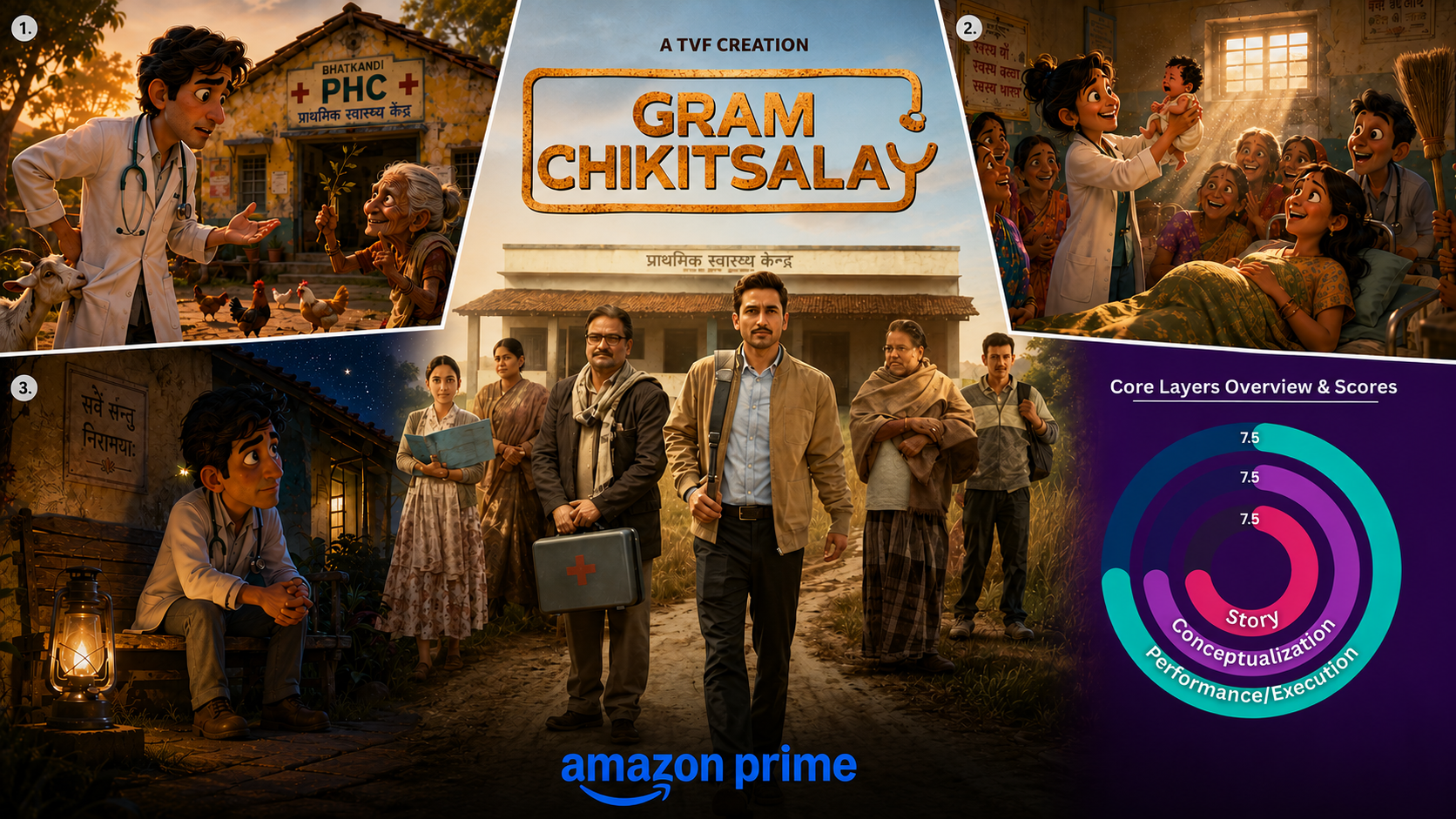
50-Word Verdict
Analysis Subject: Gram chikitshalaya 2 Director: Lalitam Tiwari Overall Greybrainer Score: 7.5/10 About the Greybrainer Methodology: This analysis examines films through three critical layers Story/Script, Conceptualization, and Performance/Execution providing a comprehensive evaluation of cinematic elements that contribute to a film's overall impact and artistic merit. Three Layer Analysis Story AI:
Greybrainer Analysis: Gram chikitshalaya 2: Morphokinetics™ Narrative Pacing
Minute-by-minute audience retention risk vs. narrative tension. Identifies structural sag points and retention thresholds.
Analysis Subject: Gram chikitshalaya 2
Director: ** Lalitam Tiwari
Overall Greybrainer Score: 7.5/10
About the Greybrainer Methodology: This analysis examines films through three critical layers - Story/Script, Conceptualization, and Performance/Execution - providing a comprehensive evaluation of cinematic elements that contribute to a film's overall impact and artistic merit.
Three-Layer Analysis
Story AI: 7.5/10 User: 7.5/10
Concept AI: 7.5/10 User: 7.5/10
Performance AI: 7.5/10 User: 7.5/10
Magic of Story/Script Core idea, narrative, themes, character arcs, originality.
"Gram Chikitsalay 2" emerges as a heartfelt and grounded rural comedy-drama, building upon its inaugural season to carve out a more distinct identity within the landscape of Indian web series. This season, produced by The Viral Fever (TVF), deepens its exploration of the intricate challenges and quiet triumphs of rural healthcare, anchored by a script that prioritizes sincerity and relatable human experiences. 1. Detailed Critique of the Magic of Story/Script: Core Idea, Narrative, Themes, Character Arcs, Originality The core idea of "Gram Chikitsalay 2" revolves around the persistent idealism of Dr. Prabhat Sinha, a city-bred doctor striving to revitalize a neglected Primary Health Centre (PHC) in the fictional village of Bhatkandi. The narrative skillfully shifts from his initial struggle to gain villagers' trust in Season 1 to a more complex battle against systemic deficiencies, resource shortages, and entrenched local beliefs in the current season. The script bravely tackles the stark realities of grassroots healthcare, highlighting issues from a scarcity of basic medicines to bureaucratic red tape and the pervasive influence of traditional remedies and superstitions. The central narrative thrust is Dr. Prabhat's ambition to secure the coveted "Adarsh PHC" (Model PHC) certification, viewing it as a crucial step to ensure consistent government support and improve the clinic's functioning. This goal provides a clear objective for the season, around which various subplots and character interactions unfold. The writers, Vaibhav Suman and Shreya Srivastava, are lauded for injecting sincerity into the script, showcasing the "rawness, the absurdity, and the urgency of the medical field" without resorting to preachy tones. Character arcs see significant development. Dr. Prabhat, portrayed by Amol Parashar, grows into his role, shedding some urban stiffness and embodying a deeply sincere physician who refuses to compromise on his principles. Dr. Gargi Singh (Akansha Ranjan Kapoor) moves beyond a supporting role to become an equal partner in Prabhat's mission, taking the lead in critical areas like promoting institutional deliveries and challenging long-standing attitudes towards maternal healthcare. The character of Chetak Kumar (Vinay Pathak), the village quack, is given more depth, with the script exploring his backstory as a failed medical student, making him a more nuanced antagonist rather than a stereotypical villain. The subplot involving ward boy Govind (Akash Makhija) and his "pakadwa vivaah" (forced marriage) crisis adds layers of humor and commentary on local customs and the corrupt system. In terms of originality, while the first season faced comparisons to "Panchayat," "Gram Chikitsalay 2" is widely praised for finding its own voice and identity. It distinguishes itself by focusing specifically on healthcare challenges, offering a fresh perspective on rural life beyond village politics. The show's strength lies in its "low stakes, lo-fi storytelling," which allows for a more intimate and authentic portrayal of its world. 2. Strengths and Weaknesses Strengths:
- Authentic and Grounded Storytelling: The script's biggest victory is its sincerity and realistic depiction of rural healthcare issues, social stigmas, superstitions, and bureaucratic hurdles. It avoids glamorizing village life, presenting a "lived-in and authentic" world.
- Well-Developed Characters: The writers effectively build upon the established characters from Season 1, giving them meaningful arcs and showcasing their growth. Amol Parashar's earnest portrayal of Dr. Prabhat is a highlight.
- Subtle Humor and Emotional Honesty: The series blends humor with social themes, maintaining warmth and emotional honesty. Even flawed characters are treated with empathy, reminiscent of Hrishikesh Mukherjee's filmmaking style.
- Clear Thematic Focus: The shift in focus to the "Adarsh PHC" certification provides a strong, unifying goal for the season, driving the plot forward.
- Improved Identity: The second season successfully steps out of the shadow of its comparisons to "Panchayat," establishing its unique narrative voice. Weaknesses:
- Panchayat Crossover/Cameo: Some critics found the "Panchayat" crossover cameos to be a "gimmick" that disrupted the carefully constructed world of Bhatkandi and felt unnecessary, adding little to the organic expansion of the story.
- Emotional Connection: Despite the sincerity, some viewers reported feeling less emotionally connected to the characters' struggles and victories. The show is a "comfort watch" but perhaps lacks the deep emotional resonance of some other TVF productions.
- Underwritten Arcs for Supporting Characters: While some characters like Dr. Gargi and Govind get good arcs, others like Phutani Ji (Anandeshwar Dwivedi) and Indhu (Garima Vikrant Singh) were felt to be restricted or given less screen presence this season. Vinay Pathak's Chetak Kumar, while improved, still had a somewhat predictable turnaround that could have benefited from more build-up.
- Pacing: While the slow pace is often a strength, some moments, particularly "scenes created to showcase characters shooting the breeze," were perceived as "time-fill" or "padding" that could have been tighter. 3. How it Contributes to the Overall Film (Series) The story and script are the absolute backbone of "Gram Chikitsalay 2." They provide the narrative structure, define the characters' motivations, and articulate the central themes. The well-crafted script ensures that the series remains "sincere and grounded," drawing viewers into the realities of rural healthcare. It allows the ensemble cast to deliver believable performances and fosters empathy for their struggles. The script's focus on character lives rather than just a fast-paced plot makes it a "soothing balm" and leaves a sense of satisfaction, making it a compelling "comfort watch." By finding its own voice, the script solidifies the series' place as a thoughtful and socially aware comedy-drama, contributing significantly to its overall positive reception and potential for future seasons. 4. Suggested Improvements
- Integrate Crossovers More Organically: If future seasons intend to incorporate elements from other TVF universes, they should be woven into the narrative more organically, serving the plot and character development rather than feeling like a mere gimmick.
- Deepen Emotional Stakes: While sincerity is a strength, exploring the emotional impact of the doctors' and villagers' struggles more profoundly could enhance viewer connection and make victories feel more personal. This could involve more intimate character moments and exploring the psychological toll of their work.
- Expand Supporting Character Arcs: Provide more substantial storylines and development for key supporting characters like Phutani Ji and Indhu, ensuring that their presence feels essential and contributes meaningfully to the overarching narrative.
- Refine Pacing for tighter storytelling: While a relaxed pace is part of the show's charm, judicious editing of less critical "filler" scenes could make the episodes feel more focused and impactful without losing their authentic feel.
- Subtlety in Character Portrayal: While Akansha Ranjan Kapoor is good as Dr. Gargi, one review pointed out that making her "unkempt and straggly-haired" might be a stereotypical and unnecessary choice, especially for a show advocating acceptance. Future seasons could consider more nuanced visual portrayals.
** Main Cast: Amol Parashar (Dr. Prabhat Sinha), Vinay Pathak (Chetak Kumar), Akansha Ranjan Kapoor (Dr. Gargi Singh), Akash Makhija (Govind), Anandeshwar Dwivedi (Phutani), Garima Vikrant Singh (Indu), Dinesh Lal Yadav (Babu Sahab) Suggested Score: 7.5/10 **
📊 Layer Scoring 🤖 AI Analysis Score 7.5/10 👤 Editor Score 7.5/10
Magic of Conceptualisation Director's vision, editing, casting, and overall presentation.
As an expert film critic, I delve into the conceptualisation of "Gram Chikitsalaya 2," a recent Hindi-language comedy-drama series that premiered on Prime Video on June 23, 2026. This second season, produced by The Viral Fever (TVF), continues the journey of Dr. Prabhat Sinha in the fictional rural village of Bhatkandi, navigating the intricate challenges of establishing a functional Primary Health Centre (PHC) amidst local politics, superstitions, and resource scarcity. The series attempts to carve its unique identity while acknowledging its spiritual predecessor, "Panchayat," a comparison that defined its first season.
1. Detailed Critique of the Magic of Conceptualization
The "magic of conceptualization" in "Gram Chikitsalaya 2" lies in its grounded approach to storytelling, aiming for authenticity in its portrayal of rural India and its healthcare system. Director's Vision (Lalitam Tiwari): Lalitam Tiwari's direction is the bedrock of the series' conceptualization, maintaining a tone that is both earnest and subtly humorous. The vision is clearly to present village life in a realistic, unglamorized manner, allowing the everyday struggles and small victories to resonate with the audience. Tiwari successfully steers the narrative to focus on the human element, treating even flawed characters with empathy, reminiscent of classic Hrishikesh Mukherjee films. This season particularly benefits from a clearer sense of purpose, moving beyond the initial "Panchayat hangover" to establish its own voice. The director's ability to weave in complex social themes like bribery, superstition, and the challenges of maternal healthcare without making the narrative feel heavy-handed is commendable. The progression of Dr. Prabhat's character from an idealistic outsider to someone more integrated and understanding of rural complexities is handled with a mature hand. Editing: The editing, which results in five easily digestible episodes of approximately 30-35 minutes each, contributes significantly to the show's "comfort watch" appeal. The pacing, while generally unhurried and slice-of-life, allows for a deeper exploration of characters and their daily lives rather than rushing through plot points. However, some critics note that the pacing occasionally feels too restrained, with certain scenes stretching longer than necessary, leading to a dip in momentum. This deliberate slowness, while contributing to the show's authentic feel, can sometimes test the viewer's patience, hindering the story's forward movement. Casting: The casting is a significant strength, with each actor embodying their role with conviction.
- Amol Parashar as Dr. Prabhat Sinha: Parashar delivers a sincere and determined performance, effectively portraying a man committed to his principles despite constant obstacles. He sheds any lingering urban stiffness, making Dr. Prabhat relatable and easy to root for.
- Vinay Pathak as Chetak Kumar: Pathak is a standout, bringing warmth and unpredictability to the role of the village quack. His performance elevates Chetak beyond a typical antagonist, making him a complex character whose motivations are explored more deeply this season.
- Akansha Ranjan Kapoor as Dr. Gargi Singh: Kapoor gets a more substantial arc in Season 2, emerging as a strong and steady presence. Her portrayal of Dr. Gargi as an equal partner in Prabhat's mission, especially in championing institutional deliveries, is convincing and impactful.
- Akash Makhija as Gobind: Makhija delivers a believable performance as the ward boy, capturing both the humor and vulnerability of his character, particularly in his storyline involving a "pakadwa vivaah" and navigating the corrupt system for a permanent position.
- Anandeshwar Dwivedi as Phutani: Dwivedi is excellent, providing sharp one-liners and a command over the local dialect that adds unique flavor.
- The inclusion of Dinesh Lal Yadav (Nirahua) is noted as a "fantastic boost" and a "surprisingly grounded performance" that adds weight to the story. Overall Presentation: The series excels in its overall presentation by creating a lived-in and authentic rural world. The production design and cinematography effectively capture the essence of Bhatkandi without resorting to glamorization. The show's ability to blend humor with pertinent social commentary on rural healthcare is a testament to its strong conceptualization. While the first season struggled with comparisons to "Panchayat," Season 2 consciously embraces this connection, even featuring cameos that confirm a shared universe. This decision, while potentially a "gimmick" for some, also helps solidify its identity within TVF's popular "ruralcore" genre. The writing, by Vaibhav Suman and Shreya Srivastava, is sharp and authentic, addressing genuine issues without being preachy.
2. Strengths and Weaknesses
Strengths:
- Authentic and Grounded Vision: The director's commitment to portraying rural life realistically, without exaggeration, is a major strength.
- Strong Ensemble Cast: The performances, particularly by Amol Parashar, Vinay Pathak, Akansha Ranjan Kapoor, and Akash Makhija, are highly convincing and add depth to their characters.
- Heartfelt Storytelling: The series effectively blends humor, emotion, and social themes, making it a "heartwarming" and "comforting watch".
- Improved Identity: Season 2 largely succeeds in stepping out of "Panchayat's" shadow, finding its own voice and focusing more confidently on rural healthcare challenges.
- Relatable Issues: The show addresses genuine grassroots problems, social stigmas, and bureaucratic hurdles in a sharp and authentic manner. Weaknesses:
- Pacing Issues: While generally deliberate, some scenes and plotlines feel unnecessarily stretched, occasionally slowing down the narrative momentum.
- Lingering "Panchayat" Comparisons: Despite efforts, the influence of "Panchayat" is still visible, with Dr. Prabhat sometimes feeling too similar to Abhishek Tripathi, which can detract from the show's unique identity. The forced crossover, while establishing a shared universe, felt like a "gimmick" to some, disrupting the established world of Bhatkandi.
- Underwritten Arcs for Supporting Characters: While main characters shine, some supporting roles, like Phutani and Indu, are noted to have less to do this season.
- Predictable Elements: Vinay Pathak's character arc, while well-acted, was somewhat predictable, needing a better build-up for his eventual turnaround.
3. How it Contributes to the Overall Series
The conceptualization of "Gram Chikitsalaya 2" is fundamental to its success. Lalitam Tiwari's vision for a grounded, empathetic portrayal of rural healthcare, combined with the strong casting, creates a believable world that draws viewers in. The editing, despite minor pacing issues, supports the slice-of-life narrative, allowing for character development and thematic exploration. The overall presentation ensures that the series stands as a thoughtful and socially aware comedy-drama, effectively balancing entertainment with a subtle commentary on the realities of India's rural medical landscape. It moves the series forward by allowing Dr. Prabhat to grow within his environment and for the show to establish a more distinct personality, making it a more engaging and satisfying sequel.
4. Suggested Improvements
- Tighten Pacing: While a slow pace can be effective, judicious editing to trim scenes that drag could enhance engagement without sacrificing the show's authentic rhythm.
- Further Differentiate Character Arcs: While the show aims to establish its own identity, ensuring that protagonist Dr. Prabhat's struggles and resolutions feel distinctly his own, rather than echoes of other TVF characters, would strengthen the series' individuality.
- Integrate Crossovers Organically: If future seasons plan more crossovers, they should be woven more organically into the narrative rather than feeling like abrupt interruptions or fan service.
- Expand Supporting Character Development: Giving more substantial storylines and screen time to talented supporting actors like Anandeshwar Dwivedi and Garima Vikrant Singh could enrich the ensemble dynamics and provide more diverse perspectives.
- Elevate Subplots: Ensure that all subplots, like Chetak Kumar's turnaround, receive adequate build-up and narrative weight to maximize their impact.
** Main Cast: Amol Parashar, Vinay Pathak, Akansha Ranjan Kapoor, Akash Makhija, Anandeshwar Dwivedi, Garima Vikrant Singh, Dinesh Lal Yadav Suggested Score: 7.5/10 ** 📊 Layer Scoring 🤖 AI Analysis Score 7.5/10 👤 Editor Score 7.5/10
Magic of Performance/Execution Acting, music, cinematography, effects, and choreography.
"Gram Chikitsalaya 2," the much-anticipated second season of the rural comedy-drama series, has premiered on Prime Video, offering a heartfelt and often humorous look into the challenges of healthcare in rural India. Directed by Lalitam Tiwari and produced by The Viral Fever (TVF), this season sees Dr. Prabhat Sinha continue his earnest efforts to revitalize the Primary Health Centre (PHC) in the fictional village of Bhathkandi. The series, while initially drawing comparisons to TVF's other popular rural offering "Panchayat," has notably found its own distinct voice and narrative strength in its sophomore outing.
The Magic of Performance/Execution: A Detailed Critique
1. Detailed Critique of this Specific Aspect: "Gram Chikitsalaya 2" truly shines in its performance and execution, particularly through its strong acting, grounded cinematography, and effective use of music to enhance the narrative. The series prioritizes authenticity, which is evident in every aspect of its production.
- Acting: The ensemble cast delivers honest and convincing performances that are central to the show's appeal. Amol Parashar, as Dr. Prabhat Sinha, brings a deep sincerity and determination to his role, making the audience genuinely root for his character's idealism in the face of systemic challenges. Vinay Pathak, portraying the village quack Dr. Chetak Kumar, is a standout, infusing his character with warmth and unpredictability, transforming what could have been a villainous role into someone surprisingly likeable. Akash Makhija, as the ward boy Gobind, delivers a believable performance, capturing both the humor and vulnerability of navigating a corrupt system. Akansha Ranjan Kapoor, as Dr. Gargi Singh, gets a more substantial arc this season and slips comfortably into her role, becoming a strong and steady presence at the clinic. Anandeshwar Dwivedi as Phutani adds a unique flavor with his sharp one-liners and command over the local dialect. The performances collectively create a lived-in and authentic world.
- Music: While not overtly prominent, the background score and music effectively complement the rural setting and emotional beats of the story. It maintains a subtle presence, enhancing the heartwarming and sometimes melancholic moments without overshadowing the narrative or performances. The music contributes to the overall "comfort watch" feel of the series.
- Cinematography: The cinematography grounds the series in realism, avoiding any glamorization of village life. It authentically captures the visual essence of rural India, from the struggling PHC to the everyday lives of the villagers. The framing and lighting contribute to the show's believable atmosphere, making the world of Bhathkandi feel tangible and relatable.
- Effects & Choreography: As a rural comedy-drama, "Gram Chikitsalaya 2" does not rely on elaborate special effects or complex choreography. Any practical effects used are subtle and serve the story's authenticity, such as depicting medical procedures or the general wear-and-tear of the PHC. Similarly, choreography is naturalistic, reflecting the organic movements and interactions of people in a village setting, particularly in scenes like a village wedding or the "pakadwa vivaah" subplot. 2. Strengths and Weaknesses:
- Strengths:
- Authentic Acting: The biggest strength lies in the genuine and sincere performances by the entire cast, particularly Amol Parashar and Vinay Pathak. Their portrayals make the characters relatable and the struggles feel real.
- Grounded Direction: Lalitam Tiwari's direction keeps the show grounded and believable, fostering an authentic and lived-in world without resorting to exaggeration.
- Effective Atmosphere: The combined efforts in acting, cinematography, and music create a warm and comforting atmosphere, drawing viewers into the simple yet profound narratives of rural life.
- Improved Storytelling: The second season is noted for finding its own voice and delivering more heartwarming and well-developed characters and storylines compared to its predecessor.
- Weaknesses:
- Pacing Issues: Some reviews note that the pacing can occasionally be slow, with certain scenes stretching longer than necessary, which can affect the momentum of the episodes.
- Unnecessary Crossover: The inclusion of cameos from "Panchayat" characters, while intended to establish a shared universe, felt like a gimmick to some critics and disrupted the carefully constructed world of Bhathkandi.
- Limited Scope for Technical Grandeur: Due to its genre and setting, the series naturally has limited scope for groundbreaking cinematography, elaborate effects, or dynamic choreography, which might be perceived as a weakness by those expecting more visual spectacle. 3. How it Contributes to the Overall Film: The strong performance and execution are the backbone of "Gram Chikitsalaya 2." The authentic acting allows the audience to connect deeply with the characters' struggles and triumphs, making the social commentary on rural healthcare more impactful and relatable. The grounded cinematography reinforces the realism of the setting, making the challenges faced by Dr. Prabhat feel immediate and tangible. The subtle music adds emotional depth without being manipulative. This cohesive execution transforms the series from a simple comedy-drama into a "sincere and grounded look at the realities of grassroots healthcare," leaving viewers with a sense of satisfaction and empathy. It ensures that the show's central themes of idealism versus reality, community trust, and the resilience of rural life are conveyed effectively and genuinely. 4. Suggested Improvements:
- Pacing Refinement: While the show's relaxed pace contributes to its charm, a tighter editing approach in certain scenes could help maintain momentum without sacrificing the slice-of-life feel.
- Focused Narrative Identity: While the "Panchayat" crossover was an attempt to leverage an established universe, future seasons could benefit from a stronger focus on cementing "Gram Chikitsalaya's" unique identity and narrative without external references.
- Subtler Character Quirks: While TVF shows are known for quirky characters, ensuring these quirks serve the character development and narrative rather than just being for comedic effect could deepen audience connection.
- Exploration of Music: While current music is effective, exploring more regional folk elements or unique instrumental scores could further enhance the cultural immersion and distinct identity of Bhathkandi.
** Main Cast: Amol Parashar (Dr. Prabhat Sinha), Vinay Pathak (Dr. Chetak Kumar), Akash Makhija (Gobind), Anandeshwar Dwivedi (Phutani), Akansha Ranjan Kapoor (Dr. Gargi Singh), Garima Vikrant Singh (Indu), Dinesh Lal Yadav Suggested Score: 7.5/10 ** 📊 Layer Scoring 🤖 AI Analysis Score 7.5/10 👤 Editor Score 7.5/10
🌊 Morphokinetics: Narrative Flow Analysis
Overall Summary: "Gram Chikitshalaya 2" unfolds as a deeply resonant drama, meticulously charting the emotional and professional journey within a rural healthcare setting. The film's morphokinetics are characterized by a thoughtful, deliberate pacing that allows the audience to immerse themselves in the daily struggles and triumphs of the village clinic. It begins with a reflective re-establishment of the world and its dedicated characters, slowly building an undercurrent of tension as new challenges emerge. This tension gradually escalates through a series of medical crises and bureaucratic frustrations, punctuated by moments of heartwarming community solidarity. The narrative energy peaks dramatically during a widespread health epidemic, transforming into a desperate race against time. The emotional rhythm navigates a spectrum from cautious optimism and enduring hope to profound frustration, despair, and grief, ultimately resolving with a powerful sense of resilience and collective triumph. The film expertly balances the stark realities of rural healthcare with the indomitable spirit of humanity, offering releases of emotional pressure through successful interventions and community support, leaving a lasting impression of dedicated service and unwavering hope.
Timeline Structure: The narrative structure of "Gram Chikitshalaya 2" is predominantly linear, following the chronological progression of events over several months within the village. The film effectively uses this straightforward approach to build a clear sense of escalating stakes and character development. While primarily linear, there are subtle, brief instances of character-driven flashbacks, particularly for Dr. Anand, that provide emotional depth and context, hinting at past struggles or inspirations from the first film without disrupting the forward momentum. The story is primarily told through the perspective of Dr. Anand and his clinic staff, occasionally broadening to encompass the collective experience of the villagers. This focused, linear structure allows for a sustained emotional journey, deeply embedding the audience in the daily life and profound challenges of the Gram Chikitshalaya.
Key Narrative Moments: 5% through: Dr. Anand arrives at the renovated Gram Chikitshalaya, reflecting on past struggles and new beginnings, a sense of cautious optimism in the air as he greets returning staff. (Intensity: 4/10) 15% through: A young child is brought in with an unfamiliar, rapidly worsening illness, immediately raising alarm bells and accelerating the film's initial slow pace. (Intensity: 6/10) 25% through: Dr. Anand faces bureaucratic hurdles; a crucial medical supply shipment is delayed indefinitely, leading to a tense confrontation with a district official. (Intensity: 7/10) 35% through: A quiet, introspective scene where Dr. Anand, overwhelmed by the mounting challenges, confides in a colleague about his fears of failure and burnout. (Intensity: 5/10) 40% through: Villagers organize a donation drive for medical supplies, showcasing their unwavering trust and support for the clinic, a heartwarming moment of collective spirit. (Intensity: 3/10) 48% through: The mysterious illness spreads rapidly, affecting several more villagers, plunging the community into widespread fear and accelerating the narrative towards a crisis point. (Intensity: 8/10) 55% through: Dr. Anand makes an urgent, desperate plea to a city hospital for assistance and resources, only to be met with indifferent refusal due to lack of funds. (Intensity: 7/10) 62% through: Despite their best efforts, the initial child patient succumbs to the illness, a devastating loss that sends a wave of despair through the clinic and the village. (Intensity: 9/10)
📋 Executive Summary Greybrainer Summary Report: "Gram Chikitsalaya 2"
"Gram Chikitsalaya 2," directed by Lalitam Tiwari, emerges as a heartwarming and critically refined rural comedy-drama, successfully distinguishing itself within the burgeoning landscape of Indian web series. Building on its inaugural season, this Prime Video offering, produced by The Viral Fever (TVF), deepens its exploration of grassroots healthcare challenges in the fictional village of Bhatkandi, earning an overall Greybrainer score of 7.5/10.
At its core, the story, penned by Vaibhav Suman and Shreya Srivastava, revolves around Dr. Prabhat Sinha's (Amol Parashar) earnest mission to secure "Adarsh PHC" certification for his neglected Primary Health Centre. The narrative skillfully navigates systemic deficiencies, resource scarcity, and entrenched local beliefs, showcasing the "rawness, the absurdity, and the urgency of the medical field" without resorting to didacticism. Character arcs see significant evolution; Dr. Prabhat sheds urban stiffness, Dr. Gargi Singh (Akansha Ranjan Kapoor) becomes an equal partner, and Vinay Pathak’s Chetak Kumar gains surprising depth as a nuanced antagonist. The script’s strength lies in its "low stakes, lo-fi storytelling," fostering an authentic, lived-in world that avoids glamorization.
Lalitam Tiwari's conceptualization is the bedrock of the series, maintaining an empathetic and subtly humorous tone reminiscent of Hrishikesh Mukherjee. The casting is a significant triumph, with Amol Parashar delivering a sincere performance, and Vinay Pathak standing out with warmth and unpredictability. Akansha Ranjan Kapoor and Akash Makhija also provide convincing portrayals, anchoring the ensemble. This grounded vision, combined with authentic production design and cinematography, crafts a believable rural milieu. While the show consciously addresses its "Panchayat" lineage, occasionally through cameos, it largely succeeds in forging its own distinct identity by focusing intently on healthcare.
Performance and execution further elevate the series. The ensemble's genuine acting fosters deep viewer connection, making the social commentary on rural healthcare impactful. The cinematography realistically captures rural India, and the subtle background score enhances emotional beats, contributing to its "comfort watch" appeal. Despite minor pacing issues in some scenes and the divisive "Panchayat" crossover that felt somewhat gimmicky, the cohesive execution ensures the central themes of idealism, community trust, and resilience are conveyed authentically. "Gram Chikitsalaya 2" stands as a thoughtful, engaging, and emotionally honest portrayal of rural India's medical landscape.
Related Greybrainer Reads
GREYBRAINER
AI-Powered Cinematic Intelligence