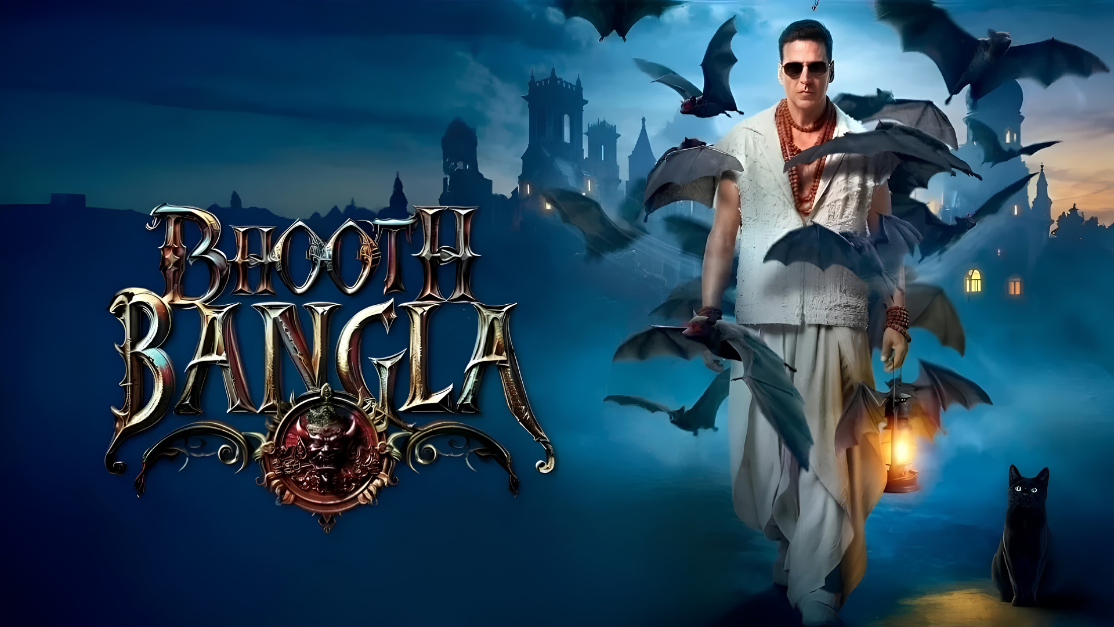
Greybrainer Analysis: Bhooth Bangla (2026): Morphokinetics™ Narrative Pacing
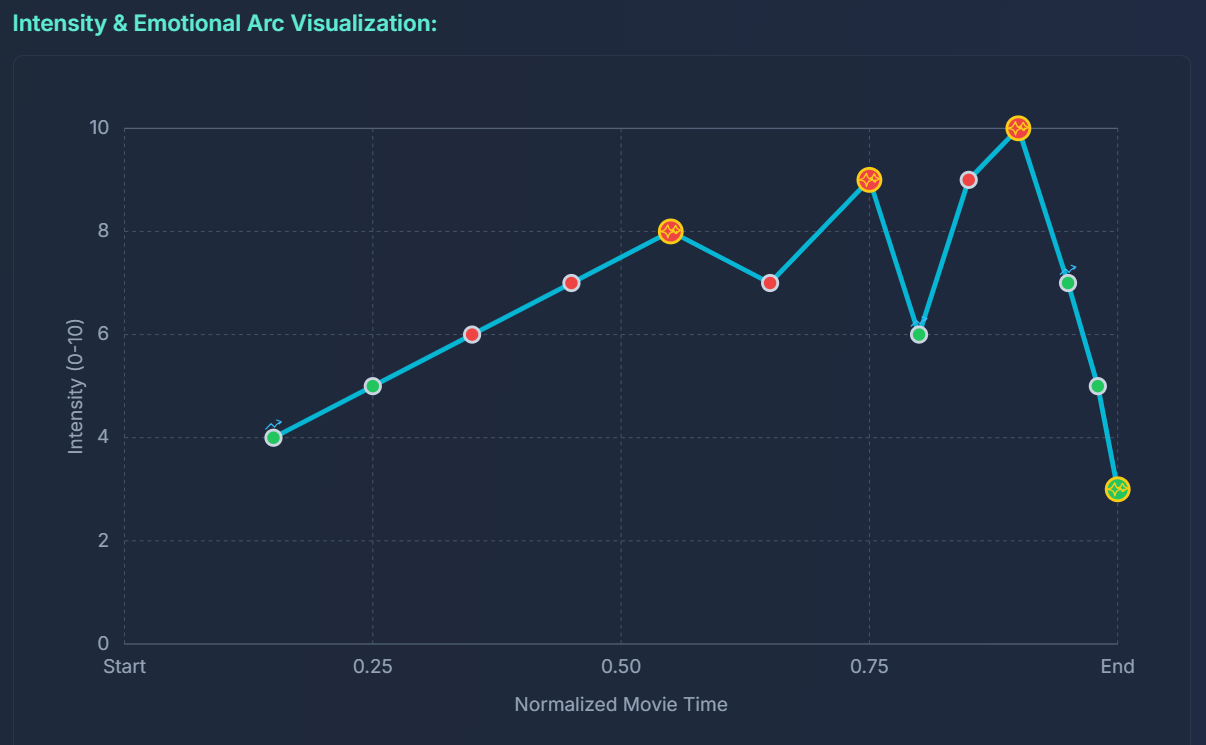
Minute-by-minute audience retention risk vs. narrative tension. Identifies structural sag points and retention thresholds.
Greybrainer Analysis: Bhooth Bangla (2026)
Overall Summary
“Bhooth Bangla (2026)” is a film that attempts to resurrect the beloved horror-comedy genre through the reunion of director Priyadarshan and star Akshay Kumar, a pairing that has historically delivered potent entertainment. Released on April 17, 2026, the film is set in a haunted ancestral mansion in Mangalpur, where a centuries-old curse, disappearing brides, and dark magic converge. While the film taps into a rich vein of Indian mythology and leverages the nostalgia of Priyadarshan’s and Kumar’s previous collaborations, particularly “Bhool Bhulaiyaa (2007),” it ultimately struggles to forge a distinct identity, often feeling like a rehash rather than an evolution.
The script, while ambitious in its exploration of themes like family legacy and superstition, is frequently convoluted and hampered by inconsistent pacing. Crucial plot elements are introduced late, and the narrative flow suffers. The humour, a hallmark of Priyadarshan’s work, is often criticised for being dated and heavy-handed, failing to resonate with a contemporary audience. Similarly, the horror elements, heavily reliant on CGI, are found to be unconvincing, detracting from genuine scares. The romantic subplot is particularly lambasted as “cringey” and forced, adding little to the overall narrative.
Conceptualisation sees Priyadarshan revisiting a familiar formula, which, while offering nostalgic appeal, lacks originality. The film’s visual and auditory presentation is functional but not immersive, with VFX and colour grading falling short of enhancing the atmospheric requirements. Casting, while a reunion of familiar faces, also presents issues, with notable age discrepancies in key relationships creating an “awkward” dynamic.
Performances, however, are a mixed bag. Akshay Kumar delivers a superb performance, showcasing his versatility in both comedic and serious moments. Veteran actors like Rajpal Yadav, Paresh Rawal, and the late Asrani provide much-needed comedic relief, with Yadav often stealing the show. Nevertheless, even these strong individual efforts cannot entirely compensate for the script’s shortcomings, especially in the second half, which is described as an “underwhelming backstory” and an “overlong climax.” The film’s overall execution is thus a blend of nostalgic charm and uninspired repetition, leaving audiences with a sense of déjà vu rather than exhilaration.
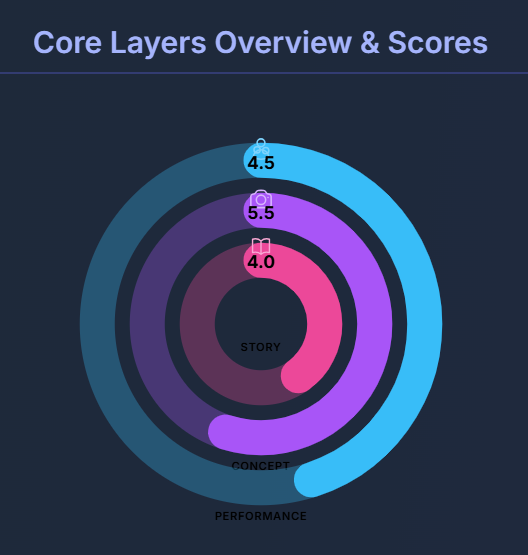
Visual Layer Overview & Scores
• (Innermost Ring) Story: 4.0 / 10
• (Middle Ring) Concept: 5.5 / 10
• (Outermost Ring) Performance: 4.5 / 10
Detailed Layer Analysis, Ratings & Suggestions
Magic of Story/Script (Score: 4.0 / 10)
(Core idea, narrative, themes, character arcs, originality.)
“Bhooth Bangla (2026),” directed by Priyadarshan, attempts to blend horror and comedy, leaning heavily on Indian mythology and the familiar reunion of its lead star, Akshay Kumar, with the director. While the film evokes nostalgia for their past collaborations, the script often struggles to find its footing, resulting in a narrative that is ambitious in its themes yet convoluted in its execution. The movie was theatrically released on April 17, 2026, receiving mixed reviews from critics.
1. Detailed Critique of the Magic of Story/Script
• Core Idea and Originality: The central premise revolves around a haunted ancestral mansion, ‘Acharya Niwas,’ in the fictional town of Mangalpur, plagued by a centuries-old curse linked to disappearing brides, Indian mythology, and black magic. This core idea, drawing inspiration from ancient texts like the Vedas and the Mahabharata, holds significant potential. However, the film’s originality is often overshadowed by its striking similarities to “Bhool Bhulaiyaa (2007)”. While aiming for a nostalgic throwback, the script often feels like a rehash rather than an evolution, failing to introduce truly fresh elements.
• Narrative and Themes: The narrative begins with London-based Arjun Acharya (Akshay Kumar) inheriting the mansion and planning his sister Meera’s wedding there, initially dismissing the local legends. This establishes a classic conflict between modern scepticism and ancient beliefs. As secrets unravel, revealing an old grudge and a curse linked to Arjun’s late mother, Yashodhara (Tabu), the initial lighthearted banter gives way to suspense. However, the pacing is inconsistent. Crucial characters, such as a guruji and a tree spirit, are introduced late and somewhat randomly, hindering the narrative flow. The themes of family legacy and superstition lack depth and act more as plot devices.
• Character Arcs: Arjun’s journey from a staunch sceptic to someone grappling with supernatural realities forms the central character arc. While predictable, its execution is hampered by a script prioritising situational comedy and jump scares over nuanced development. The comedic trio of Paresh Rawal, Rajpal Yadav, and Asrani primarily serve as comic relief using heavy-handed, dated humour. The romance involving Priya (Wamiqa Gabbi) is criticised for being forced. The casting of Jisshu Sengupta (49) as Akshay Kumar’s (58) father drew criticism for its lack of credibility. Tabu’s Yashodhara brings a momentary spark but highlights a missed opportunity for a stronger role earlier in the narrative.
2. Strengths and Weaknesses
Strengths:
• Intriguing Premise: The blend of Indian mythology, black magic, and a haunted ancestral property provides a rich cultural backdrop.
• Nostalgia Factor: The reunion of Priyadarshan, Akshay Kumar, Paresh Rawal, and Rajpal Yadav taps into strong nostalgia for their successful past collaborations.
• Potential for Situational Comedy: The setup allows for numerous opportunities for comedic misunderstandings and physical humour.
Weaknesses:
• Dated Humour: Critics found the humour heavy-handed and outdated, relying on tropes that no longer resonate.
• Inconsistent Pacing and Structure: The plot struggles with pacing, introducing crucial elements too late, resulting in an ungainly flow.
• Weak Character Development: Most characters lack significant arcs or depth, serving merely as plot devices.
• Cringeworthy Romantic Track: The forced romance between Kumar and Gabbi lacked chemistry and narrative relevance.
• Over-reliance on CGI: The scares, particularly the CGI-heavy demons, were unconvincing and contrasted unfavourably with psychological horror.
• Lack of Freshness: The script fails to bring newness to the genre, feeling like a less impactful version of its predecessors.
3. How it Contributes to the Overall Film
The script is the foundation upon which the film is built. Its mythological premise and comedic potential drive initial engagement. However, weaknesses like dated humour, inconsistent narrative, and underdeveloped arcs lead to a disjointed viewing experience. The unconvincing scares undermine the horror aspect, meaning “Bhooth Bangla” struggles to be more than a nostalgic re-run.
4. Suggested Improvements
• Modernise the Humour: Update comedic sensibilities to appeal to a contemporary audience.
• Strengthen Character Arcs: Provide meaningful development for key characters to evolve beyond initial archetypes.
• Integrate Subplots Cohesively: Ensure romantic interests and supporting characters serve a clear purpose and blend seamlessly into the main story.
• Refine Pacing and Structure: Improve narrative flow and timely introduction of crucial plot points.
• Enhance Horror Elements: Focus on psychological or atmospheric horror rather than unconvincing CGI.
• Originality within Nostalgia: Strive for greater originality in plot twists, character motivations, and thematic exploration.
Structured Data:
• Main Cast: Akshay Kumar, Paresh Rawal, Jisshu Sengupta, Rajpal Yadav, Tabu, Wamiqa Gabbi, Mithila Palkar, Asrani, Manoj Joshi, Zakir Hussain, Rajesh Sharma
• Suggested Score: 4.0 / 10
Potential Enhancements:
**• **Revitalise comedic timing and content.
**• **Develop deeper, more relatable character motivations.
**• **Streamline the plot for better coherence and pacing.
**• **Invest in more effective and less CGI-reliant horror techniques.
**• **Provide a unique take on the horror-comedy genre, moving beyond past successes.
Magic of Conceptualisation (Score: 5.5 / 10)
(Director’s vision, editing, casting, overall presentation.)
“Bhooth Bangla (2026)” attempts to rekindle the magic of Priyadarshan’s earlier horror-comedies by reuniting with Akshay Kumar and a familiar ensemble cast. The film has garnered mixed reviews, praised for its nostalgic appeal but criticised for its lack of originality and uneven execution.
1. Detailed Critique of the Magic of Conceptualisation
Priyadarshan’s directorial vision is rooted in the well-trodden path of the horror-comedy genre, leaning heavily on the formula he perfected in previous successes. The conceptualisation aims for a blend of spooky thrills and situational humour drawn from Indian mythology. This approach relies heavily on the audience’s affection for his past work. Critics note this vision often feels like a “recycled comedy beneath a revamped haveli,” suggesting a reluctance to innovate.
The editing, handled by M.S. Aiyappan Nair, features crisp pacing in the first half where jokes land effectively. However, the second half loses its grip and becomes a “slog,” with an overlong climax that dilutes the initial momentum.
Casting is a prominent aspect, featuring a massive reunion. Akshay Kumar takes on a dual role, and his performance is a strength. Paresh Rawal and Rajpal Yadav are particularly praised. However, age disparities — such as Sengupta playing Kumar’s father, and Gabbi as his love interest — create an “awkward” dynamic that detracts from believability. Tabu and Mithila Palkar are perceived as underutilized.
The overall presentation strives for a grand aesthetic with the haunted mansion setting, but the VFX and CGI are described as merely “serviceable,” occasionally breaking the illusion. The colour grading is somewhat flat, and the background music doesn’t consistently complement the tension or comedic beats.
2. Strengths and Weaknesses
Strengths:
• Nostalgic Appeal: The reunion of key talents taps into a strong sense of nostalgia.
• Comedic Performances: Kumar, Rawal, and Yadav deliver strong comedic performances, with Yadav often cited as the highlight.
• First Half Pacing: The initial half is generally well-paced and maintains audience engagement.
• Traditional Elements: Effectively utilises classic horror-comedy tropes for genre fans.
Weaknesses:
• Lack of Originality: Heavily criticised for relying on a familiar template without offering anything groundbreaking.
• Uneven Pacing and Overlong Climax: The second half suffers from a loss of grip and an extended, exhausting climax.
• Awkward Casting: Significant age gaps in familial or romantic roles create discomfort.
• Subpar Visuals and Sound: VFX, CGI, and colour grading are not immersive; background music often fails to enhance the atmosphere.
• Underwhelming Backstory: The complex past story feels convoluted and fails to justify the film’s runtime.
3. How it Contributes to the Overall Film
Conceptualisation largely defines the film’s identity as a commercial horror-comedy. The director’s vision for a fun, formulaic entertainer is evident in the casting and comedic set pieces. While the crisp early editing establishes the tone, the predictable plot, uneven pacing, and uninspired visual effects prevent the film from achieving lasting impact, leaving it reliant on nostalgia.
4. Suggested Improvements
• Reinvention of the Formula: Aim for a genuine reinvention of the genre through fresh plotlines and innovative comedic approaches.
• Tighter Script and Editing: Tighten the screenplay in the second half to avoid an underwhelming backstory and an overlong climax.
• Thoughtful Casting: Prioritise character suitability and chemistry over reuniting familiar faces.
• Enhanced Visuals and Sound Design: Invest in immersive VFX, thoughtful colour grading, and a nuanced background score.
• Character Development: Deepen character motivations to make the narrative more engaging.
Structured Data:
• Main Cast: Akshay Kumar, Paresh Rawal, Jisshu Sengupta, Rajpal Yadav, Tabu, Wamiqa Gabbi, Mithila Palkar, Asrani, Manoj Joshi, Rajesh Sharma, Zakir Hussain.
• Suggested Score: 5.5 / 10
Potential Enhancements:
**• **Introduce fresh comedic scenarios and horror elements beyond established tropes.
**• **Streamline the narrative in the latter half to maintain consistent engagement.
**• **Prioritise organic character dynamics over forced nostalgic pairings.
**• **Elevate technical aspects (VFX, cinematography, sound design) for a more immersive experience.
**• **Develop a stronger, more cohesive backstory integrated seamlessly with the present-day plot.
Magic of Performance/Execution (Score: 4.5 / 10)
(Acting, music, cinematography, effects, choreography.)
“Bhooth Bangla (2026)” largely falls short despite a star-studded cast and commendable individual efforts. The film aims for a blend of spooky laughs and nostalgic charm, yet its execution is met with mixed critical reception.
1. Detailed Critique of Performance/Execution
• Acting: The primary strength lies in the ensemble cast. Akshay Kumar delivers a superb dual-role performance, enhancing scenes with comic timing and excelling in serious moments. Rajpal Yadav dominates key sequences in the first half, and Paresh Rawal effectively contributes to the chaotic humour. The late Asrani leaves a memorable mark. However, casting choices like Sengupta as Kumar’s father and Gabbi as his love interest were deemed “incredibly awkward.” Collective impact struggles due to a weak script in the latter half.
• Music: Featuring songs by Pritam and a score by Ronnie Raphael, the soundtrack receives mixed feedback. While some audiences enjoyed the music, critics noted the background score felt overly directive, constantly reminding the audience to laugh or be scared rather than subtly enhancing the mood.
• Cinematography: Divakar Mani’s cinematography is described as “visually quite splendid” and a treat on the big screen. However, shooting at the same Chomu Palace in Jaipur as “Bhool Bhulaiyaa” evokes nostalgia while simultaneously highlighting a lack of reinvention.
• Effects: Handled by WRC Studio LLP, the visual effects are noted as “impressive,” which is crucial for balancing the horror elements and comedic timing.
• Choreography (Action/Stunts): Stunt Selva and Ravi Thyagarajan’s action sequences are “entertaining but also gory in some scenes,” suggesting a blend of slapstick violence and genuine scares.
2. Strengths and Weaknesses
Strengths:
• Strong Lead Performances: Akshay Kumar’s comedic timing and overall performance are a major draw.
• Effective Supporting Cast: Yadav, Rawal, and Asrani deliver memorable comedic turns.
• Visual Appeal: Cinematography and impressive VFX contribute positively to the aesthetic.
• Nostalgia Factor: The reunion of the cast and director successfully taps into past goodwill.
• Humour in First Half: Initial portions are well-received for their signature chaotic comedy.
Weaknesses:
• Inconsistent Script and Direction: The screenplay falters post-interval with an underwhelming backstory. Priyadarshan is noted to falter when the horror takes centre stage.
• Outdated Narrative: The core story feels recycled, resulting in boring horror sequences that fall flat.
• Awkward Casting and Character Development: Uncomfortable on-screen dynamics and characters who shockingly disappear in the second half.
• Forced Humour and Over-reliance on Nostalgia: The film fails to recreate past magic, leaning on forced humour without reinvention.
• Lengthy Climax: The climax is overly long and fails to grip viewers.
3. How it Contributes to the Overall Film Performance and execution act as a double-edged sword. The individual brilliance of the comedic actors provides much-needed relief in the first half. However, impressive visuals are undermined by a narrative that loses steam and fails to deliver on its promise. The strong performances are ultimately wasted on an exhausting plot that struggles to recreate the magic of its predecessors.
4. Suggested Improvements
• Script Refinement: A tighter, more original, and less convoluted screenplay is crucial, especially in the second half.
• Balanced Horror and Comedy: A stronger grasp on the horror elements is needed to genuinely thrill the audience instead of dragging out scenes.
• Character Arc and Consistency: Ensure all significant characters have justified screen time and consistent development.
• Pacing and Editing: Slicker editing and a more concise narrative during the climax would greatly improve engagement.
• Reinvention over Nostalgia: Prioritise fresh ideas and reinvention rather than rehashing familiar tropes and settings.
Structured Data:
• Main Cast: Akshay Kumar, Paresh Rawal, Rajpal Yadav, Tabu, Wamiqa Gabbi, Jisshu Sengupta, Asrani, Mithila Palkar, Manoj Joshi, Rajesh Sharma
• Suggested Score: 4.5 / 10
Potential Enhancements:
**• **Strengthen the screenplay, especially the second half and the climax.
**• **Develop a more original and less predictable plot for the genre.
**• **Ensure consistent character arcs and avoid underdeveloped roles.
**• **Improve pacing and editing for a more cohesive viewing experience.
**• **Prioritise reinvention and fresh storytelling over relying solely on nostalgia.
Overall Improvement Opportunities
**• **The film needs a stronger narrative backbone, with a more cohesive and original script that modernises the humour and horror elements, moving beyond nostalgic callbacks.
**• **Casting choices should prioritise on-screen chemistry and believability over simply reuniting familiar faces, particularly for romantic and familial relationships.
**• **Technical aspects such as VFX, sound design, and editing require enhancement to create a more immersive and engaging cinematic experience, especially in the latter half and climax.
Overall Greybrainer Score: 4.7 / 10
Related Greybrainer Reads
GREYBRAINER
AI-Powered Cinematic Intelligence