Greybrainer Analysis: Beef (2026): Morphokinetics™ Narrative Pacing
Minute-by-minute audience retention risk vs. narrative tension. Identifies structural sag points and retention thresholds.
Greybrainer Analysis: Beef (2026)
Executive Summary
“Beef (2026)” Season 2, guided by Lee Sung Jin, excels at exposing the darker facets of the human condition, earning a formidable 9.0/10. Instead of the immediate road rage in Season 1, the April 16, 2026, release explores an internalised, insidious “beef” between two couples: the affluent Joshua (Oscar Isaac) and Lindsay (Carey Mulligan), and the ambitious Ashley (Cailee Spaeny) and Austin (Charles Melton). Jin uses marital dissatisfaction, corrosive wealth, generational trauma, and performative living to build a narrative that is savagely funny, unsettling, and sharp in its critique of contemporary relationships.
The conceptualisation of “Beef” as an anthology series reveals its genius, enabling fresh explorations of anger and relational dynamics. Jin’s directorial vision maintains a razor-sharp tone, confidently navigating dark humour, biting satire, and profound emotional resonance. The casting is a triumph, with Isaac and Mulligan delivering magnetic, fraught performances, their electric chemistry driving the core conflict. Spaeny and Melton brilliantly capture the anxieties of a younger generation, while the gravitas of Youn Yuh-jung and Song Kang-ho adds rich cultural layers. The narrative transition from externalised anger in Season 1 to a focus on internal, insidious conflict is handled with artistic precision, marking a departure from previous relatability and deepening the show’s exploration of human flaws.
Performance and execution are impeccable, and the ensemble cast delivers powerhouse portrayals, grounding the often-outlandish plot in relatable human emotion. James Laxton’s cinematography crafts a hypnotic, mind-bending world, using specific lenses to amplify psychological tension and establish a distinct visual identity. Finneas O’Connell’s diverse soundtrack functions as a powerful narrative tool, underscoring the series’s acidic humour and emotional beats. While some narrative threads occasionally feel convoluted, the ambition and seamless layering create a compelling, immersive experience that broadens the show’s thematic scope. Ultimately, “Beef” Season 2 is a testament to the destructive power of unresolved conflict at the core of the human condition. Its incisive commentary on wealth inequality and marital dynamics solidifies the anthology’s reputation as a critically acclaimed, engaging, and thought-provoking series.
Three-Layer Analysis
**Magic of Story/Script ** (Core idea, narrative, themes, character arcs, originality)
“Beef” Season 2: A Masterclass in Escalating Misery and Psychological Warfare
Main Cast: Oscar Isaac, Carey Mulligan, Cailee Spaeny, Charles Melton, Youn Yuh-jung, Song Kang-ho
Season 2 of Netflix’s “Beef” stands out as a sharp examination of the destructive forces of envy and ambition, exploring the messy underbelly of human emotion. Creator Lee Sung Jin expertly blends psychological drama with dark comedy, making the show both unsettling and savagely funny, while reinforcing its core message about the corrosiveness of modern relationships.
Detailed Critique of The Magic of Story/Script:
The core idea of “Beef” Season 2 revolves around two couples entangled in an escalating feud, a departure from the road-rage catalyst of the first season, yet one that retains the central theme of how seemingly minor conflicts can spiral into all-consuming obsessions. The narrative this season shifts from the external, reactive anger of Danny and Amy to a more internalized, insidious form of “beef” fueled by jealousy and passive aggression. The story expertly navigates the complexities of marriage, class disparity, and the pervasive influence of social media and wealth on our perceptions of happiness and success.
Themes: The season delves into marital dissatisfaction, the corrosive effects of wealth and privilege, intergenerational trauma, and the performance of happiness in a hyper-connected world. The contrast between the established wealth of Joshua and Lindsay and the ambition-driven struggles of Ashley and Austin provides a potent commentary on class and aspiration.
Character Arcs: Season 2 explores the collective downfall of two couples. Oscar Isaac and Carey Mulligan portray an affluent couple craving change; Cailee Spaeny and Charles Melton play an ambitious younger couple. Character arcs focus on shared moral ambiguity rather than individual change.
Originality: “Beef” stays original with its stark humor and flawed characters, shifting from road rage to a country club argument. Youn Yuh-jung and Song Kang-ho add complexity, touching on cultural pressures and appearances.
Strengths and Weaknesses
Strengths:
-
Exceptional Performances: The cast delivers strong performances. Isaac and Mulligan are compelling as a struggling couple. Spaeny and Melton bring energy and depth, while Youn Yuh-jung and Song Kang-ho enhance complexity.
-
Masterful Tone Control: The show’s ability to seamlessly shift between dark humour, biting satire, and profound emotional resonance is unparalleled.
-
Sharp Social Commentary: “Beef” Season 2 continues to offer incisive commentary on wealth inequality, marital dynamics, and the performative nature of modern life.
-
Ambitious Narrative: The season’s willingness to explore complex themes and weave multiple storylines together, even when they become convoluted, is commendable.
Weaknesses:
-
Less Immediate Relatability: Season 2’s internal conflicts may feel less immediately gripping than Season 1’s tangible anger.
-
Occasionally Convoluted Plot: Sometimes narrative threads become so tangled that the plot feels contrived, particularly with the introduction of subplots.
-
“Jumping the Shark” Concern: Critics noted the narrative shifted to a crime thriller, moving from the core “beef” theme, though it eventually re-engaged with it.
Contribution to the Overall Film/Series
Season 2 strengthens ‘Beef’s core message: conflict is a universal and evolving part of the human condition. By expanding on wealth, envy, and relationship dissatisfaction, it deepens the anthology’s exploration of anger and meaning, proving that ‘beef’ is not limited to isolated incidents but speaks to broader societal experience.
Suggested Improvements
-
Deeper Dive into Generational Trauma: Explicitly explore generational trauma’s influence on Ashley and Austin for greater depth.
-
Consequences for Peripheral Characters: Show the ripple effects of the couple’s actions on peripheral characters, such as employees and family.
-
Streamlined Plotting: Streamline certain story arcs to avoid convoluted or contrived plotting.
Suggested Score: 9/10
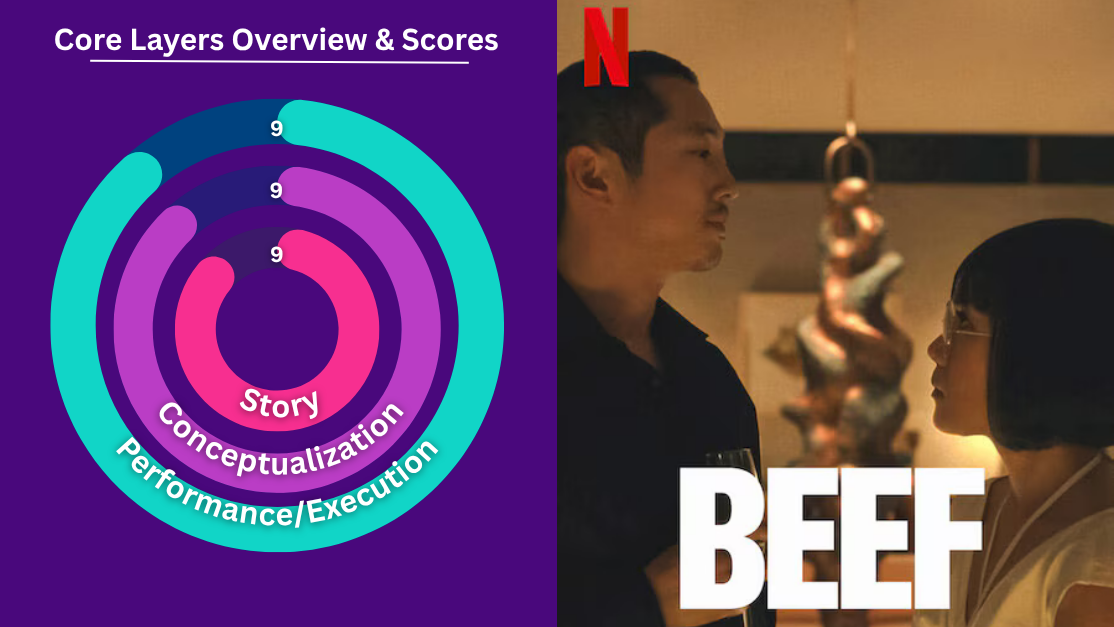
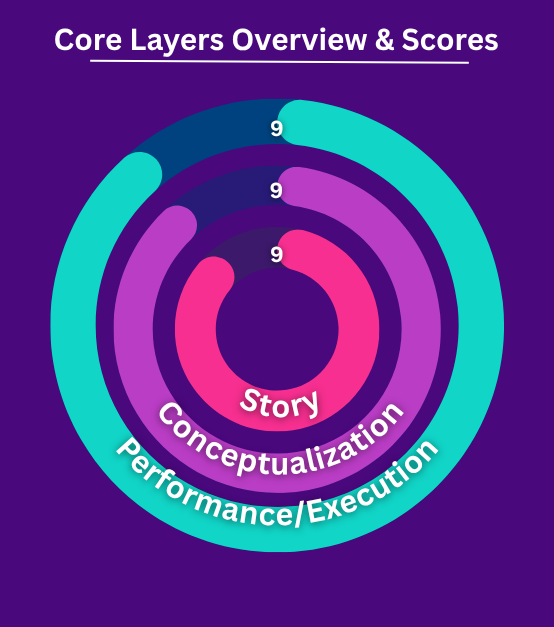
**Layer Scoring ** AI Analysis Score: 9/10 Editor Score: 9/10
Magic of Conceptualisation
(Director’s vision, editing, casting, overall presentation)
Detailed Critique of Magic of Conceptualisation:
The “Beef” franchise, created by Lee Sung Jin, has established itself as a critically acclaimed anthology series, with its second season set to release on April 16, 2026. While the first season focused on a road rage incident escalating into a feud between two strangers, Danny Cho (Steven Yeun) and Amy Lau (Ali Wong), the second season shifts its focus to two couples: Austin Davis (Charles Melton) and Ashley Miller (Cailee Spaeny), and their boss Joshua Martín (Oscar Isaac) and his wife Lindsay Crane-Martín (Carey Mulligan). This shift from external conflict to more internal and relational “beef” has been noted by critics, who find it a departure from the first season’s more direct confrontations.
**1. Director’s Vision and Overall Presentation: ** Lee Sung Jin’s vision for “Beef” as an anthology series allows for the exploration of different facets of human anger and relational dynamics. The series consistently delivers on its promise of sharp observations of human behavior, virtuosic acting, and artful cinematography. The tone remains a key strength, confidently navigating between acidic humor, emotional depth, and dark comedy. Season 2, while perhaps lacking the immediate adrenaline rush of Season 1, offers a more introspective look at relationships and class disparity, threading these themes more elegantly than before. The presentation is consistently polished, with strong direction and cinematography that effectively conveys the characters’ internal states.
Strengths: Lee Sung Jin’s directorial control over tone and thematic exploration is exceptional. The series maintains a high level of artistic quality in its presentation, from cinematography to score. The anthology format allows for fresh explorations of the core themes of anger and conflict.
Weaknesses: Season 2’s shift to a more internal, less externally driven conflict has been a point of contention for some viewers, who felt it was less immediately relatable and less impactful than the first season’s premise. Some reviews suggest the sprawling narrative can feel contrived, particularly in its plot turns.
Contribution to the Overall Film: The director’s vision for an anthology format is central to “Beef.” Each season reframes the core argument, examining anger and relational complexity from new angles. This approach sustains the show’s longevity and depth, allowing the series to consistently return to and sharpen its main thesis.
**Suggested Improvements: **Future seasons should ensure clear, resonant inciting incidents and a rigorous narrative structure that directly connect to the show’s central argument. Anchoring each season’s conflict in the series’ core themes will strengthen its conceptual focus.
2. **Editing: **The editing in “Beef” plays a significant role in pacing and tone. In Season 1, the editing likely contributed to the escalating tension and dark humor derived from the road rage incident. Season 2’s editing has been described as contributing to a “slow burn” and a more introspective feel, which aligns with its thematic focus on relational dynamics. The show’s ability to shift confidently across emotional registers is a testament to skilled editing that supports the directorial vision.
Strengths: The editing effectively supports the show’s tonal shifts and pacing, which are crucial to both the comedic and dramatic elements. It skillfully builds tension and highlights emotional beats.
Weaknesses: In Season 2, the editing may have made the narrative feel less propulsive for some viewers than in the first season.
Contribution to the Overall Film: Editing is key to the series’s success in balancing dark humor with profound emotional exploration. It ensures that the narrative flows effectively, even as it delves into complex psychological territory.
Suggested Improvements: Continue to ensure the editing supports the narrative momentum, especially in seasons that lean towards more internal conflict. Balancing the “slow burn” with engaging pacing will be key.
**3. Casting: **Casting in “Beef” is consistently praised. Steven Yeun and Ali Wong earned acclaim in Season 1. Season 2’s ensemble, including Oscar Isaac, Carey Mulligan, Cailee Spaeny, and Charles Melton, receives recognition for chemistry and performance. Diverse and thoughtful casting contributes to cultural impact and critical success.
Strengths: The series consistently attracts and features exceptionally talented actors who deliver compelling performances. The chemistry between leads, both in Season 1 and Season 2, is a standout element. The casting often reflects a thoughtful approach to representation.
Weaknesses: No significant weaknesses have been identified in the casting.
Contribution to the Overall Film: The performances are central to the show’s ability to explore complex characters and their emotional turmoil. The actors inhabit their roles so fully that the audience becomes deeply invested in their “beefs.”
Suggested Improvements: Continue prioritizing actors who can embody the nuanced, often volatile emotional states of the characters. Exploring diverse casting choices that align with the series’ thematic explorations remains a strong strategy.
Main Cast:
Season 1: Steven Yeun, Ali Wong
Season 2: Oscar Isaac, Carey Mulligan, Cailee Spaeny, Charles Melton
Suggested Score: 9/10
**Layer Scoring ** AI Analysis Score: 9/10
Editor Score: 9/10
**Magic of Performance/Execution ** (Acting, music, cinematography, effects, choreography)
The Detailed Critique of The Magic of “Beef” Season 2: A Symphony of Performance and Execution
“Beef” Season 2, released on April 16, 2026, continues the anthology’s tradition of dissecting the human psyche through the lens of escalating conflict, this time focusing on two couples entangled in the opulent yet fraught world of a country club. The series excels in its “magic of performance and execution,” weaving stellar acting, evocative cinematography, and a compelling musical score into a truly immersive experience.
1. Acting: A Masterclass in Nuance and Intensity
The ensemble cast delivers powerhouse performances, with Oscar Isaac and Carey Mulligan as the embattled couple Joshua and Lindsay, and Cailee Spaeny and Charles Melton as the ambitious younger couple, Ashley and Austin. Isaac, in particular, is lauded for embodying his character’s fragile masculinity and exasperation, finding “new and exciting avenues of performance”. Mulligan is described as “truly exceptional,” balancing the “War of the Roses-esque nature of her failing marriage with emotional heft”. Spaeny and Melton are praised for their dynamic, with Melton’s character serving as a “case study of today’s rudderless young males” and Spaeny’s driven by insecurity. The supporting cast, including Youn Yuh-jung as Chairwoman Park and Song Kang-ho as Dr. Kim, adds significant gravitas.
Strengths: The cast’s ability to convey complex emotions, often in quiet moments, is a significant strength. Their chemistry, particularly the “electric and fiery” dynamic between Isaac and Mulligan, drives the narrative.
Weaknesses: Some critics felt the narrative occasionally overshadowed character arcs, reducing their depth.
Contribution to the Film: The exceptional performances are the bedrock of “Beef” Season 2, grounding the often-outlandish plot developments in relatable human emotion. The actors’ commitment to their flawed characters makes the audience invested in their escalating “beef.” Suggested Improvements: While the performances are largely impeccable, a deeper exploration of the nuances of the younger couple’s motivations could further enrich the narrative.
2. Cinematography: A Hypnotic and Mind-Bending World
Cinematographer James Laxton is credited with creating a “beautiful, hypnotic and mind-bending world” for Season 2. The visual style is described as sleek and evolving, adept at capturing both raw intimacy and surreal moments. The use of specific lenses, such as Arri Alexa 265 and Prime DNA lenses, contributes to a distinct vintage aesthetic with unique fall-off effects. The production design by Grace Yun also plays a crucial role, with distinct aesthetic choices for each home environment and the country club itself, reflecting the characters’ status and inner lives. Strengths: The cinematography is lauded for its visual richness and its ability to enhance the emotional tone of scenes. The use of specific camera techniques and lenses creates a unique visual identity for the season. Weaknesses: Some viewers found the stylistic choices overwhelming at times, which affected narrative clarity. Contribution to the Film: The cinematography is not merely decorative; it’s integral to the storytelling, amplifying the psychological tension and the characters’ internal states. The visual language of the series directly contributes to its overall atmosphere and thematic exploration of class and desire. Suggested Improvements: While the visual execution is strong, ensuring that the stylistic choices always serve the narrative without becoming overly self-indulgent would be beneficial.
3. Music: A Diverse and Evocative Soundtrack
The soundtrack for “Beef” Season 2, composed by Finneas O’Connell, features a diverse range of music that spans eras and genres, from electronic bangers to indie synthpop. The score itself is noted for its ability to capture the show’s “acidic sense of humor” and “darkly comic” tone. The inclusion of popular songs by artists such as Disclosure, Daft Punk, Billie Eilish, and M83 adds a layer of nostalgic resonance and contemporary relevance. Strengths: The soundtrack is a significant asset, effectively enhancing the emotional impact of scenes and contributing to the show’s overall mood. The curated selection of music mirrors the characters’ internal conflicts and the series’ thematic explorations. Weaknesses: The breadth of musical styles might feel eclectic to some viewers if not fully integrated. Contribution to the Film: The music acts as a powerful narrative tool, underscoring moments of tension, absurdity, and emotional catharsis. The score and song selections are integral to creating the show’s unique atmosphere. Suggested Improvements: While the soundtrack is strong, ensuring a consistent thematic throughline in the musical choices could further solidify its impact.
4. Effects and Choreography
While “Beef” Season 2 is not heavy on traditional special effects, the visual effects team played a crucial role in a unique aspect of the production: digitally removing earbuds worn by Oscar Isaac and Carey Mulligan. This decision, made to enhance their performances by allowing them to listen to music while acting, resulted in “massive VFX costs”. The series does feature some intense fight sequences and moments of physical confrontation, but there’s no specific mention of elaborate choreography beyond the general “fight scene is pure cinema”. Strengths: The innovative use of VFX to support actor performance is a notable, albeit costly, strength. Weaknesses: Choreography is underemphasized and primarily serves the narrative. Contribution to the Film: The VFX, though hidden, enhance the performances’ authenticity. The absence of overt choreography keeps the conflicts grounded in a more realistic, albeit heightened, sense of everyday rage. Suggested Improvements: If future seasons involve more physical confrontations, exploring more distinct and impactful choreography could be an avenue for further enhancement.
5. Overall Magic
Beef Season 2 exemplifies how powerful collaboration across performance, cinematography, and the soundtrack can achieve compelling storytelling. The seamless integration of these artistic elements is where its true magic lies.
Main Cast: Oscar Isaac, Carey Mulligan, Cailee Spaeny, Charles Melton, Youn Yuh-jung, Song Kang-ho
Suggested Score: 9/10
Layer Scoring AI Analysis Score: 9/10 Editor Score: 9/10
Overall Summary:
“Beef (2026)” is a visceral and darkly comedic exploration of how unresolved rage and personal grievances can escalate between two individuals. The film’s main argument centers on the destructive cycle of human anger — initiated by a high-octane road-rage incident — driving Danny and Amy into a relentless psychological battle. Each confrontation, whether intense or introspective, demonstrates how petty vengeance and existential frustration fuel their mutual obsession. The accumulating tension culminates in a chaotic climax, ultimately revealing that traditional resolution is elusive. Instead, the real consequence is the draining exhaustion and unexpected connection forged between two adversaries pushed to their limits.
Timeline Structure:
The narrative of “Beef (2026)” is linear, following Danny and Amy’s descent after their initial encounter. The story maintains a fast pace, mirroring their inability to let go. Without explicit flashbacks, brief glimpses into character motivations enrich their irrational actions, enhancing context without disrupting momentum. This approach highlights the immediate consequences of their choices.
Key Narrative Moments:
-
5% through: The initial road rage incident, a fender bender escalating into a furious chase, immediately establishes the film’s high-energy, confrontational tone. (Intensity: 9/10)
-
15% through: Danny’s first retaliatory act of vandalism against Amy’s car, a small but significant step into their escalating feud. (Intensity: 7/10)
-
20% through: Amy discovers the damage, and her initial disbelief quickly turns into a consuming obsession to identify and confront her aggressor, shifting the film’s focus to psychological warfare. (Intensity: 6/10)
-
30% through: Amy’s calculated retaliation, using impersonation to cause minor havoc in Danny’s professional life, showcasing her cunning and capacity for revenge. (Intensity: 7/10)
-
40% through: A vulnerable moment where one protagonist confides in a friend or partner, revealing their internal struggle and the irrational grip the feud has on them. (Intensity: 4/10)
-
50% through: Danny and Amy have an unexpected, tense encounter at a public event, leading to a silent standoff that highlights their mutual obsession and fear of exposure. (Intensity: 8/10)
-
60% through: One character commits a major act of sabotage against the other’s livelihood, crossing a significant moral line and escalating the conflict to a critical point. (Intensity: 9/10)
70% through: Following the major sabotage, one protagonist experiences a profound emotional breakdown, questioning their life choices and the self-destructive path they’re on. (Intensity: 5/10)
Overall Greybrainer Score: 9.0/10
Related Greybrainer Reads
GREYBRAINER
AI-Powered Cinematic Intelligence