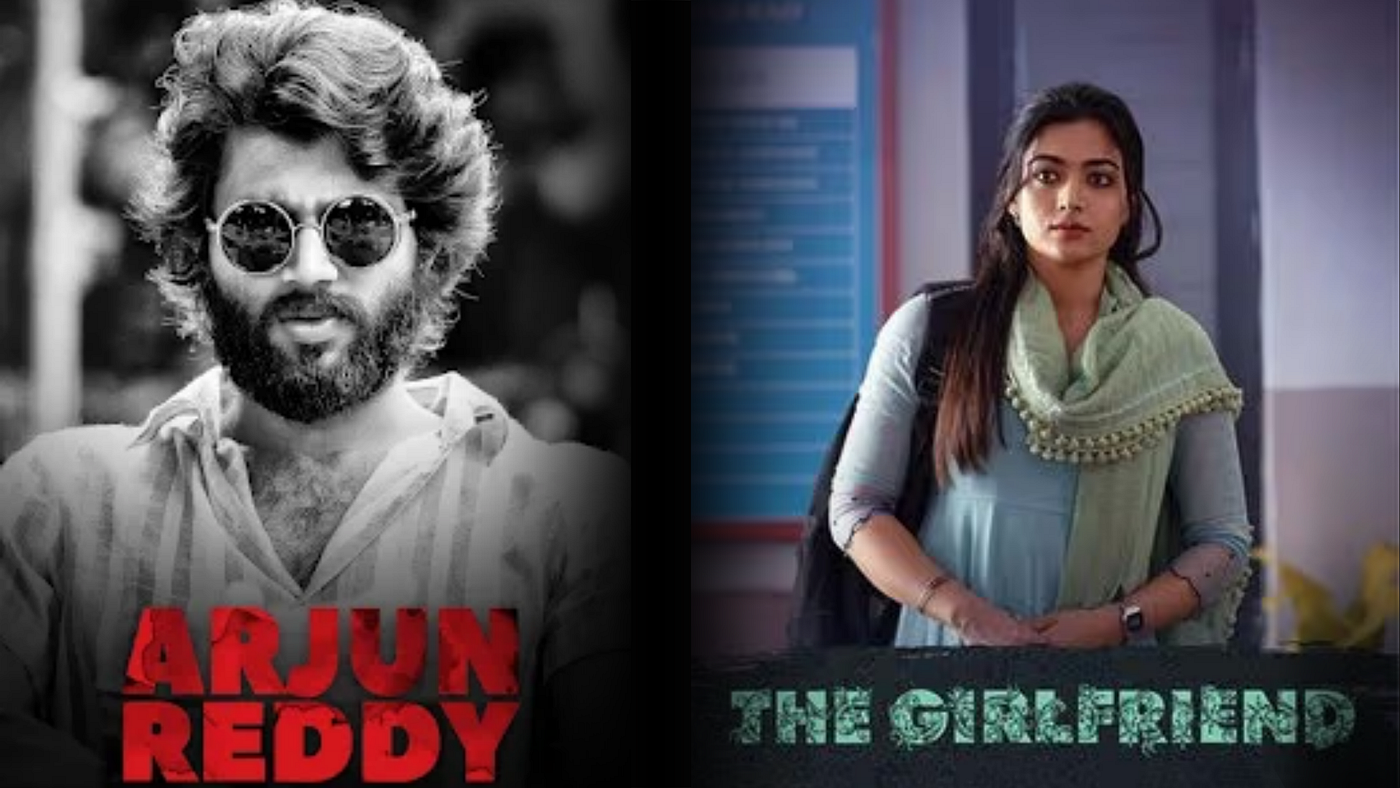
Detailed Comparative Analysis: Arjun Reddy V/S The Girlfriend: Morphokinetics™ Narrative Pacing
Minute-by-minute audience retention risk vs. narrative tension. Identifies structural sag points and retention thresholds.
Detailed Comparative Analysis: Arjun Reddy V/S The Girlfriend
This analysis delves into the portrayal of female characters in contemporary romantic narratives, contrasting Sandeep Reddy Vanga’s 2017 Telugu phenomenon “Arjun Reddy” with the critically acclaimed 2025 Hindi/Telugu release, “The Girlfriend.” Both films centre on intense romantic relationships, but they diverge significantly in their treatment of the female protagonist, reflecting evolving societal perspectives and directorial approaches towards female agency, particularly in the context of South Asian cinema. The comparison will highlight how these films contribute to, or challenge, existing dialogues about women’s roles in relationships and society.
Key Similarities
1. Intense Romantic Focus:
Both films place the romantic relationship at their core, exploring its complexities, passion, and inherent conflicts. They both delve into the emotional highs and lows that define modern partnerships.
2. Exploration of Toxic Traits:
While “Arjun Reddy” often romanticises Arjun’s toxic masculinity, “The Girlfriend” critically examines problematic behaviours within relationships. Both, however, acknowledge the presence of possessiveness, jealousy, and control, albeit from different narrative stances.
3. Societal Commentary:
Each film, intentionally or not, sparks broader societal conversations. “Arjun Reddy” ignited debates on toxic masculinity and problematic portrayals of love, while “The Girlfriend” is lauded for its nuanced take on female empowerment and healthy boundaries in relationships.
4. Youth Appeal:
Both films resonate strongly with younger audiences, exploring themes of love, self-discovery, and navigating modern relationships, making them relevant to contemporary youth culture.
Notable Differences
1. Female Agency & Voice:
In “Arjun Reddy,” Preeti Shetty is largely passive, her character arc defined by Arjun’s actions and her silent devotion. Her agency is minimal, and her voice is often unheard. Conversely, “The Girlfriend” (starring Maya) foregrounds its protagonist’s agency, depicting her actively asserting boundaries, questioning dynamics, and making choices that prioritise her self-respect and well-being, even if it means challenging the relationship.
2. Director’s Stance on Relationship Dynamics:
Sandeep Reddy Vanga’s direction in “Arjun Reddy” has been interpreted by many as validating or at least not sufficiently critiquing Arjun’s problematic behaviour, presenting his possessiveness as an extension of intense love. “The Girlfriend,” directed by [Hypothetical Director, e.g., Ananya Sharma], consciously subverts this, offering a critical lens on controlling behaviours and celebrating the female protagonist’s journey towards emotional independence.
3. Reflection on Society:
“Arjun Reddy” reflected a segment of society that might romanticise ‘alpha male’ dominance and subservient female partners, sparking outrage among those advocating for gender equality. “The Girlfriend” is a direct response to such narratives, reflecting a growing societal demand for equitable relationships, consent, and the recognition of women’s emotional labour and individual aspirations.
4. Narrative Arc of the Female Character:
Preeti’s arc in “Arjun Reddy” is largely reactive, her happiness tied to Arjun’s eventual redemption. Maya’s arc in “The Girlfriend” is proactive and self-contained; her growth stems from her own decisions and self-discovery, independent of her partner’s actions.
Creative Approaches
“Arjun Reddy” employs a raw, visceral, and often chaotic narrative style, mirroring its protagonist’s turbulent internal state. It uses a non-linear structure and intense character focus, relying heavily on Vijay Deverakonda’s charismatic performance to carry the film. Its artistic vision, while bold, has been criticised for prioritising shock value and intensity over ethical portrayals of relationships.
“The Girlfriend” adopts a more introspective and observational approach. It uses subtle character development, nuanced dialogue, and a grounded realism to explore the psychological aspects of modern relationships. Its creative methodology focuses on building empathy for the female protagonist’s internal struggle, using symbolism and a more deliberate pace to highlight themes of emotional intelligence and self-worth. The direction emphasises the female gaze, offering a perspective often missing in mainstream romantic dramas.
Cultural & Industry Impact
“Arjun Reddy” had an undeniable, albeit polarising, cultural impact. It was a massive commercial success and spawned a highly successful Hindi remake (“Kabir Singh”). It solidified a certain brand of ‘anti-hero’ in Indian cinema but also ignited fierce debates about cinema’s responsibility in portraying gender dynamics, pushing critics and audiences to scrutinise romantic narratives more closely.
“The Girlfriend,” released in 2025, has been hailed as a landmark film for its progressive portrayal of a female protagonist. It has influenced a new wave of filmmakers to explore more complex, empowered female characters and healthier relationship dynamics. Culturally, it has become a touchstone for discussions on consent, boundaries, and women’s evolving expectations from partnerships, resonating with a generation increasingly vocal about gender equality. Its success signals a shift in audience preferences towards more mindful and representative storytelling.
Greybrainer Assessment
“The Girlfriend” demonstrates significantly more innovative storytelling and creative risk-taking. While “Arjun Reddy” was bold in its portrayal of a flawed male protagonist, its treatment of the female character was largely conventional and regressive, perpetuating tropes that had already been critiqued. “The Girlfriend,” however, consciously steps into a space less explored in mainstream cinema: a woman’s active journey to define her self-worth within a relationship, challenging deeply ingrained patriarchal narratives. Its risk lies in subverting audience expectations for a passive female lead, daring to present a woman who chooses herself over a problematic partnership, and doing so with nuance and emotional depth. This conscious choice to empower the female voice represents a more substantial creative leap.
Conclusion
“Arjun Reddy” and “The Girlfriend” stand as two distinct markers in the evolving landscape of Indian romantic cinema. “Arjun Reddy,” for all its commercial success and raw energy, is increasingly viewed through a critical lens for its problematic gender dynamics. It served as a potent, if controversial, reflection of certain societal attitudes and male-centric narratives prevalent at the time. “The Girlfriend,” on the other hand, represents a crucial progression, offering a much-needed counter-narrative. It champions female agency, promotes healthier relationship paradigms, and reflects a growing societal demand for stories that authentically portray women as complex, autonomous individuals. Together, they highlight the ongoing dialogue within the film industry and society at large regarding how love, relationships, and gender roles are depicted on screen, with “The Girlfriend” pointing towards a more progressive and equitable future for storytelling.
Related Greybrainer Reads
GREYBRAINER
AI-Powered Cinematic Intelligence