The Monday Brief: The Rise of Emotional Truth in Streaming: Morphokinetics™ Narrative Pacing
Minute-by-minute audience retention risk vs. narrative tension. Identifies structural sag points and retention thresholds.
The Monday Brief: The Rise of Emotional Truth in Streaming
Industry insiders and viewers are calling this “The Empathy vs. Chaos Divide.” As we cross the mid-week hump, a fascinating trend has emerged: the timeline is aggressively rejecting hollow, action-heavy spectacles and overly convoluted thrillers. Instead, audiences are flocking to narratives that balance bizarre, situational chaos with deeply grounded emotional truth.
Mainstream audiences are exhausted by the relentless onslaught of hyper-stylised action choreographies and mind-bending, empty plots. In response, a distinct counter-culture of viewership is rising. The “Grey” audience — viewers who crave nuance, wit, and emotional resonance — is currently obsessed with the concept of “Accidental Absurdity.” This theme is driving unprecedented word-of-mouth for regional and independent projects that prove you don’t need a massive studio budget to create highly engaging, unpredictable cinema. Viewers want real emotion, even wrapped in ridiculous premises. Let’s break down what is trending, what is getting rightfully blasted by critics, and the hidden gems you need to add to your queue immediately.
1. The Popular: Archaeological Bedlam & Ruthless Teen Sleuths
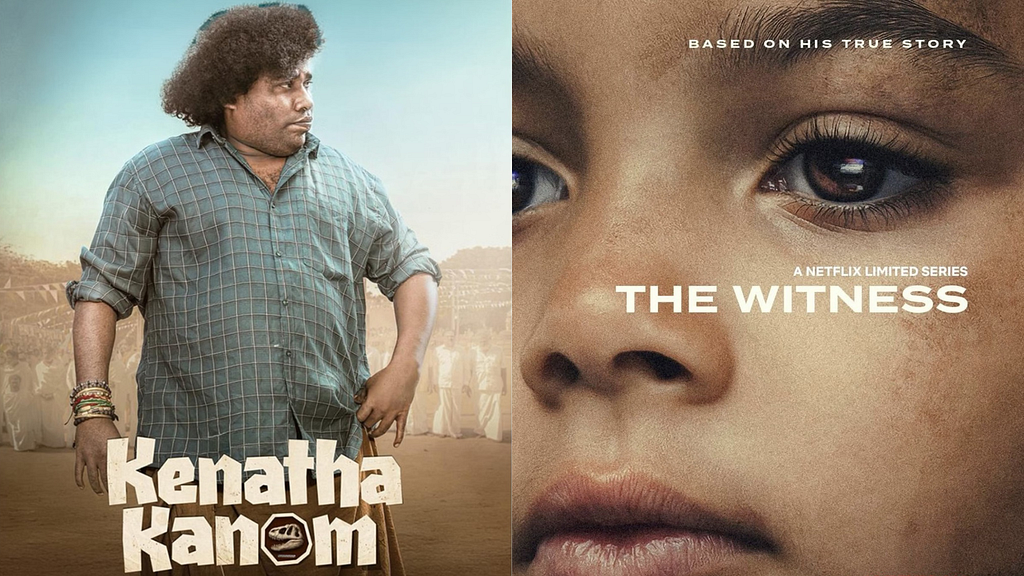
Kenatha Kanom (JioHotstar)
Trending #1 in India Yogi Babu’s Tamil-language comedy, Kenatha Kanom, is currently dominating streams. The premise is brilliantly bizarre: a drought-stricken village digs a well for survival, only to accidentally unearth a massive cache of dinosaur bones.
The Perspective: Why is this dominating the charts? It taps perfectly into the zeitgeist of “Accidental Absurdity.” In an era where mainstream comedy often feels algorithm-generated, watching rural bureaucracy violently clash with prehistoric archaeology provides a breath of fresh air. It is a brilliantly unpretentious satire. Yogi Babu’s signature deadpan delivery grounds the sheer lunacy of the situation, making the characters’ everyday struggles just as compelling as the prehistoric discovery in their backyard. Audiences are devouring this because it finds genuine humor and heart in the most unexpected places.
A Good Girl’s Guide to Murder Season 3 (Netflix)
The Global Binge Globally, the final season of the YA mystery starring Emma Myers is today’s undisputed binge.
The Insight: The success of this final season boils down to a concept we can call “Calculated Catharsis.” Viewers are mesmerized by a teenage protagonist who refuses to rely on physical force, instead utilizing pure intellect, methodical deduction, and relentless investigation to solve complex crimes. It perfectly satisfies our 2026 craving to see a messy, chaotic world brought to a state of order through undeniable competence. In a sea of media where protagonists routinely punch their way out of problems, there is something deeply soothing about watching a smart character simply out-think the surrounding darkness.
2. Most Critiqued: Sanitised Disappearances & Choreography Fatigue
Aliya Basu Gayab Hai (Lionsgate Play)
The Critical Misfire Not everything dropping this week is hitting the mark. The newly released psychological missing-person thriller Aliya Basu Gayab Hai awoke this morning to a wall of critical pushback.
The Critique: Critics are officially diagnosing this film with a terminal case of “Complexity for Complexity’s Sake.” The filmmakers seemingly fell into the trap of believing that making a story harder to understand automatically makes it a “smart” psychological thriller. The project is being blasted for prioritizing convoluted, confusing twists and non-linear trickery over actual character development. The timeline is firmly rejecting this approach. We don’t want a puzzle box that is frustrating to open, only to find it completely empty inside; we want narratives that give us a reason to care about the missing person in the first place.
The Furious (Theatrical)
The Action Disappointment In cinemas, Kenji Tanagaki’s high-octane martial arts film released to a surprisingly cold reception.
The Analysis: The critique here centres entirely on what we are calling “Fight Choreography Fatigue.” There is absolutely no denying that the action sequences in The Furious are world-class, executed with bone-crunching precision. However, viewers feel the movie has zero emotional anchor or cohesive plot. It is clear evidence that 2026 audiences will no longer show up for a two-hour stunt reel masquerading as a feature film. Without stakes, without empathy, and without a reason to care whether the hero wins or loses, even the most spectacular roundhouse kick feels hollow. Action must serve the story, not replace it.
3. Hidden Gems: Historical Displacement & True Crime Trauma
My Royal Nemesis (Netflix)
The Genre Subversion If you are looking for something off the beaten path, look no further than this overlooked, wildly entertaining fantasy K-Drama that just dropped quietly on the platform.
The Gem: My Royal Nemesis follows a ruthless, fiercely intelligent, and unapologetically villainous noblewoman from the Joseon era who miraculously wakes up in modern-day Seoul. It is a sheer masterclass in “Historical Displacement.” It completely subverts the exhausted “good-hearted time traveler” trope. Instead of a naive protagonist marveling at smartphones and modern plumbing, we get a calculating antagonist forced to channel her cutthroat political instincts to survive the vicious hierarchy of corporate South Korea. It is sharp, hilarious, and offers a brilliantly cynical twist on the classic fish-out-of-water narrative.
The Witness (Netflix)
The Ethical Pivot Finally, we have The Witness, a devastating British true-crime limited series detailing a horrific 1992 tragedy.
Why it matters: The true-crime genre has been rightfully criticized for years for its exploitative nature, but this series represents a massive step forward. Unlike standard documentaries that obsess over the psychology of the perpetrator, The Witness tells the story strictly and intimately through the lens of the only survivor — a young boy. It refuses to glamorize the violence or turn trauma into cheap entertainment. This is the perfect watch for the reader who prefers profound empathy over sensationalized violence. It proves we can explore darkness while centering humanity.
As we navigate the rest of the week’s releases, the mandate from audiences is crystal clear. The days of skating by on flashy visuals, unearned plot twists, and mindless action are fading fast. Whether it is through the absurdity of dinosaur bones in a Tamil village, the razor-sharp intellect of a teenage detective, or the profound resilience of a tragedy survivor, viewers are demanding emotional truth. We want the chaos, but only if it comes with a heavy dose of empathy.
Related Greybrainer Reads
GREYBRAINER
AI-Powered Cinematic Intelligence