Analog Grit in a Digital World: Why We’re Craving Raw Cinema Amidst Data Anxiety
50-Word Verdict
Today, we find ourselves sitting at a fascinating, almost paradoxical intersection of cultural consumption. If you parse through the massive weekend streaming data and the trending topics dominating our timelines, a massive convergence is taking place between on screen grit and off screen anxiety. We are no longer passively consuming
Who Should Watch
For readers tracking the movie and OTT conversation through a sharper Greybrainer lens.
Morphokinetics Teaser
This briefing reads the cultural movement around titles and audience energy without exposing the internal scoring model.
Producer / Director Lens
For producers and directors, this brief surfaces audience appetite, tonal shifts, and emerging story signals worth watching.
Analog Grit in a Digital World: Why We’re Craving Raw Cinema Amidst Data Anxiety: Morphokinetics™ Narrative Pacing
Minute-by-minute audience retention risk vs. narrative tension. Identifies structural sag points and retention thresholds.
Today, we find ourselves sitting at a fascinating, almost paradoxical intersection of cultural consumption. If you parse through the massive weekend streaming data and the trending topics dominating our timelines, a massive convergence is taking place between on-screen grit and off-screen anxiety. We are no longer passively consuming content; our viewing habits have become a direct reflection of our deepest, most modern fears.
The timeline is fiercely split. On one side, audiences are indulging in grounded, high-stakes thrillers that rely on human ingenuity. On the other hand, there is a growing, highly vocal discourse around digital surveillance, invisible data tracking, and the slow erosion of our privacy. What we are witnessing is an audience aggressively filtering out safe, manufactured studio algorithms. We are collectively pivoting instead to raw tension, meticulous storytelling, and high-stakes narratives. Interestingly, this off-screen anxiety regarding how administrative automation is quietly eroding our data privacy is directly bleeding into what we choose to watch, critique, and champion.
The Popular: Ground-Level Grit & Intellectual Friction
We are living in an era where the sheer scale or budget of a movie is no longer enough to guarantee a hit. The audience wants substance, and more importantly, they are demanding "Intellectual Friction."
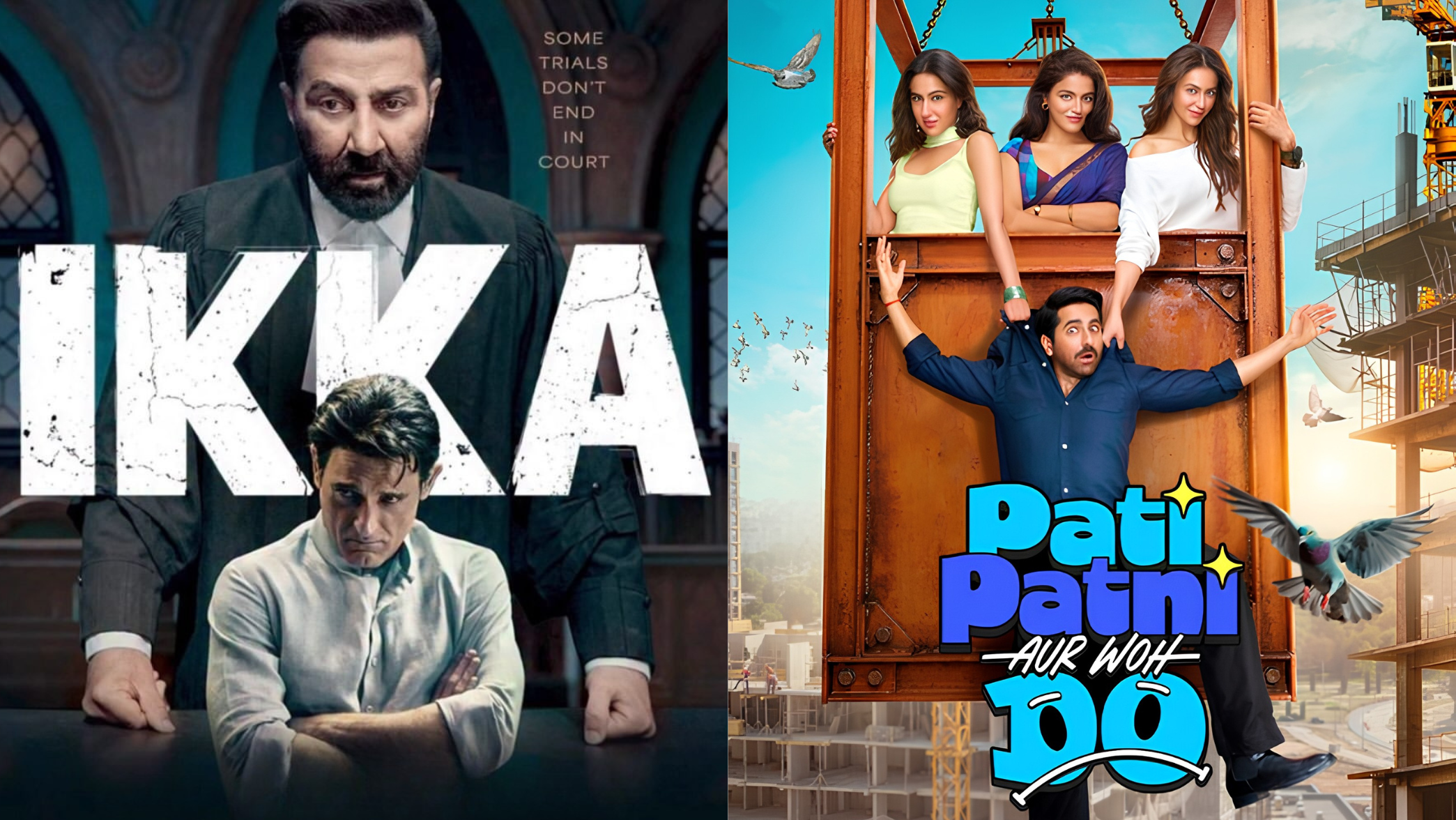
Ikka (Netflix - Global Binge) Consider the phenomenal rise of Ikka, the intense courtroom thriller currently dominating the Netflix global binge charts. Led by the formidable duo of Sunny Deol and Akshaye Khanna, this film is driving incredible word-of-mouth following its weekend drop. But why is it resonating so deeply? It all comes down to pure intellectual friction. Watching a celebrated, razor-sharp lawyer forced by circumstance to defend a man whose conviction he once secured creates a deeply satisfying, morally complex narrative.
The success of Ikka proves that we are starved for heroes who outsmart a rigged system using sharp dialogue, ethical leverage, and raw human intellect, rather than relying on digital hacks, indestructible armor, or impossible CGI physics. In a world where machines are increasingly thinking for us, there is profound satisfaction in watching human intelligence take the steering wheel.
I, Nobody (Theatrical - Box Office Surge) This same craving for the tangible extends to theatrical releases. Prithviraj Sukumaran’s understated Malayalam action-crime drama, I, Nobody, is currently pulling massive organic footfalls, completely defying the conventional wisdom of what constitutes a box office draw. By focusing heavily on identity and personal conflict over mindless, green-screen spectacle, the film perfectly captures the anxiety of an ordinary life unraveling.
Audiences are flocking to regional cinema precisely because it consistently delivers grounded, tangible stakes. For years, massive Pan-India blockbusters have force-fed us spectacle, but in doing so, they have completely abandoned the human element. I, Nobody brings the scale back down to earth, proving that a man fighting to reclaim his stolen identity is far more gripping than a superhero destroying a digital city.
Most Critiqued: Manufactured Romance & Algorithm Fatigue
Just as audiences are elevating raw, human-centric narratives, they are ruthlessly punishing content that feels engineered by a machine. We are officially entering the era of "Algorithm Fatigue."
Pati Patni Aur Woh Do (Netflix - Polarized Reception) Take, for example, the newly released rom-com Pati Patni Aur Woh Do, starring Ayushmann Khurrana and Sara Ali Khan. The film dropped over the weekend to heavy fanfare, but the timeline reaction has been aggressively polarized. Critics and viewers alike are diagnosing the film with a severe case of algorithm fatigue.
The audience is sharply calling out the studio for relying on forced, internet-friendly misunderstandings and meme-bait rather than writing actual, organic comedic setups. It feels less like a movie and more like a romance designed by a boardroom committee armed with a spreadsheet of trending hashtags. By trying to appeal to everyone based on demographic data, the film completely misses an authentic emotional core. It is a sterile product in a genre that fundamentally requires a heartbeat.
Alpha (Theatrical - Spy Universe Exhaustion) This exhaustion with formulas isn't limited to streaming rom-coms; it is actively hurting massive theatrical franchises. YRF’s highly anticipated spy thriller Alpha, led by Alia Bhatt and Sharvari, is struggling to maintain its second-week momentum.
On paper, the film does a lot right. Audiences genuinely appreciate the long-overdue shift toward female-led tactical action. However, the rigid franchise formula feels completely stale. Throwing massive, bankable stars into a heavily branded cinematic universe cannot mask a predictable, template-driven narrative. We can see the structural beats coming from a mile away. When every plot twist, action set-piece, and character arc feels mandated by franchise rules rather than creative inspiration, the viewer disengages.
The Digital Shift: Automation & Privacy-Focused Anxiety
To understand why Ikka and I, Nobody are thriving while Alpha and Pati Patni Aur Woh Do are stalling, we have to look away from the screen and at our own daily lives. The timeline isn't just debating cinema today; the broader cultural conversation has rapidly pivoted to the terrifying implications of invisible data tracking.
As our workplaces and digital tools increasingly integrate heavy administrative automation for routine tasks, from automated medical scheduling and AI-driven workflow management to algorithmic hiring processes, audiences are expressing severe, privacy-focused anxiety. We are hyper-aware of how our personal data is being scraped, categorised, and monetised without transparent consent. We are surrounded by "smart" systems that are ostensibly designed to make our lives easier, but instead leave us feeling exposed, monitored, and entirely out of control.
Analogue Heroes in an Automated World
This growing, pervasive paranoia directly explains the massive spike in viewership for grounded, analog thrillers. When our reality feels heavily surveilled and manipulated by invisible algorithms, we actively seek out stories of rebellion.
We want to see human intuition, analogue grit, and raw survival outmanoeuvre cold, automated systems. We want to watch characters use legal loopholes and street smarts instead of hacking a mainframe. We want to see heroes rely on their wits and their fists rather than a high-tech gadget. Ultimately, the entertainment industry needs to recognise this massive cultural shift. Audiences are no longer easily sedated by algorithmically perfected content. In an era where data is our biggest vulnerability, the only stories that will truly survive the weekend drop are the ones that remind us of our messy, unpredictable, and entirely un-programmable humanity.
Related Greybrainer Reads
GREYBRAINER
AI-Powered Cinematic Intelligence